Stand There! She Shouted: The Invincible Photographer Julia Margaret Cameron, by Susan Goldman Rubin, illustrated by Bagram Ibatoulline; Candlewick Books, $16.99, 74 pages, ages 12 and up.

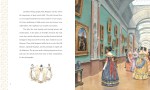
Born in India, raised by her grandmother in France, married at age twenty-two to a man nearly double her age, Julia Margaret Cameron defied the odds to become one of the most prolific photographers of the Victorian era. Veteran children’s book author Susan Rubin (Andy Warhol: Pop-up Painter; Edward Hopper; Painter of Light and Shadow) has crafted another outstanding biography of a globally admired artist.  Cameron didn’t touch a camera until almost she was fifty years old, and her unorthodox technique for taking portraits became her hallmark for which she is recognized as one of the greatest photographic portraitists ever.  Rubin’s fascinating biography is accompanied by Bagram Ibatoulline’s sumptuous acrylic paintings, evoking a world full of excitement and adventure. Several of Cameron’s portraits are interspersed throughout the text as well. Complete with bibliography and a list of museums displaying the photographer’s work, Stand There! is an eloquent testament to a pioneer’s life behind the lens.   
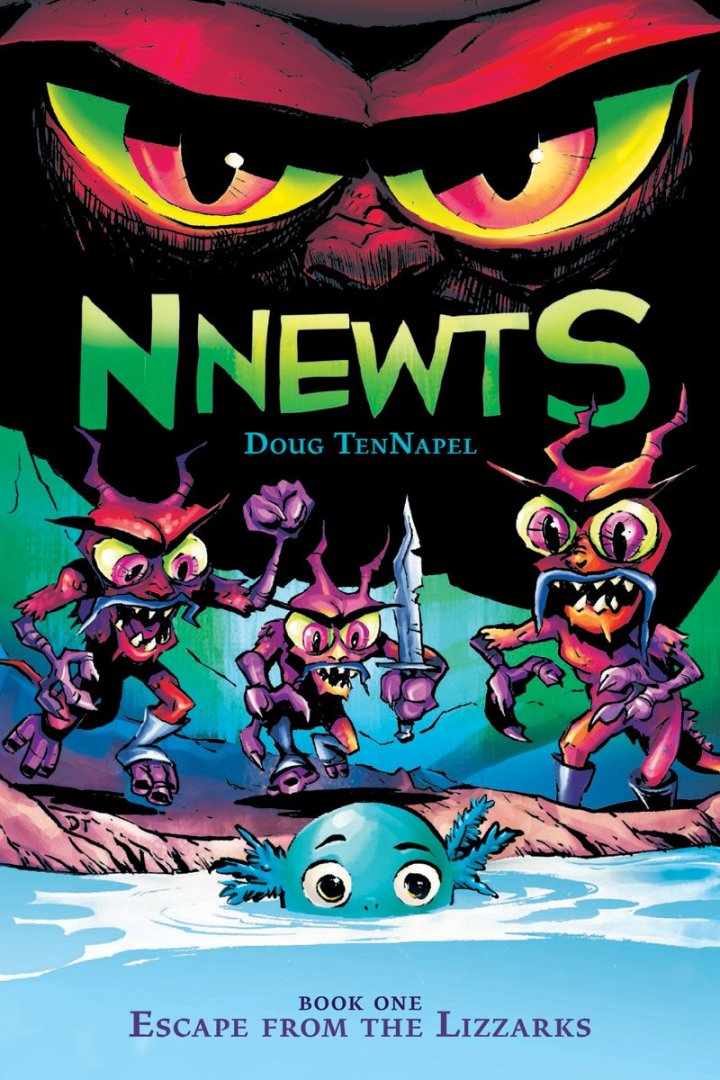
Newts, Book One: Escape from the Lizzarks, by Doug TenNapel; GRAPHIX, $10.99, 192 pages ages 10-13.

Graphic-novel fans, rejoice: Author-illustrator Doug TenNapel (Ghostopolis; Bad Island) has created another a classic adventure story with Newts, the first of a proposed series featuring a young amphibian named Herk who overcomes adversity to win the day. Herk isn’t like his counterparts; stumpy, misshapen legs keep him from joining his able-legged friends hunting and playing. Relegated to the baby pool, the boy creates fantastic imaginary scenes under the watchful eye of his protective mother, until one day their village is attacked by Lizzarks, a warring reptile tribe.  Herk’s parents die in the attack, but he escapes, and while navigating this strange and mysterious world, he makes friends, overcomes his disability and demonstrates that brains triumph over  brawn.  TenNapel’s expressive illustrations of Nnewts, Lissarks and other magical creates fills the pages and will completely enthrall comic aficionados. 

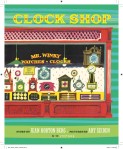
The Noisy Clock Shop by Jean Horton Berg, illus. by Art Seiden. G&D Vintage, $7.99
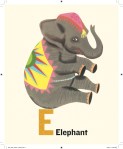
My ABC Book
, illus. by Art Seiden. G&D Vintage, $7.99
The Too Little Fire Engine
by Jane Flory. G&D Vintage, $7.99
All: ages 3-5. 

Grosset & Dunlap, the original publishers of the iconic Dick and Jane series, just reissued four of its classic mid-century children’s picture books in a bid to reach a new genearaion of readers yet to discover these adorable titles. The publishing house has over 200 similiar out of print books hailing from its Wonder Books imprint. (G&D plans to release four more later this year.) These titles are prime examples of books published during the era many in the industry call the ‘Golden Age’ of children’s book publishing.  Many artistic flourishes that appear in these books no doubt provide inspiration to today’s crop of illustrators. While G&D changed little from the original editions, savvy readers will notice that these reissues are slightly larger than the original Wonder Books.  None of the books have lost their charm with age, and young children will delight in the stories much as their grandparents did almost sixty years ago.  We’re looking forward to seeing more of these treasures in 2015, which are also a real bargain at $7.99 each.

UPDATE: Matt de la Pena was awarded the 2016 Newbery Medal 2016, and Christian Robinson received a Caldecott Honor.

Last Stop on Market Street, by Matt de la Peកa, illustrated by Christian Robinson; Putnam Books, $16.99, 32 pages, ages 4-6. (January 2015)

CJ and his grandmother board the Market Street bus after church every Sunday, and spend the afternoon working in the soup kitchen of a homeless shelter. One day, the boy wonders aloud why his family doesn’t have a car or an MP3 player, and his wise and patient grandmother responds with encouragement, gentle humor and love by showing CJ that there is beauty even in the muddy and mundane city streets. Brooklyn-based author Matt de la Peកa (A Nation’s Hope: The Story of Boxing Legend Joe Louis) captures the child’s inquisitive spirit as well as the time-worn perspective of an older generation with short, snappy sentences that convey just enough detail about class inequality without weighing the story down. (When CJ and his grandmother board the bus, Peកa’s ‘They sat right up front" recalls Rosa Parks and the civil rights movement in one simple sentence, and it’s perfect. ) San-Francisco native Christian Robinson (Smallest Girl in the Smallest Grade; Josephine) expertly captures the charm and vibrancy of the City by the Bay with illustrations done in bright acrylic paint and collage. This celebration of life’s simple gifts and reminds us that what matters most isn’t the acquisition of stuff, but the time we spend with each other. 

Seeds of Freedom: The Peaceful Integration of Huntsville, Alabama; by Hester Bass, illustrated by E.B.Lewis, Candlewick Press, $16.99, 30 pages, ages 6-10.

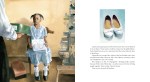
While violent protests and confrontations marked a large part of the American civil rights movement, many communities chose nonviolent activism, such as the citizens of Huntsville, Alabama. Author Hester Bass (The Secret World of Walter Anderson) tells the story of the summer of 1963 and how Huntsville’s black community used creativity and problem-solving to combat racism rather than fighting and rioting. Starting in January 1962, Bass sets the stage by exploring the inequities between the black and white communities – black children must carry pictures of their feet to shoe shops because they aren’t allowed to try on merchandise, and black families are routinely locked out of restaurants. Slowly, like the first signs of spring, people act – black men and women eat at diner counters and frequent bowling alleys and public parks reserved for whites. The real test comes in September 1963, after a summer of peaceful demonstrations, when schools are federally mandated to desegregate. Will the school doors remain locked? Bass’s rhythmic, sonorous writing weaves this important moment in American history, while Coretta Scott King award-winning illustrator E.B. Lewis’s watercolors evoke the pain and struggle of people working together to be free. Complete with an informative author’s note (Bass spent a decade in Huntsville) and carefully curated bibliography, this is an excellent introduction to the civil-rights movement for elementary-aged students, and sucessfully champions the notion that people can change without resorting to violence.

SEEDS OF FREEDOM. Text copyright © 2015 by Hester Bass. Illustrations
copyright © 2015 by E. B. Lewis. Reproduced by permission of the
publisher, Candlewick Press,
Somerville, MA.

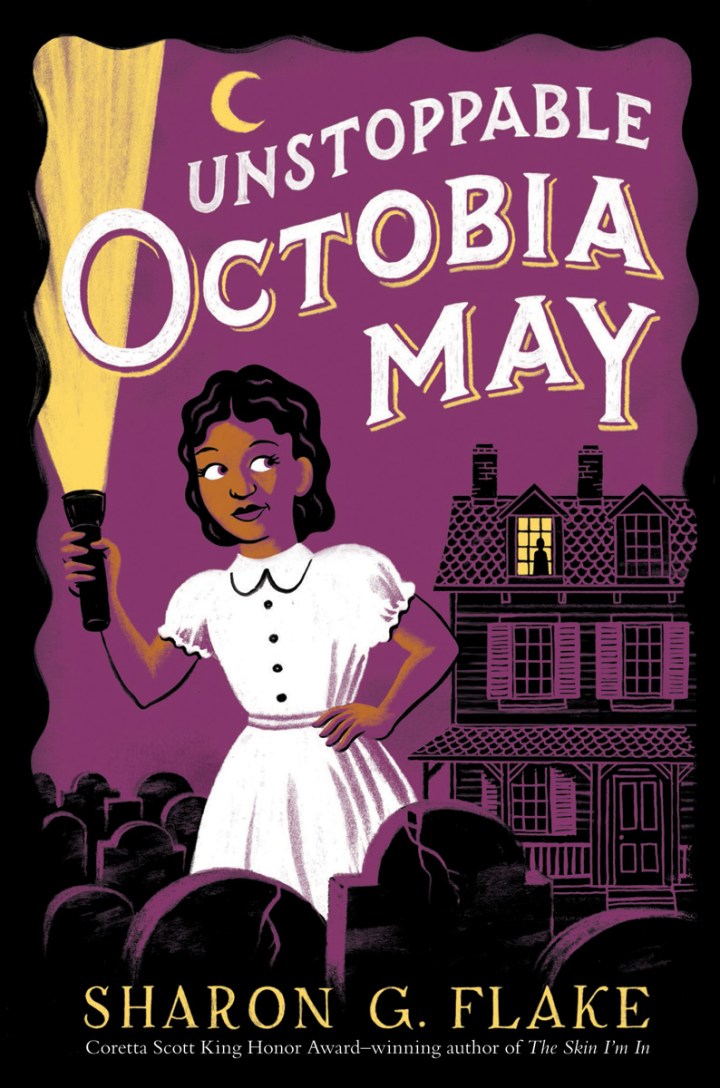
Unstoppable Octobia May, by Sharon G. Flake; Scholastic Press, $16.99, 276 pages, ages  8-12.

In 1953, most children are expected to be seen and not heard, but that’s certainly not the case with ten year old Octobia May, a plucky self-styled detective with a heart condition who is certain a vampire is rooming at her aunt’s boarding house. Coretta Scott King Honor Award winning author Sharon G. Flake (The Skin I’m in) weaves a vivid portrait of the Eisenhower era and explores topics such as racism, gender inequality, and the Holocaust.  Flake’s unique novel will attract vampire chasers and history buffs alike, while offering encouragement to young readers that it’s alright to speak out againt injustice, even when others might prefer to maintain the status quo.  

Nicole Claire looks at her favorite Caldecott and Newbery Medalists of 2015.

Kid Presidents: True Tales of Childhood from America’s Presidents, by David Stabler, illustrated by Doogie Horner; Quirk Books, $13.99, 224 pages, ages 7-10.

Celebrate Presidents’ Day with this thoroughly enjoyable nonfiction examination of America’s presidents before they grew up. Stabler continues his exploration of popular history (Secret Lives of the Supreme Court; Secret Lives of Great Authors) by digging into the boyhoods of twenty commanders-in-chief. Many were pranksters, like Jimmy Carter and George W. Bush, and others had surprising hobbies like ballroom dancing (Taft). Ford faced dyslexia, and Obama’s first job at Baskin Robbins ruined his taste for ice cream for life. Lively and engaging text are accompanied by Horner’s 200 caricatures of the presidents as young boys. A wonderful reminder that even the most powerful people in the world were once children too, and that greatness can come from anywhere.

I Love Mom, by Joanna Walsh and Judi Abbot; Simon & Schuster, $16.99, 32 pages, ages 2-5.

Joanna Walsh and Judi Abbot team up for their third children’s book, this time dedicated to celebrating moms. Like their previous collaborations (The Biggest Kiss; The Perfect Hug) I Love Mom is a snuggly, feel-good story aimed at very young children. Here, tiger cubs demonstrate all the wonderful things their mother does: transforming chairs into thrones, baking cakes, and making skinned knees better with a kiss and a hug.  Judi Abbot’s warm and inviting illustrations fill the oversize pages and delight the eye. 

Unfortunately, while the goal was to recreate the success of the duo’s previous read-alouds, this text feels disjointed and awkward: one page extols the mother tiger’s ability to create fantastic games, then the next page she’s packing up a messy box and trucking her charges someplace. (On my first read-through, I thought I had skipped a page.)  Rhymes such as “No one brings the sky closer to the seesaw” are strange as well. Also, the text goes back and forth between “me” and “we.” This could be confusing for young readers.  Fans of Walsh and Abbot will love it regardless, but readers new to the collection might do well to consider one of their earlier offerings.  

Ultimate Bodypedia: An Amazing Inside-Out Tour of the Human Body (National Geographic Kids), by Christina Wilsdon, Patricia Daniels, and Jen Agresta; National Geographic, $24.99 272 pages, ages 7-13. (October 2014)

Human biology gets a colorful update in this latest encyclopedia from National Geographic Kids. This child-friendly guidebook explores all the various ways  humans are unique. Ten chapters cover everything from our collective genetic history to what the future holds for the human body.

Parents familiar with the National Geographic Kids Magazine will recognize the format, and it works: Each page is full of clear, age-appropriate information and accompanied by vivid, supersize images interspersed with interesting factoids (how to make ‘brain freeze’ go away and why our skin wrinkles in the tub are a few examples). The book manages to be clear and lively while still presenting scientific information. Thirty pages of body atlases, glossary, and further resources round everything out. Keep this book handy when children begin studying human biology at school – it’s aligned with various Common Core State Standards for grades 2 through 6.