Green Day

Mother Earth needs our help. Easier said than done, right? The challenges are enormous and it’s tempting to simply buy a reusable grocery bag and call it a day. But every little bit–including that reusable grocery bag–helps, and plenty of options exist to make the world a cleaner place. But where to start? According to Jen Gale in The Sustaninable(ish) Living Guide: Everything you need to know to make small changes that make a big difference (Green Tree, 296 $16), taking Draconian measures to “go green” aren’t necessary to make significant change. Gale knows, because she went to those extremes by undertaking an entire year without buying a single new item for her and her family, which she chronicled on her website. That experience, though difficult, revealed that she and her family (which included two young children) were capable of becoming more thoughtful consumers. But going whole hog isn’t for everyone, and this book grew out of a desire to permanently change her behavior without having to pull up stakes and move to Amish country.

Sustainable(ish) provides easy, achievable ideas on how to reduce consumption and help save the planet. Topics run to the usual suspects, like reducing food and plastic waste, as well as the more unexpected and thought-provoking, from an examination of the astounding amount of waste that goes into producing our clothes to how the most mundane of items, like markers and baby wipes, can be toxic for the planet.  Each chapter follows a similar pattern of laying out the statistics, providing Gale’s experience with the problem, and a series of suggestions for the reader to implement that become progressively more involved.

Engagingly optimistic, there is much here to help readers find their way to a cleaner, greener future, but financial stats provided in pounds and UK-based resources will leave many American readers wondering where to turn for further guidance, but that is easily remedied via a quick online search. Our choices matter, and Gale helps us take realistic action that will benefit the health of our planet and the next generation–in other words, this is the earth-friendly guidebook for all of us.

giphy

Brad Meltzer and Chris Eliopoulos Debut TV Series on PBS That’s Anything But “Ordinary”

The men who brought you the Ordinary People Change the World book series have created a TV show! Xavier Riddle and the Secret Museum premiered November 11, 2019. I spoke with author Brad Meltzer and illustrator Chris Eliopoulos about how they paired up, why they like writing and drawing, and what they hope kids will learn from the new series.

Chris and Brad share a love of comic books, and got closer with the power of Twitter. Brad proposed they write a series, and Chris was happy to help. They’ve written dozens of books in the Ordinary People series since 2014.

You might be a bit curious about the name of the new TV series: Xavier Riddle and the Secret Museum isn’t something you hear too often. As a kid, Brad always liked names with the letter X in them. Xavier is one of these rare few. He also loved riddles. Puzzling things out was a favorite activity of his. Hence the name, Xavier Riddle.

Brad was inspired to become a writer thanks to his ninth grade English teacher, Mrs. Spicer. She told him he could write. Brad was dubious — he didn’t expect to be a writer. However, when he wrote his first book, he visited his teacher’s classroom, thirty years later, and said to her, “My name is Brad Meltzer, and I wrote this book for you.” The teacher started crying. When he asked her why, she explained that she was planning on retiring that year, because she didn’t think she influenced anyone. Clearly, she was wrong.

I Am Marie Curie

Brad picks his subjects with a particular characteristic in mind: “I always chose a hero, not because they’re famous, but because their life provides a lesson that I can give my own kids, and, truthfully, that I need myself.” The hero’s childhood is what strikes Brad as the most interesting for young readers. When talking about his biography of Amelia Earhart, Brad said that, “I loved the idea that there was this little girl, and everyone said to her, ‘You’re never going to be successful. You’re never going to be able to do what you want to do.’ And she just didn’t care. She just kept plowing forward. She wouldn’t let anything stop her. That’s the lesson I want for my sons, it’s a lesson I want with my daughter.”

Now let’s talk about the illustrator. Chris always knew he was talented at art, especially as a kid. “If you’d asked me back then, ‘Would you rather go to Disneyland or would you rather sit and draw pictures?’ I’d rather draw,” he said. He grew up a shy child, and Chris drew pictures to tell other people what he was feeling. “I would give these drawings to my parents, and they would read these stories and go, ‘Oh, okay, now we know what’s going on in Chris’s life.’” As an adult, he decided that he wanted to be a children’s book illustrator.

Brad and Chris work closely when it comes to the book or television creating process, as Chris explained: “Brad writes a script, and then sends it to me, and we talk about it a little bit, and then I go off and I draw the whole book out in pencil, so that everybody can see it. We decide if something works or doesn’t work. He’ll suggest things, or I’ll throw things in. Once everybody’s in agreement, I go back and I fix the things that need fixing, and I ink it up in ink, and then I send it back again. And then they all decide what looks good, what looks bad, what needs to be fixed. And then I go back and fix it, and then I color the whole book and I send it back.”
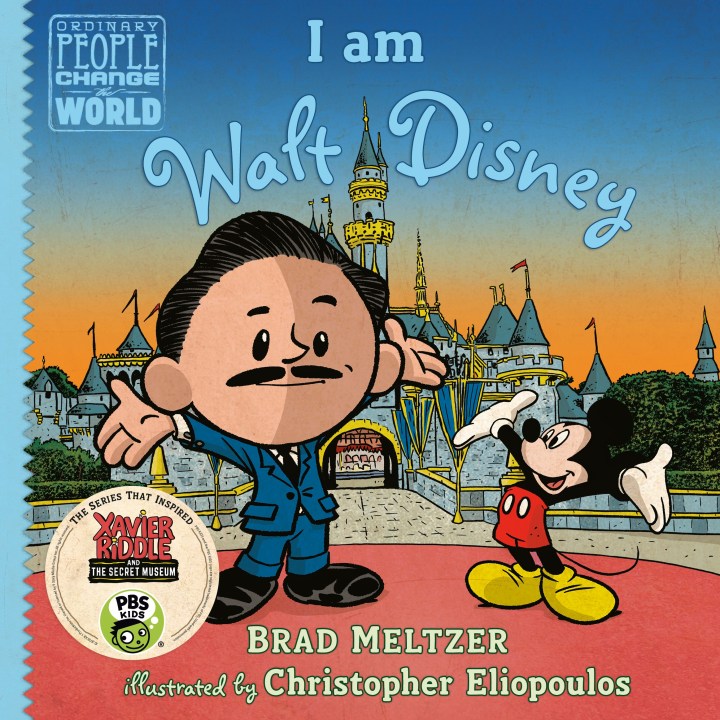
I Am Walt Disney Cover

Sometimes, the people in the books have a say in how the book will look. During the creation of I Am Caring: A Little Book About Jane Goodall, for example, Jane read the book and made Chris go back and re-draw over ten pages because she was holding hands with wild animals in the pictures, and she didn’t find that appropriate for children. Chris told me that it was tiring to go back and redraw so many pages, but, in the end, the book did turn out to be better!

When I told Chris that his work seemed to resemble the Peanuts cartoons, he replied, “They’re my favorite thing in the whole wide world!” he explained why he adored them: “Peanuts was the biggest influence in my life. When I was a little kid, my uncle owned a remaindered book shop — basically where all the leftover books went. I used to take all of the Peanuts books–I still have them here in my studio–and I would just read them, cover to cover, all the time.” As he got older, Chris discovered Calvin and Hobbes, a popular cartoon by Bill Watterson about a boy and his tiger. Look at Chris’s drawings: big heads, tiny bodies, strange squished faces. The Peanuts cartoons look quite similar.

Xavier Riddle aims to teach kids the same message that the books do: that kids, no matter what, can be extraordinary. Brad said that making sure these stories are exciting is important to keep kids interested: “If you remind kids that these aren’t the stories of famous people, this is what we’re all capable of on our very best days, suddenly kids will look and go, ‘tell me more about that.’”

Abigail C. Richter is a fifth grader and lives with her parents and two basset hounds in New York. 

Tourists Overwhelm Beatrix Potter’s Beloved Lake District

Last month, the Lake District National Park Authority (LDNPA) issued a statement declaring that off road vehicles would not be banned from the park, a move that has upset some locals who say dirtbikes and cars are ruining the countryside. 

**This article has been updated with new information.**

Named a UNESCO World Heritage site in 2017, the Lake District has welcomed a surge of visitors over the past twenty years, and not all sightseers have left the land as they found it: according to a recent report in The Guardian, off road vehicles, 4x4s, and dirtbikes are increasinglychewing up the delicate lands forged in the last Ice Age, damaging dirt roads and surrounding fields. Farmers complain that the roads are so poor that they cannot drive their equipment on them anymore.

The Lake District ‘s spokesperson Sarah Burrows said in a recent email that The Guardian’s article “is inaccurate and, as such, we wrote to the editor in response. We highlighted that the headline Lake District heritage at risk as thrill-seekers ‘chew up’ idyllic trails is misleading and inflammatory, furthermore, parts of the article itself are factually incorrect. The two public roads are open to all users and make up just 0.09 per cent of our rights of way network, so to infer that this is a Lake District-wide ‘problem’ is misleading. Indeed, the overwhelming majority of people enjoying the national park’s 3,280km of trails are highly unlikely to encounter recreational motorists on these routes.”

Lake District residents say the tension between meeting the wants of tourists while preserving the bucolic landscape is at least a decade in the making. In 2006, the LDNPA posted the now-ubiquitous red and white “hierarchy of trails” guides, notifying visitors of proper road etiquette, however local groups say these signs have only encouraged thrill-seekers to take their ATVs off roading. Members of the Save the Lake District Group say that vehicles using these roads have leapt from 90 a month in 2008 to over 400 in 2017. Burrows, meanwhile, provided usage data on the LDNPA website saying that tracking motorized vehicles on the roads has been historically spotty and that the numbers quoted by Save the Lake District “may not be very reliable.” The LDNPA report goes on to state that it has noticed a decrease on vehicular traffic on those roads that have been repaired.

The roads bearing the brunt of these adventure seekers are High Tilberthwaite and High Oxenfell. Part of the appeal lies in these roads’ proximity to Potter’s farm, which she purchased in 1929 and is now part of the National Trust. Meanwhile, the LDNPA maintains that the Lake District trails have historically been a mix of dirt, asphalt, and stone, and that recent severe weather has deteriorated the roads that now require repair. Paving these highly trafficked roads would keep motorists from destroying the surrounding area, and the LDNPA posted before and after images of repaired roads on its website, where some of the “before” roads look downright impassable, but Save the Lake District maintains that these pictures aren’t telling the whole story.

Earlier this month, LDNPA committee members voted not to ban ATVs from trails despite a recommendation from the International Council on Monuments and Sites suggesting that banning these vehicles would drastically improve the quality of the trails and preserve the beauty of the area. The latest vote has lead to frustrated protests and angry outbursts from locals, who fear that this is only another step towards stripping the Lake District of its charm and turning it into a roadside attraction.

Burrows counters that the LDNPA is trying to meet the needs of all park users. “As a national park representing everyone’s right to enjoyment, the decision to restrict anyone’s right to use these roads must not be taken lightly. In line with government guidance, legal intervention through a TRO (Traffic Regulation Order) is a last resort and we should explore other management options first. We completed a comprehensive evidence gathering exercise and the findings were presented to our Rights of Way Committee on 8 October where Members decided on the future management of these roads and whether or not a TRO is required.

“The decisions we have to take are often complex, but we do this in an open and transparent way so that everyone can see in detail what the perceived issues are, how we’ve gathered our evidence, and how we’ve come to the reasoning behind our recommendation to committee,” Burrows wrote. The committee’s findings can be read here

Jennifer Morla’s Career-Spanning, Kickstarter-funded Autobiography Makes a Splash

Entitled, fittingly, Morla: Design, this Kickstarter-funded memoir explores the career of Jennifer Morla her creative process, design philosophy, and provides behind-the-scenes stories about various high profile projects like her campaigns for Swatch, Levi’s, and Nordstrom.

MorlaDesign_Stories
Reproduced with permission from Letterform Archives.

Though an autobiography, Morla is a designer, and so it makes sense that her story be draped in a style that speaks to her lively aesthetic. There’s neon bookmark ribbons, metallic inks, vacuum-formed, debossed white covers, and bold stripes that all manage to play well together.  In other words, the designer’s touch is visible on every inch of the book.

MorlaDesign_RegularOverhead
Reproduced with permission from Letterform Archives.

Essays and insight fill the 400+ page volume, spanning Morla’s career and providing advice to design acolytes. Typohiles, meanwhile, have plenty to rejoice about: Morla explores twenty-six of her most beloved typefaces, from newer fonts to her “oldest typographic friends.” The designer waxes poetic over the sloping curves of the italic Garamond C to when she fell in love at first sight with Obsidian when it first appeared in 2015.
Earning over 300 accolades including the Cooper Hewitt award, the AIGA medal, and the Smithsonian Design Museum National Award, Morla’s work is found in the permanent collections of the Library of Congress and MOMA, and when not running her design firm, Morla teaches at the California College of the Arts. Her book is a vibrant reflection of a designer whose work combines type and image to express a range of concepts. “Design,” as Morla writes, “is understanding made visible.”
Morla: Design, by Jennifer Morla; Letterform Archive, $125, 432 pages. 

Counting Crows…and Robins, Jays, and Chickadees

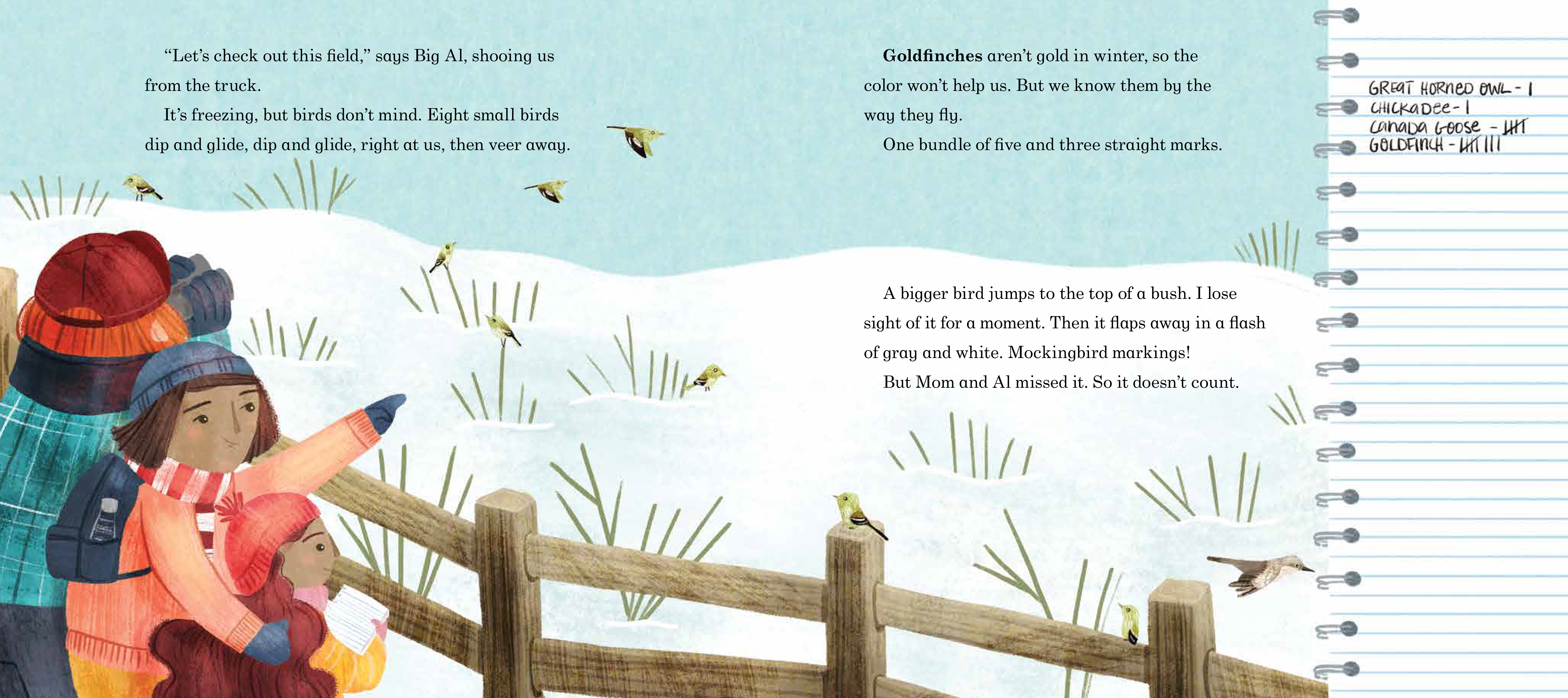
Bird Count_interior-7
Copyright 2019 Susan Richmond and Stephanie Coleman. Reproduced with permission from Peachtree.

Bird Count, by Susan Edwards Richmond, illustrated by Stephanie Fizer Coleman, Peachtree Publishers; $17.95, ages 4-8. October 2019.

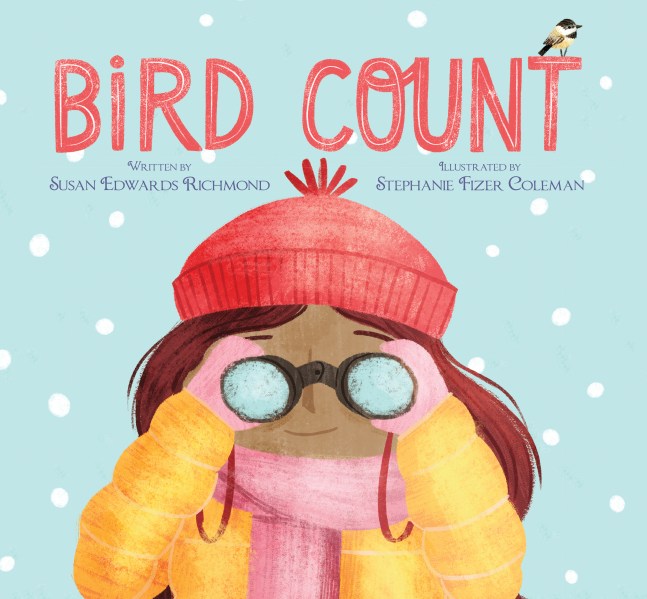
Fall birdwatching is more challenging now that mating season is over–the bright plumage of some birds gives way to more muted tones–but scouting them out is excellent preparation for the annual Audubon Christmas Bird Count. In Susan Edward Richmond’s first children’s book, Bird Count, Ava, whose name is Latin for “like a bird,” is tasked with recording and identifying birds for the wintertime roundup.

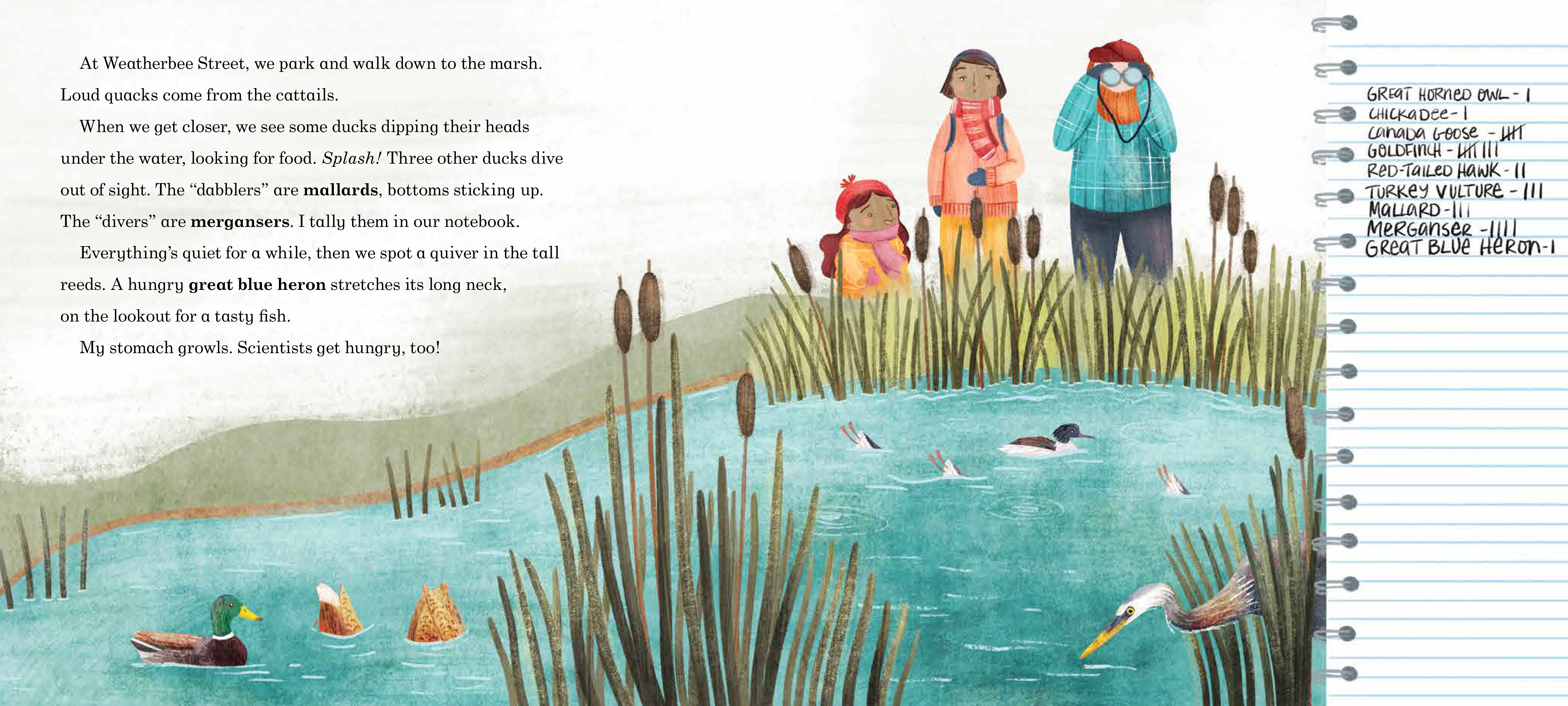
Bird Count_interior-10
Copyright 2019 Susan Richmond and Stephanie Coleman. Reproduced with permission from Peachtree.

A bird can only be counted if at least two people confirm hearing or seeing it, so Ava must pay close attention with her eyes and ears. The singsongy text flies with ease from one page to the next, while young readers can keep abreast of Ava’s bird tally in the page margins. Stephanie Coleman’s deft illustrations of mallards, mergansers, and merlins prove the adage that practice makes perfect: last year she challenged herself to paint one bird a day for 100 days. (See the entire flock here.)

A joyous introduction to birdwatching while also fostering a love of the outdoors, Bird Count will delight fledgling ornithologists as well as wise old owls.


Beatrix Potter Portrait to Appear on Cumbrian Currency

Brexit may be in turmoil, but there is a bright spot to leaving the E.U: being able to print hyper-local money that’s backed by the national government. This year, Beatrix Potter, educational reformer Charlotte Mason, and other notable residents of the English region of Cumbria will grace various denominations of the Lake District pound (LD£), a currency launched there in 2018 to encourage local shopping and promote independent businesses.
“It’s been an amazing year for the project,” said Lake Currency Project founder Ken Royall in a January report by the BBC. Available at Lake District post offices and tourism centers, the currency can be swapped pound for pound with sterling and is accepted at over 350 hundred local and independent shops throughout the Lake District, a region in the northwestern region of England popular with tourists. Over 140,000 LD£S are currently in circulation.
Unlike standard currency which never expires, LD£S is an annual currency. The 2018 batch expired on January 31 but could be exchanged until the end of February for fresh 2019 LD£S notes. Any expired currency becomes found money for the district, helping fund community projects and maintaining the stunning landscapes that make the region such a hot tourist spot.
The Lake District currency is the first paper money issued with Potter’s likeness.The brightly colored banknotes were designed by artists Rebecca Gill and Cumbrian native Debbie Vayanos. Meanwhile, Potter’s charming characters like Peter Rabbit and Squirrel Nutkin have appeared on the British pound since 2016 and are coveted among numismatics. Last August, a coin collector stabbed a man to death and then stole the victim’s coin collection, which included rare Beatrix Potter 50p coins. (The murderer was recently sentenced to thirty years in prison.)
No need for violence here, nor must Potter collectors book a flight to Cumbria to get their hands on these: Lake District Pounds are available online.


Image courtesy of Lake District Currency Project

Yale University’s Planned Renovation of Bass Library Draws Ire from Students

University librarian Susan Gibbons has said in various interviews that the books are being moved to make more studying space available as the student body grows. “I don’t think that, as a result of this project, students are going to have less access to the books — they’re all still here on-campus,” she said in an interview with NPR’s Frankie Graziano.  “But, what they will have access to is more places to actually sit down amongst the books and do that studying.” Gibbons also said that the way students use Bass has changed with the times, citing a decrease in students checking out books for the sciences and math programs, but usage among Humanities majors has stayed the same. According to a recent Yale press release, borrowing among undergraduates has dropped from 40% of total circulation in 2008 to just 13% in 2018.  Coupled with a growing student body, university administrators feel repurposing the stacks into seating would be a better use of the space.
Gibbons acknowledged the enduring importance of books, especially in a library. Yale’s plan for the library going forward includes, as Gibbons said in the press release, “maintaining a more dynamic, up-to-date collection in Bass that will evolve with the addition of new courses and encourage students’ engagement with print books.” That engagement includes what she called a “renewed focus” on books by Yale faculty. “The collection will be smaller, but more vital and relevant.”Opened in 1971, the Bass Library last underwent a $50million-dollar interior renovation in 2007.


Some Yale students aren’t having it. Humanities and philosophy major Leland Strange is leading what he’s dubbed a “browse-in,” a mass check-out of books from Bass to protest the move. Fellow students worry that a denuded Bass will resemble an airport terminal rather than a library. Other students fretted that the whole point of a library is to have access to materials, whether they’re on regular rotation or have never been checked out.


Despite students’ efforts, Yale appears poised to move ahead with the renovation and is expected to be completed by October 1, with a “soft roll-out” planned for late August.

Eye Balm: 10 Bookish Insta Feeds to Put on Your Radar

Special collections libraries, rare booksellers and collectors have embraced Instagram as an ideal platform to virtually share their treasures with the world. Fellow FB&C writer Nate Pedersen wrote the inaugural “rare Books on Instagram” post back in 2016, profiling institutional accounts like those of the British Library (@britishlibrary), the American Antiquarian Society (@americanantiquarian), and others. Follow-up posts looked at librarian accounts and collector feeds. Keeping with that theme, below, in no particular order, are ten noteworthy institutional Instagram accounts that excel at showcasing rare books, manuscripts, and other works on paper.


Don’t have an Instagram account? No problem: All of these accounts are freely accessible to anyone with an internet connection.

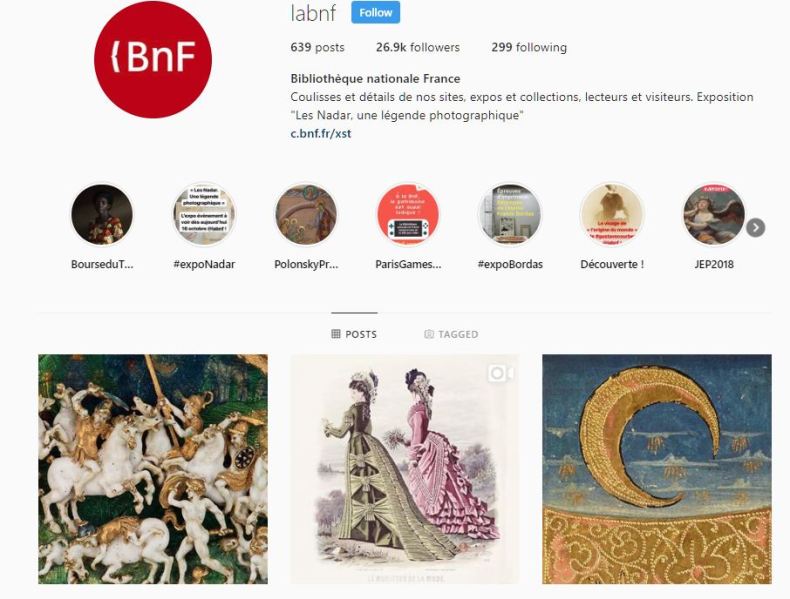
La Bibliothèque nationale France (@labnf)

bnf.JPG


The Barr Smith Library at the University of Adelaide (@uofaspecialcollections)

uofa.JPG


The New York Public Library (@nypl)

nypl.JPG


Musée de Cluny (@museecluny)

museec.JPG


The Harry Ransom Center (@ransomcenter)

hrc1.JPG


The Emily Dickinson Museum (@emilydickinson.museum)

edm1.JPG


The Printing Museum (@theprintingmuseum)

pm.JPG


The HuntingtonLibrary (@thehuntingtonlibrary)

hl.JPG


The Johns Hopkins University (@jhuspecialcollections)

jhu.JPG

The Alaska Digital Newspaper Project (@alaskahistoricalnewspapers)

ak.JPG

Grolier Club Reopens Renovated Exhibition Hall with French Book Arts Exhibit

Today, the country’s oldest and largest bibliophilic society, the New York-based Grolier Club, will unveil the fruits of a three-and-a-half-year, $5-million renovation of the organization’s entire first floor and exhibition hall with, appropriately, a show highlighting the club’s Francophile roots. French Book Arts: Manuscripts, Books, Bindings, Prints, and Documents, 12th-21st Century includes nearly one hundred items pulled from the Grolier’s rich trove of French books and illuminated manuscripts. Also in the show are six items that once hailed from the collection of the “Prince of Bibliophiles” and club namesake, Jean Grolier (1489-1565).


Matisse.JPG

The exhibition and accompanying book were curated and written by Grolier Club member George Fletcher. A member since 1973, Fletcher’s lifelong love of books led him to the Morgan Library as the Astor Curator of printed books and bindings, followed by a position as director of special collections at the NYPL. In 2013, Fletcher was bestowed with the title of Chevalier dans l’Ordre des Arts et des Lettres by the French government. “As the inaugural exhibition in our new gallery, this is the first that presents a survey of so many areas of French bibliophilia, going back to illuminated manuscripts to contemporary livres d’artistes,” Fletcher explained during a press tour. Expect to see sumptuous illuminated Books of Hours, miniatures by Boyvin, a letter by a distraught Thomas Jefferson to a French bookseller concerning a shipment of waterlogged books, and decorative bindings hailing from the 14th to the 21st centuries.
1.59 Grolier Homer 2.jpeg


As to the renovation: it’s a complete overhaul. Previously, the first floor exhibition hall was awash in mauve-toned walls, light wood flooring, and track lighting (see below). Standard-issue glass cases lined the walls while the back of the hall was dominated by a faux-Palladian window, also mauve. The upper balcony, where many of the Grolier Club’s treasures are stored, was flanked by white solid-wood railings. With a client portfolio that includes renovations at places like the New England Conservatory of Music and Boston Symphony Hall, Ann Beha Associates of Boston took up the challenge to update the aesthetics of the space while also addressing conservation issues, lighting, ventilation, and sound systems.


Grolier Old.JPG

“The Grolier Club put together a nine-member design team task force, and together we examined various issues while also keeping in mind the club’s history and stewardship of collections,” explained Ann Beha at the press preview. “Part of the preparation included hopping in a van and visiting other institutions throughout New York that had also recently undergone renovations, such as the Brooklyn Museum and the Cooper-Hewitt.” Staying true to the Grolier Club’s roots was essential. “The Club prides itself on welcoming the public to free exhibitions and various programs, and this renovation took that into consideration. This design incorporates heritage and technology, welcomes new visitors and promotes scholarship and engagement,” Beha said.


180412_Updated Grolier Renderings (1)_Page_1.jpeg

Now, the exhibition hall features custom-built Goppion glass cases lit by LED bulbs, a properly balanced ventilation system, and mahogany-stained floors and wall panels. Gone is the mauve Palladian faux paneling in favor of a multi-paneled video wall, and the wood paneling on the upper balcony has been replaced with glass, allowing visitors on the ground level to fully appreciate the impressive surroundings. Plus, the Grolier’s 60th Street townhouse is handicapped accessible. The hall feels more open and inviting, yet still suffused with the tradition and history of the space. In short: Beha seems to have hit a home run. (Professional photos are being shot Monday, so check back here for images shortly.)


The club invited members earlier this week to tour the hall before it opens to the public as well as to listen to a lecture given on Wednesday night by Carla Hayden, the current Librarian of Congress.
Just as Jean Grolier was known to share his library and its treasures with friends, the public is welcome to revel in the richness of human ingenuity and talent and the newly redesigned hall, too. As an added incentive, Mr. Fletcher will be offering free lunchtime tours of the exhibition today, December 19, and February 1, all from 1-2 p.m. No reservations needed.


Images, from top: Florent Rousseau Binding On:Printing for Kingdom, Empire, and Republic: Treasures from the Archives of the Imprimerie Nationale. Ed. H. G. Fletcher New York, The Grolier Club & Paris: Imprimerie Nationale, 2011; Matisse in a Brugalla Binding Henry de Montherlant. Pasiphaé : Chant de Minos (les Crétois) Gravures originales by Henri Matisse Paris : Martin Fabiani, 1944; Homer. Opera (Greek). Two volumes Venice: Aldus Manutius, after 31 October 1504. Both Collection of The Grolier Club and reproduced with permssion; Grolier Club Exhibition Hall pre-renovation reproduced with permission of Grolier Club; Renovation rendering reproduced with permission of Ann Beha and Grolier Club. 

The Holiday Round-Up: Books for All!

Yes, ’tis the season for frantic holiday shopping, unless you’re one of the rarefied people who check everyone off your list during those Christmas in July sales. If you’re more of a last-minute shopper, there’s still time to ace your gift-giving game this holiday season with a carefully selected title or two.  Below, our top picks for the bibliophile in your life. Get ’em while the gettin’s good!

The Folio Society Black Beauty cover shot

Black Beauty, by Anna Sewell, illustrations by Annette Hamley-Jenkins; Folio Society, $53.95, 224 pages.

Originally published in 1877, Sewell’s bestselling tale championing fair treatment for working horses in Victorian-era England gets the sumptuous Folio treatment with lush, full color illustrations by Annette Hamley-Jenkins and an introduction by War Horse author Sir Michael Morpurgo. This edition of Black Beauty comes in a handsome blue slipcase printed with horses galloping across in silhouette. This is the gift that keeps on giving: a timeless story, beautifully presented.

Please note: Folio Society’s order deadlines to make Christmas delivery are December 8 for standard shipping and December 14 for express.

(Images copyright 2018 Annette Hamley-Jenkins and reproduced with permission from Folio Society. )

This slideshow requires JavaScript.

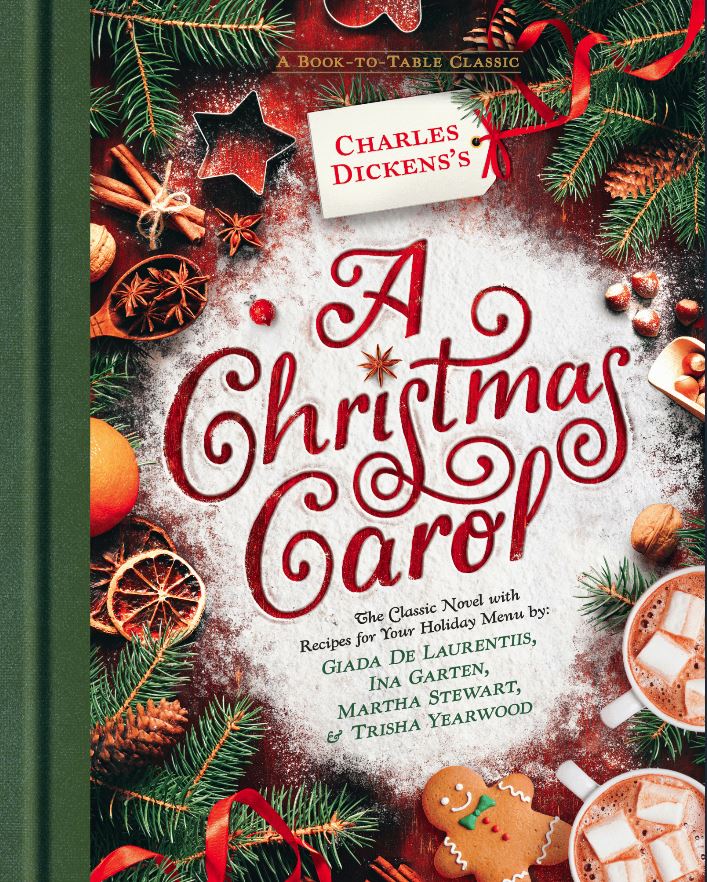
Charles Dickens’s A Christmas Carol: The Classic Novel with Recipes for Your Holiday Menu by: Giada de Laurentis, Ina Garten, Martha Stewart, and Trisha Yearwood; Puffin Plated, $25.00, 168 pages.

Carol

Is there any better combination than a good book and a good meal? Perhaps a frothy brew, but I digress. Puffin Plated, a new endeavor launched this fall by Penguin Random House, recently released A Christmas Carol by Charles Dickens, unabridged and accompanied by mouth-watering photographs (by Tisha Cherry and Vega Hernando) of fruitcakes, gingerbread, and other holiday treats.  Delectable recipes come courtesy of culinary giants like Ina Garten and Martha Stewart. (Looking for a non-denominational gift? Pride and Prejudice also got the Puffin Plated treatment and is filled with sugary sweet confections.)


This slideshow requires JavaScript.

(Images reproduced with permission from Penguin Random House.)

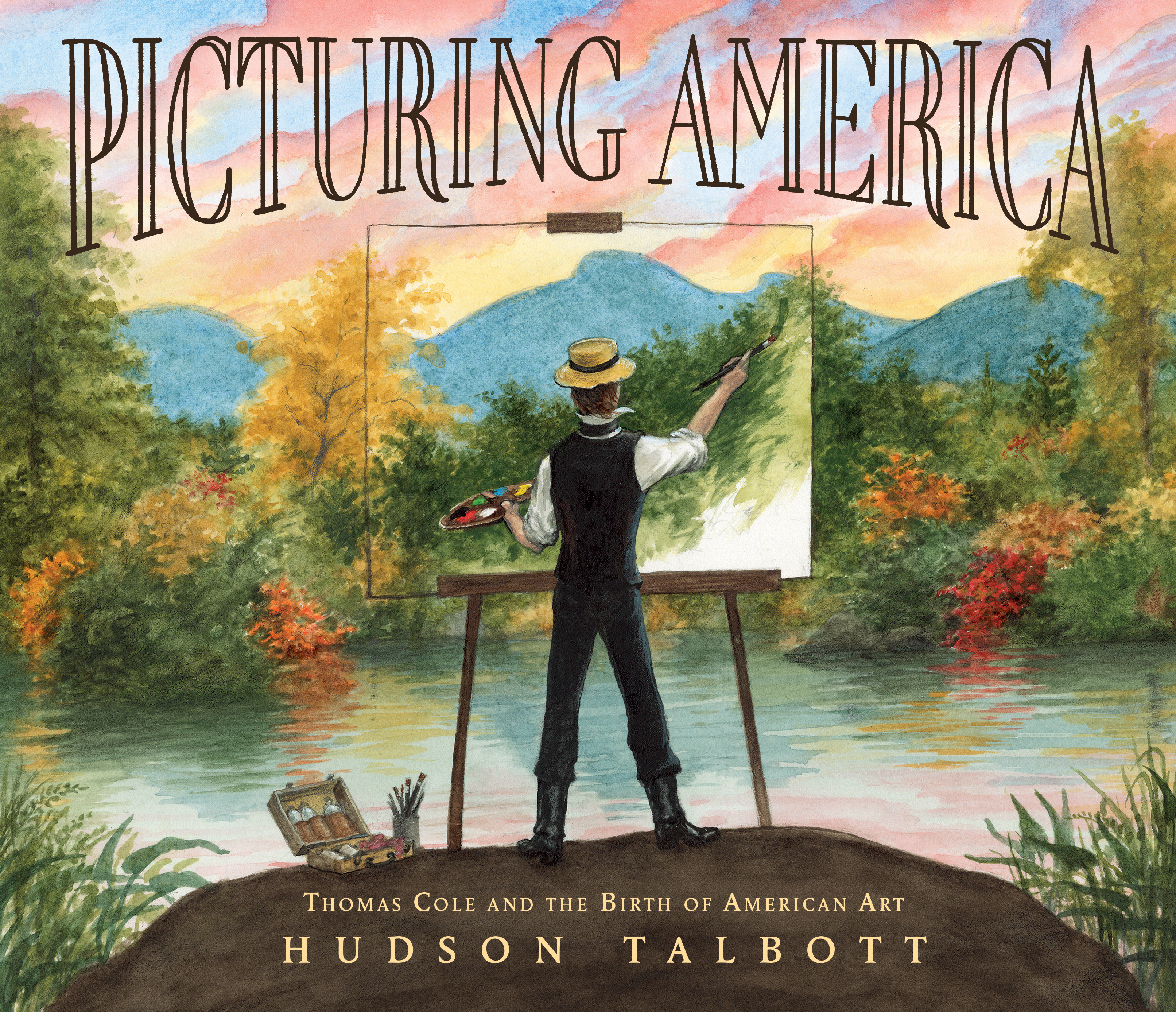
Picturing America: Thomas Cole and the Birth of American Art, by Hudson Talbott; Nancy Paulsen Books, 32 pages, ages 4-7.

Picturing America cover

“The painter of American scenery has, indeed, privileges superior to any other. All nature here is new to art,” wrote Thomas Cole (1801-1848), the father of the Hudson River School of painting and the patriarch of the young country’s first art movement. Here, author-illustrator Hudson Talbott introduces readers to a man who was at once an immigrant, an artist, and an environmentalist by weaving elements from some of Cole’s most iconic paintings into the book. A perfect gift for budding naturalists with an artistic streak.


This slideshow requires JavaScript.

(Images copyright 2018 Hudson Talbott and reproduced with permission from Penguin Random House.)

Hansel & Gretel, by Bethan Woolvin; Peachtree Publishers, $16.95, 32 pages, ages 4-8.

hansel

Bethan Woollvin is back with another twisted fairy tale. Now, the author of Little Red and Rapunzel has concocted a revision of the Grimm brother’s classic story of two siblings forced to outsmart a cannibalistic old witch. As in her previous adaptations, Woollvin’s Hansel & Gretel takes a surprise turn, with Hansel and Gretel as sassy brats and the witch (named Willow) cast in a more benevolent role. To be enjoyed fireside with a heaping plateful of tasty gingerbread cookies.


This slideshow requires JavaScript.

(Images copyright 2018 Bethan Woollvin. Reproduced with permission from Peachtree Publishers.)

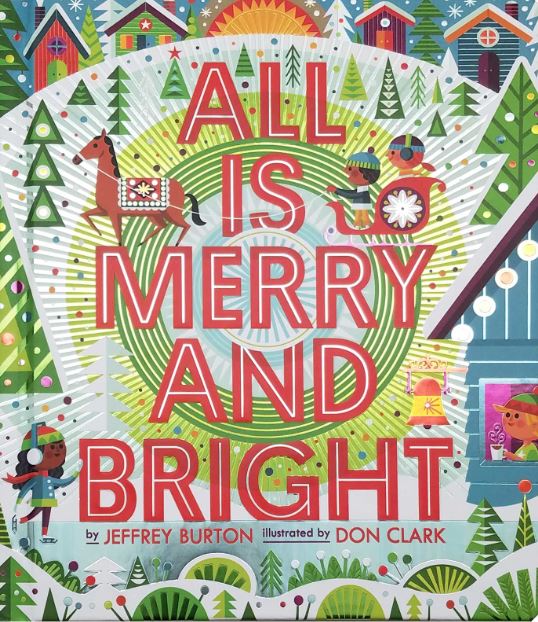
All is Merry and Bright, by Jeffrey Burton, illustrated by Don Clark; Little Simon, $24.99, 26 pages, ages 0-4.

merry

Get the littlest revelers into the holiday spirit by offering them this oversize board book by Jeffrey Burton and Don Clark. The retro volume, complete with sparkly foil and embossing on every page is a joyous celebration of Christmas. Sensory overload in the best sense awaits the tiny tots who find this book tucked under their tree this year.


This slideshow requires JavaScript.

(Text copyright 2018 Jeffrey Burton. Illustrations copyright 2018 Don Clark. Reproduced with permission from Simon & Schuster.)