Julia Pimsleur-Levine

Interview with Julia Pimsleur-Levine, CEO of Little Pim

            Julia Pimsleur-Levine, founder and CEO of the Little Pim language program, spoke to me from her Manhattan office about her business, love of languages, and being a ‘mompreneur.’ 

image

photo credit: Jean-Luc Mege

Mompreneur

          Pimsleur-Levine considers herself part of a growing group of female CEOs and business-owners who actively and successfully balance work and home commitments.  She considers ‘mompreneurs’ essential innovators in the marketplace.  “It’s a fabulous term. There’s a growing group of women who look out into the marketplace and see there’s something lacking for their own children and then they go out and create it.” The realization came quickly that she would have to create her own language program after searching for an effective and entertaining way to teach her firstborn son French. The search was fruitless – there was nothing on the market that catered to the youngest demographic. “I created Little Pim for my oldest child. I think – like many women – I sat there for a few months and said, ‘Gee someone should really make something for parents who want their children to learn a foreign language.’ Then I realized that someone should be me.”    

           Pimsleur-Levine began developing the Little Pim program in 2007 while her son was a toddler. She recalled how the harshest critics are often those still in diapers.  “Toddlers are your most unforgiving audience because if they don’t like something they just stand up and walk away.” This proved to be constructive feedback for her. Pimsleur-Levine worked with award-winning animators, language advisors and neuroscientists to create the language-learning program. “We made sure that we created something that was as engaging and entertaining as it was as educationally sound,” said Pimsleur-Levine.  “Both those pieces were really important to me.” The Little Pim franchise is now in its fourth year of sales and offers twelve languages ranging from French to Arabic to Chinese. 

Pim the Panda

            At the core of the program is an adorable panda named Little Pim who acts as the friendly and engaging catalyst for language acquisition.  How did Pimsleur-Levine choose this animal? “Well, I have to credit my mother for that. She came up with the idea for a panda. It was a much less popular animal at the time. Now you see pandas everywhere.  But it was a little more rare then. And we liked that babies see black and white better than color at first. Since pandas are from China, we knew that children would be inquisitive about the origins of the panda. That way they’re already learning about another language and country.”  Each DVD is centered around a theme such as eating, playtime, and sleeping, and each video is broken down into five-minute segments to accommodate the attention span of babies and toddlers.  The program’s success can be measured in the accolades it has received from parents as well as educational organizations – Little Pim has won twenty-five awards over the past four years. Looking to the future, Pimsleur-Levine plans to transition the program to exclusive digital content, creating digital downloads of all the language programs and offering e-books that currently accompany the videos in traditional book format. 

Baptême du feu

            Born in New York, Pimsleur-Levine’s family moved to Paris when she was six. Her father, Dr. Paul Pimsleur, had been invited to the Sorbonne to share his successful audio-based language learning method.  Ms. Pimsleur-Levine and her brother arrived in Paris not knowing how to speak French.  Yet two months after enrolling in the local public school the children were fluent.  Being the only Americans in the school was a culture shock, as Pimsleur-Levine recalled those early days.  “It wasn’t an easy experience. The other schoolchildren had never met Americans before, so we were like objects of curiosity. While I complained bitterly about it at the time, I now feel grateful for the gift that my parents gave me. Now that I’m a parent I see many moments like that.”

            Complete cultural immersion imparted Pimsleur-Levine with a lifelong love of all things Francophone.  She even moved back to Paris after graduating from Yale to pursue a career in filmmaking. Pimsleur-Levine credits fluency in French as a major advantage to this stage in her career. “I love languages – especially French, and as soon as I graduated from Yale I moved to Paris. I lived there for seven years and went to the French National Film school and got my MFA there.  It was a huge advantage to already be bilingual.” As a filmmaker Pimsleur-Levine made documentaries that would eventually be broadcast on HBO and PBS. 

Tricks of the Trade

            Parents who don’t speak another language can help their children learn a second language using the Little Pim language method. Pimsleur-Levine uses Chinese as an example. “I think we’ve hit a cord because there are so many non-Chinese speaking parents who want their children to become familiar with the language. One of our core principles at Little Pim is that we want all of our products to be accessible to parents who don’t speak the language.  And so that’s where we’ve really filled the niche.” Often, learning a second language intimidates parents, and Little Pim’s goal is to allay some of that anxiety.  “Parents often don’t know where to start, and they find our product, which presents the language to their kids with a perfect accent.  We’ve made it very easy and you don’t have to be Chinese to offer this to your children.”

            For parents concerned that their children may not use the language, Pimsleur-Levine offers sage advice.  "You often have a higher degree of receptive comprehension rather than expressive ability. Meaning they understand a lot more than they speak.“ While at first a child may not seem to be learning a language, there is solace in knowing that offering language instruction to young children is a great gift. "The way I see it, we’re giving them a solid foundation, but children don’t yet see all the advantages of speaking a second language.  That comes later when they travel to another country or when they have their first cognitive experience using the language. I think more kids step up speaking when they have that base.”  

Normal
0
0
1
96
549
4
1
674
11.1539

0

0
0


Book Launch at Jill Newhouse Gallery

MANHATTAN, Friday January 18 —

Last night, despite the plummeting temperatures, I attended a launch for a book of poetry called The Living and the Dead, written by Mario Luzi. Dana Gioia, himself a poet and former chairman of the National Endowment for the Arts, translated this edition. The line drawings were rendered by internationally acclaimed artist Fulvio Testa. Both men were there to discuss the book, their inspiration, and even read a poem to the crowd. Also present was Michael Peich, founder of the Aralia Press, which published the book.  Two editions were available for purchase, one regular edition bound in red cloth boards and printed on Zerkall paper, and another deluxe edition on handmade Tovil paper, with hand-colored drawings by Testa and quarter-bound in leather. The Jill Newhouse Gallery was a warm venue, and many thanks to Gallery Director Christa Savino who explained to me the gallery’s display of Master Drawings. Beautiful books, art, and lively company were a wonderful remedy to melt away winter’s icy grip. 

Midweek gem

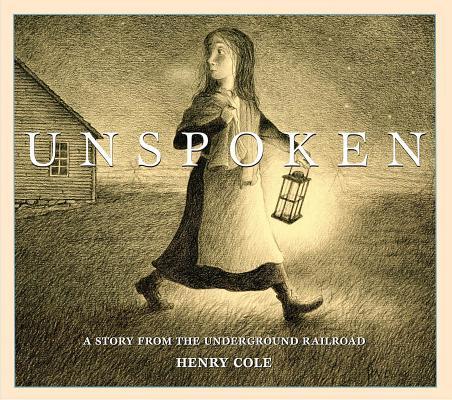
“Unspoken; A Story from the Underground Railroad,” by Henry Cole, Scholastic Press, 40 pages, $16.99 ages 4 and up.

  image

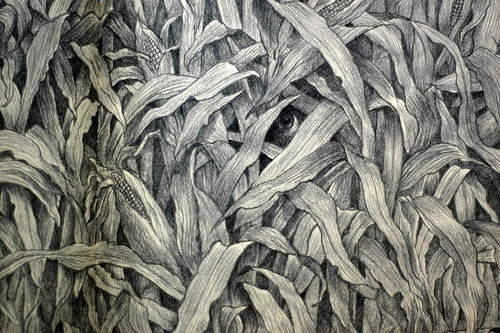
Sometimes the most profound stories are wordless. Here, author-illustrator (and former schoolteacher) Henry Cole renders a tense and moving tale of the Underground Railroad with full-page graphite on charcoal paper illustrations. The weighty, sepia toned palette indicate that this story will challenge young readers’ understanding of right and wrong.  In a barn on her family farm, a young girl discovers a runaway slave.  Despite the presence of bounty hunters, she chooses to help this person find freedom.  The reader never sees the runaway; rather we see the slave as the girl does – as a wary eye peering out of a bushel of corn.  (There are hints in the images that the stranger may be a child.) In the end notes, we learn that the inspiration for this tale came from family members who told Civil War stories around the dinner table at the Cole dairy farm in Purcellville, Virginia. Unspoken will generate valuable discussion and interest about compassion under pressure while showing that courage is never limited by age, gender or race.

image

Why Write

imageI struggled this week to find purpose to what I do – how do I continue writing children’s book reviews in the wake of last Friday’s unspeakable tragedy? I couldn’t sit at my desk and find anything relevant, soothing, even angry, to write.  So I called my parents. My mother, after reflecting awhile, had the answer. We face a new world. Children will now likely grow up where no location can offer complete sanctuary.  Yet, there is one place, my mother reasoned, where children will still be able to escape, and that is in the world of books.  Fortified with this sound logic I share with you those books that I hope will bring joy and happiness to those who need them the most. 
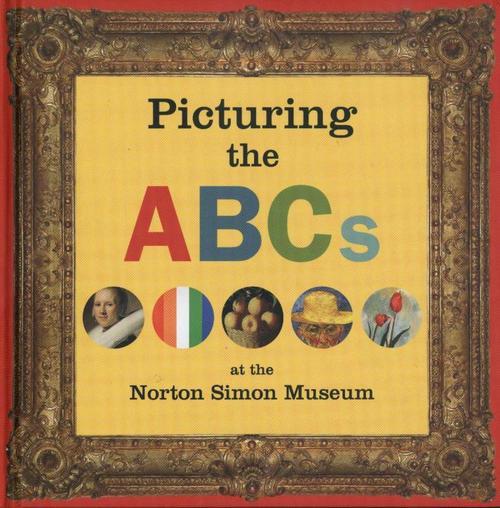
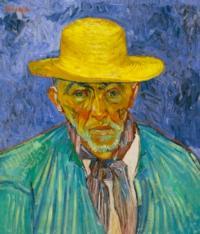
“Picturing the ABC’s at the Norton Simon Museum,” created by the Norton Simon Education Department; 108 pages, Norton Simon Museum, $15.00, ages 3-5.

image 


imageThe first book developed by the Education Department at the Norton Simon Museum in Pasadena, California is a striking alphabet hardback that will make a sophisticated holiday gift for any art aficionado. Twenty-six die-cut images were selected from over 4,000 objects housed in the Norton Simon Museum. The museum was originally part of the private collection of business mogul Norton Simon, founder of the eponymous corporation whose holdings include Hunt, Max Factor cosmetics and Avis Car Rental. Images in the book include masterpieces by artists such as Degas, Cézanne, Rembrandt and Manet. Children will enjoy the peek-a-boo cutouts (“H is for/ Hat”) then turning the page to reveal the entire image. 
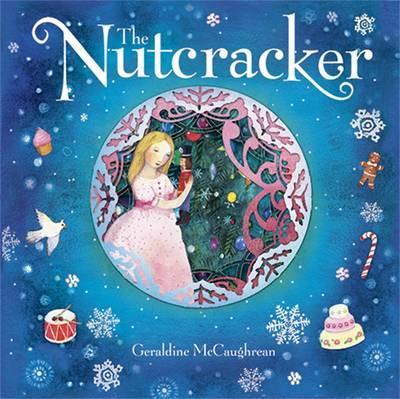

“The Nutcracker; A Magic Theater Book,” by Geraldine McCaughreaen, illustrated by Kristina Swarner; 24 pages, Chronicle Books, $19.99, ages 5-7.

 image

This is the time of year when visions of sugarplums dance in the minds of young and old alike. This inspired rendering of Tchaikovsky’s ballet captures the whimsy and charm of the spectacle. Carnegie medal winner Geraldine McCaughrean condenses the story into 24 exciting pages. The story almost takes a back seat to the outstanding and glowing three-dimensional mixed-media illustrations rendered by Kristina Swarner. Paper engineering allows Marie and the Nutcracker to skip and leap off of the pages, which will no doubt charm young and old alike.

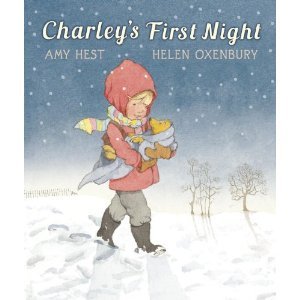
“Charley’s First Night,” by Amy Hest, illustrated by Helen Oxenbury; Candlewick Press, 32 pages, $15.99, ages 4-6.

image

Harry carries cuddly Charley home on a cold winter day, and so begins a lifelong love between a boy and his faithful pooch.  Charley is only a puppy, but Henry is gentle and cares for his charge like any doting parent would.  Amy Hest’s story flows beautifully, making the tale a joy to read aloud.  As always, warm and inviting illustrations by Helen Oxenbury invite the reader into this wintry wonderland. 


Interview with Fulvio Testa

Interview on November 11 2012 at the Waldorf Astoria NYC

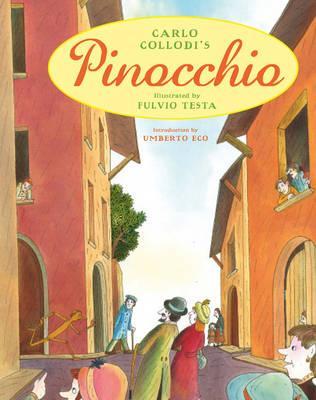
Introduction to “Pinocchio” by Umberto Eco, “…it’s not even a fairy tale, since it lacks the fairy tale’s indifference to everyday reality and doesn’t limit itself to one simple basic moral, but rather deals with many.” 

image

       On Veteran’s Day a couple weeks ago, the internationally acclaimed children’s book illustrator Fulvio Testa sat down with me over tea in the Peacock Bar at the Waldorf Astoria to talk about his ground-breaking work for Geoffrey Bock’s new translation of Carlo Collodi’s Pinocchio.  The wide-ranging conversation inevitably led to a discussion of his artistic philosophy regarding children’s book illustration in general, and how he can’t get New York out of his mind.  

Focus and Rhythm

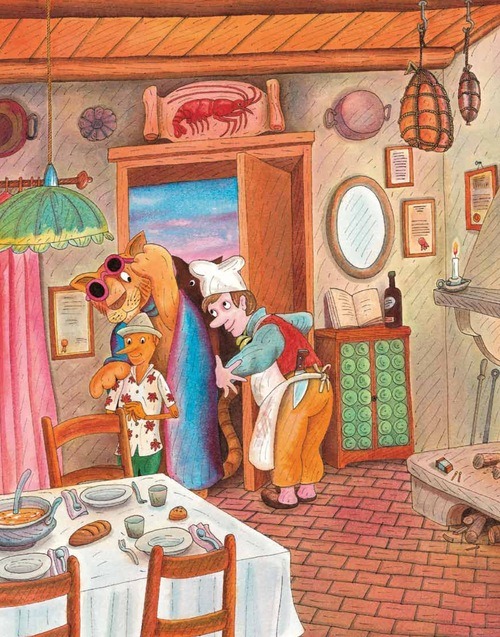
         For this project, Testa told me how he created a special storyboard that allowed him to keep constant track of the visual and literary levels he was trying to maintain. During the process, he constantly asked himself, “How can I get readers to understand the story simply by creating an image? There are two ways that I might create an image, either one image with two stories, or one large edited image.” To choose the right scenes for Pinocchio, Testa outlined places where he felt the images would best compliment the text, and read the book repeatedly in order to completely grasp the flow of action.  Perhaps equally important to the actual artwork itself, he added, is the pacing and the precise location of where an image is placed in a printed book. “There are fifty-two images in this book, and they are relatively close together. I try to create a rhythm to the illustrations,” meaning that each picture represents a pivotal moment in the story, and in Pinocchio most chapters either end or begin with an illustration. The flowing imagery allows the reader to maintain a steady pace, while creating pauses in the storyline and breaking the text into manageable parts. 

Action and movement

         At first glance the art for Pinocchio appears lighthearted and buoyant, however Testa’s work is in reality quite dynamic.  To show where the action lies in what appears to be a passive image, Testa pointed to an illustration in the book. In it, Pinocchio stands at Geppetto’s worktable and argues with the Cricket. “Some images are deceptive. They look approachable and friendly, but an older reader will see some of the darker aspects at work here. Look at the table. Pinocchio’s hand is very close to the mallet, which he will pick up shortly and throw at the Cricket, killing him. This is a triangle of violence here.”  This  is not simply a picture of a quarrel, but a violent avant scène, and yet is still an image that is appropriate for children.  “Children need action to convey a story of experience through repetition,” which may be why, in Pinocchio,Testa has filled the pages with the scurrilous puppet in all manner of situations, from skipping school to facing a fearsome serpent. Testa also believes that in order to be successful at his craft, a part of him must retain a childlike understanding and appreciation for the world.  “To illustrate, an illustrator needs to have a part of himself that hasn’t grown up yet,” Testa explained. “I have to be willing to re-experience pain, rejection, joy, and other emotions, as if for the first time.”

Fables

         Just as parents once used Pinocchio as a way to teach social and moral values, fables are equally important today in constructing a moral compass for children. Testa illustrated an edition of Aesop’s Fables, and finds their universal qualities a captivating way to educate young minds. “Through these stories there is a possibility to acquire a social sensibility.” He views his illustrations as an educational tool because they show how to deal with society from a children’s point of view, which is often more effective than an adult telling a child what is right and what is wrong. There is historical precedent to this approach going back to the nineteenth century, when < em>Pinocchio was first published.  Before there was mandatory schooling, children’s books were crucial teaching tools. Carlo Collodi originally published Pinocchio in installments and he initially intended to end the book with the death of the unfortunate puppet.  Indeed, the illustration that closes chapter fifteen shows Pinocchio strung up and hanging from a large oak tree.  The puppet survives the hanging, and continues on his adventures. 

image

Early Biography

         Born in 1947 in Verona, Italy, Fulvio Testa grew up believing he would become  an architect.  In 1968 he went to Florence, where he enrolled as an architecture student. Testa began traveling extensively throughout Europe in 1970.

         Eventually Testa met Štěpán Zavřel, a Czechoslovakian refugee and children’s book illustrator who in 1959 had escaped communism and fled to Italy.  Zavrel became Testa’s mentor and advised him to illustrate children’s books. Testa took his advice and discovered that he had a gift for creating images that speak directly to children. In 1971 Testa presented his first work, illustrations for H.C. Andersen’s The Nightingale to a Japanese publisher. The publisher rejected it only because the illustrations were in black ink. The book was published three years later – with colored illustrations. “I have cultivated my reputation [as a children’s book illustrator] since the beginning,” he said. In 1982 he began working with Dial Press, then branched out to other publishing houses. Since the 1970’s Testa has illustrated dozens of books and authored many of his own. 

New York

            Since 1981 Testa has divided his time between New York City and Verona in six-month intervals. The winter months are spent in his Uptown studio where he works on watercolors and etchings. His time in Italy is devoted to oil painting. “Watercolors require resolute design perspective,” he said, and like many artists, he finds the rhythm of the city to be an excellent inspiration no matter what the subject matter.  Oil paintings, like the suite of landscapes he showed recently at the Jill Newhouse Gallery in Manhattan, demand a distinctive focus.  “Oil is a different medium. It requires a longer drying process.” Sometimes Testa has ten oils in process simultaneously. Although he paints his dreamy abstract oils in Verona, Testa believes he would never be able to create them if he didn’t live in New York and absorb firsthand the vibrancy of the city that never sleeps. 


Odd Love

“Otter and Odder; A Love Story,” by James Howe, illustrated by Chris Raschka; Candlewick Press, $14.00, 40 pages, ages 5-7.

An otter falls in love with a fish that he might normally consider eating, and so begins this tale of discovering l’amour and the challenges of keeping an unlikely love alive.  Author James Howe’s hallmark read-aloud style (for which he won the E.B White Read Aloud award for 2007’s “Houndsley and Catina”) is in top form, with breezy, rolling, flowing lines of poetic prose: “But when Otter gazed into those eyes – those round, sweet, glistening eyes, he knew that he had found what he had not known he was looking for.”  Subtle humor throughout ensures that adults reading this will also smile during Otter’s journey to be with his beloved Myrtle.  Standout pencil on watercolor illustrations are by Caldecott Medal winner Chris Raschka (“A Ball for Daisy”). They are deceptively childlike, almost appearing to have been completed on a whim. Yet closer examination reveals a master at his craft, who brings together elements of fanciful expression in vibrant hues and layers of texture that will appeal to multigenerational readers. 

Thanksgiving Quick Pick

The holiday rush begins early, so here’s a bright book that will keep little ones entertained.  

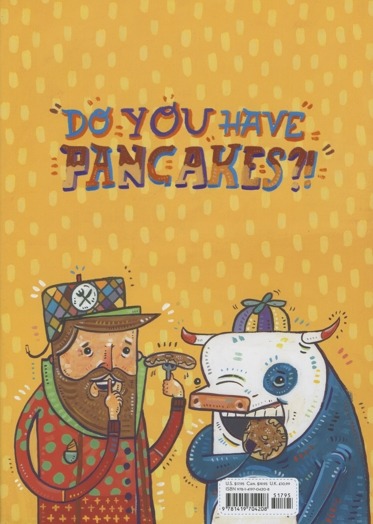
“Paul Bunyan and Babe the Blue Ox: The Great Pancake Adventure,” by Matt Luckhurst; Abrams Books for Young Readers, $17.95, 48 pages ages 4-6. 

Matt Luckhurst’s debut children’s book spins a classic North American folktale about the giant man and his equally enormous blue ox by weaving joyful hand lettering with bright gouache illustrations.  The adventurous duo travels across the country on a gastro-quest that leads them to reshape the Rockies and carve the Grand Canyon. Luckhurst’s research, which the author discusses in a lovely end note, informs a story that stays true to to the myth of Paul and Blue.  The book is an ode to insatiable appetites and reminder of those early Americans whose pluck and ingenuity helped shape the country, two timely themes to consider as we celebrate Thanksgiving.  

Sometimes, a bowl of soup is perfect, except when it’s not.

“Happy Harry’s Café,” by Michael Rosen, illustrated by Richard Holland; Candlewick Press, $16.99 32 pages, ages 3-5. 


English poet Michael Rosen (“We’re going on a Bear Hunt”) takes a classic Jewish joke  and crafts a quirky rhyme around it in this warm and toasty picture book.  Harry, who appears to be a polar bear, makes the best soup in town. Ryan the Lion, Jo the Crow, even Matt the Cat rush in to taste this perfect potage.  “Take it easy!” Harry admonishes his hurried customers, but perhaps Harry has taken his own advice once too often. One day Matt the Cat says the soup is no good, and from there develops the gag to its quirky punchline. Rosen’s easy to follow rhymes are printed in large type which resemble woodblock cuttings. This allows budding readers to pick out words like “soup” and “spoon” on their own. Veteran illustrator Richard Holland’s mixed-media illustrations are whimsical and fill each page.  “Happy Harry’s Café” is great for reading aloud. This story, like a good bowl of lentil, chicken noodle, or matzo, will totally satisfy and warm the spirit on a cold winter day. 

Frankenstorm Reads!

With the pending arrival of the “Frankenstorm” here on the East Coast, parents may find themselves homebound this Halloween. Perhaps these spooky titles will help weather the storm.  If we could hand out books instead of treats on Halloween anyway, we would tuck these into outstretched bags instead of candy.

“The Itsy Bitsy Spider,” illustrated by Richard Egielski, paper engineering by Gene Vosough; Atheneum Books, $19.99, 12 pages, ages 2-4.

Millions of people on the East Coast will likely experience the effects of Hurricane Sandy this week, so why not read about a spirited little spider in baseball cap and overalls who also faces an oncoming deluge.  This version of the classic hand rhyme gets an update with the arachnid climbing up the side of a building in a bustling downtown area constructed just for insects – salt shakers and teapots are transformed into apartment buildings, and bright daisies are the towering flora in this neighborhood.  Caldecott-winner Egeilski’s charming illustrations jump off the page with the help of paper engineer Gene Vosough, whose other books include “Take Me Out To The Ballgame” and “Here Come the Firefighters.” 

image 

“Icky Sticky Monster,” by Jo Lodge; Nosy Crow Press, $12.99, 12 pages, ages 3 and up.

“Icky Sticky Monster has an itchy nose. He pokes his grubby finger in – and all around it goes!” And so go the exploits of this “super yucky” monster in this delightfully disgusting pop-up book. Preschool children will delight in searching for the monster’s whereabouts in the overflowing potty and will squeal when he guzzles a jug of cabbage juice spiked with bits of slimy slugs.  Five pop-ups in blindingly neon hues accompany rhymes about this revolting, nose-picking, garbage rummaging blue troll. Bestselling author and paper engineer Jo Lodge has crafted a bright and quick reading romp that harnesses the power of all things smelly and grimy to entertain young readers. 

“The Monsters’ Monster,” by Patrick McDonnell; Little, Brown & Co, $16.99, 40 pages, ages 4-7.

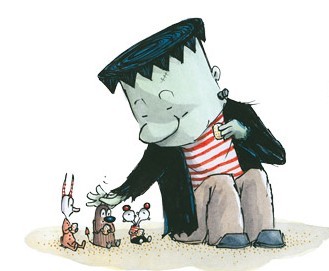
While parents may tire of “Icky Sticky Monster” before their children, both parties will enjoy  “The Monsters’ Monster” over many reading sessions. Patrick McDonnell, Caldecott honor winner and creator of the syndicated comic strip MUTTS , crafts a story of three self-described “bad” monsters whose ambition is to breathe life into the meanest monster who ever lived. Wreaking destruction and striking fear into the local villagers may be the trio’s ultimate goal, but Monster has other, less dastardly plans that involve pats on the head and jelly doughnuts. Indeed, this green giant bounds around the village repeating the phrase “Dank You,” to everyone he meets.  Adults will pick up on the “Frankenstein” send-up, from the bolts and wires sticking out of Monster’s body to the green skin-tone to the life-giving bolt of lightening.  A story of gratitude makes “The Monsters’ Monster” a timeless tale that will carry this book from the Halloween reading rotation throughout the rest of the year.

 image

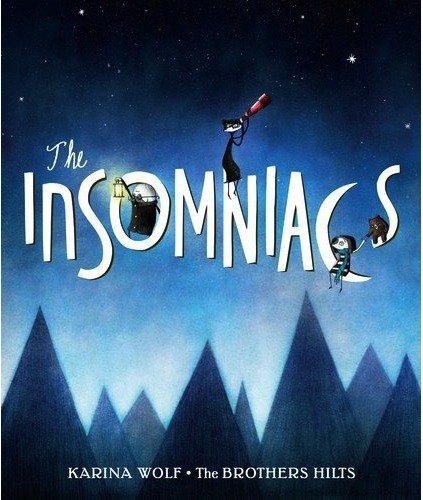
“The Insomniacs,” by Karina Wolf, illustrated by Ben and Sean Hilts; Putnam Juvenile, $16.99, 32 pages, ages 4-6.

image

Normal
0
0
1
137
781
6
1
959
11.1539

0

0
0

Mrs. Insomniac takes a job that is twelve time zones away, and her family makes the journey by ship across the cerulean sea to their new home. Unfortunately, the Insomniacs’ internal clocks never adjust to the new place, and the foreigners are stymied by their inability to sleep at night. Exhausted by daytime activities and unable to remedy their nocturnal rousing, the Insomniacs make the bold decision to renounce the day and to become “a nighttime family.” Mother, Father and little Mike blossom and embrace their new world. This enchantingly beautiful tale is a knockout debut picture book by Kira Wolf. A celebration of diversity and quirkiness is treated to moody illustrations of pencil and charcoal courtesy of Ben and Sean Hilts, the fraternal illustrating team who gave “The Insomniacs its decidedly Edward Gorey flair.

image

Normal
0
0
1
16
94
1
1
115
11.1539

0

0
0

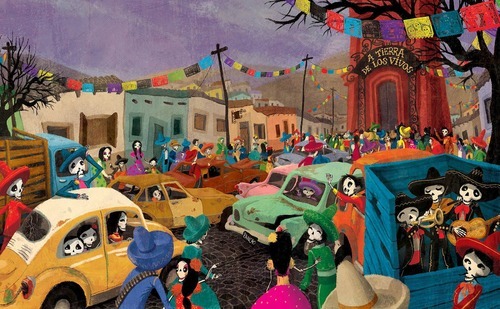
“The Dead Family Diaz,” by P.J. Bracegirdle, pictures by Poly Bernatene; Dial Books, $16.99, 40 pages, ages 5-7. 

image

The Day of the Dead (El Día de los Muertos) is presented from the point of view of the departed but certainly not lifeless participants in this Mexican holiday. Angelito is a plucky bow-tie wearing skeleton boy whose family is preparing to visit the living, and he is unsure what to expect – he’s heard so much about the living’s hot, squishy skin, red tongues and bulging eyes. But perhaps the most frightening of all is that on Halloween, the living carve creepy faces into pumpkins to scare the dead away.  The boy reluctantly joins his family on the elevator up to the world of los vivos (the living) and unknowingly meets a fleshy boy who changes Angelito’s perspective on the yearly trek. Illustrator Poly Bernatene’s digitally saturated images are brilliant, reflecting the same pigments found in traditional Day of the Dead decorations. However, the white skeletons with their dark, hollow eye-sockets and visible spinal columns may make this book better suited to kindergarten-aged children and older. A brief explanation at the end provides helpful background information on the holiday. 

image

The power to inspire children through books

I am so happy to post this story because it is about one of my former students who has chosen to inspire children through reading.  In October 2011, Paul Naanou, then a junior at the Thomas Jefferson High School in Alexandria, Virginia, organized an event called “Destination Text-ploration.”  The event was coordinated through an after school club called Book Buddies, whose ongoing mission is to encourage children from kindergarden through sixth grade to discover the magic and joy that comes from reading. Around eight hundred children from Fairfax County participated in book readings, author interview sessions and culture demonstrations. Book Buddies also gave away over two thousand new books to enthusiastic new readers.  

The event was such a success that a second event is scheduled for this December.  Below are links to two videos put together by Fairfax County.  

Bravo and good luck to Book Buddies for the upcoming festival! I hope you continue to help unlock the secrets and the power of curling up with great books.  

http://www.youtube.com/watch?v=Mne9sgvUi-E

http://www.youtube.com/watch?v=twdI0hB2Lzs