Stand There! She Shouted: The Invincible Photographer Julia Margaret Cameron, by Susan Goldman Rubin, illustrated by Bagram Ibatoulline; Candlewick Books, $16.99, 74 pages, ages 12 and up.
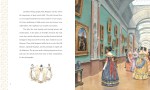
Born in India, raised by her grandmother in France, married at age twenty-two to a man nearly double her age, Julia Margaret Cameron defied the odds to become one of the most prolific photographers of the Victorian era. Veteran children’s book author Susan Rubin (Andy Warhol: Pop-up Painter; Edward Hopper; Painter of Light and Shadow) has crafted another outstanding biography of a globally admired artist. Cameron didn’t touch a camera until almost she was fifty years old, and her unorthodox technique for taking portraits became her hallmark for which she is recognized as one of the greatest photographic portraitists ever. Rubin’s fascinating biography is accompanied by Bagram Ibatoulline’s sumptuous acrylic paintings, evoking a world full of excitement and adventure. Several of Cameron’s portraits are interspersed throughout the text as well. Complete with bibliography and a list of museums displaying the photographer’s work, Stand There! is an eloquent testament to a pioneer’s life behind the lens.
Seeds of Freedom: The Peaceful Integration of Huntsville, Alabama; by Hester Bass, illustrated by E.B.Lewis, Candlewick Press, $16.99, 30 pages, ages 6-10.
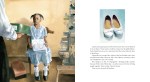
While violent protests and confrontations marked a large part of the American civil rights movement, many communities chose nonviolent activism, such as the citizens of Huntsville, Alabama. Author Hester Bass (The Secret World of Walter Anderson) tells the story of the summer of 1963 and how Huntsville’s black community used creativity and problem-solving to combat racism rather than fighting and rioting. Starting in January 1962, Bass sets the stage by exploring the inequities between the black and white communities – black children must carry pictures of their feet to shoe shops because they aren’t allowed to try on merchandise, and black families are routinely locked out of restaurants. Slowly, like the first signs of spring, people act – black men and women eat at diner counters and frequent bowling alleys and public parks reserved for whites. The real test comes in September 1963, after a summer of peaceful demonstrations, when schools are federally mandated to desegregate. Will the school doors remain locked? Bass’s rhythmic, sonorous writing weaves this important moment in American history, while Coretta Scott King award-winning illustrator E.B. Lewis’s watercolors evoke the pain and struggle of people working together to be free. Complete with an informative author’s note (Bass spent a decade in Huntsville) and carefully curated bibliography, this is an excellent introduction to the civil-rights movement for elementary-aged students, and sucessfully champions the notion that people can change without resorting to violence.
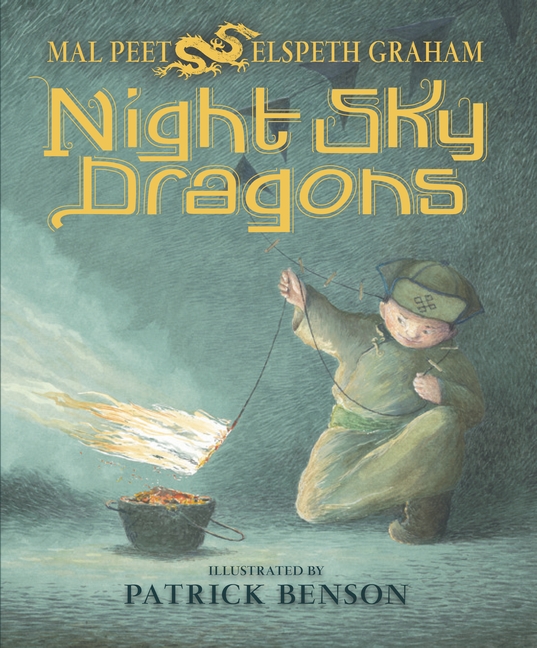
Night Sky Dragons, by Mal Peet & Elspeth Graham, illustrated by Patrick Benson; Candlewick Press, $15.99, 64 pages, ages 5-8.
Husband and wife team Mal Peet and Elspeth Graham (Mysterious Traveler; Cloud Tea Monkeys) share another story set in a far away place in another time. Yazul lives in a han, a walled roadside inn along the Silk Road, and his father is its lord. The young boy spends most of his days making kites with his grandfather, much to his father’s disapproval. But when bandits encircle the han, cutting off the inhabitants from fresh food and water, Yazul enlists his grandfather and his kite-making prowess to save the day. Tucked inside the special dragon kites is a secret weapon: Gunpowder, which, loaded into the kites’ bamboo stems, creates homemade firecrackers. Peet and Graham weave a spirited tale of adventure and cunning. Award-winning illustrator (Owl Babies; The Sea-Thing Child) Patrick Benson’s pen and watercolor illustrations are full of detail, and set the right tone for a thrilling story set in a faraway place. Expect this book to be in heavy reading rotation at bedtime.
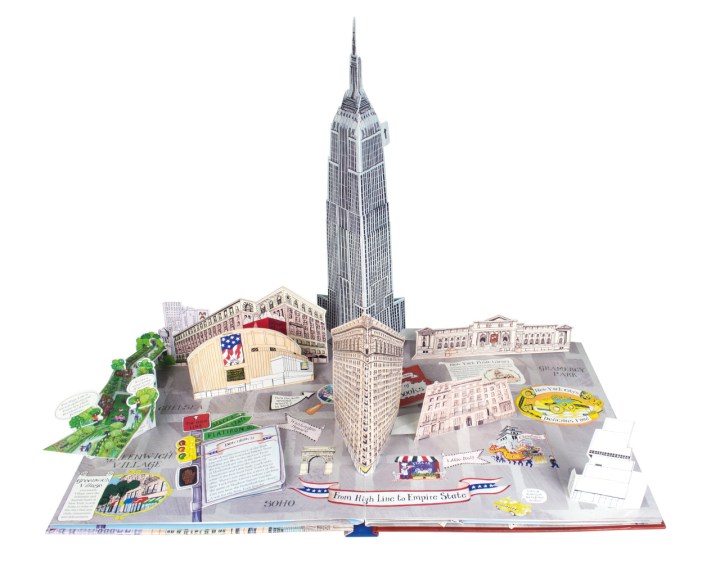
Pop-up New York, by Jennie Maizels, Candlewick Press; $19.99, 12 pages, all ages.
Forget the ubiquitous I LOVE NY tee shirts because there’s a better way to show your love for the Big Apple that also makes a great holiday gift; Jennie Maizels’ latest oversize pop-up book dedicated to New York. (London was the object of her previous pop-up ode to urban life.) Here readers are treated to marvelous paper engineering showcasing many of the places that make New York unique, such as the Statue of Liberty, the Empire State Building, Yankee Stadium, and the High Line. Each oversize page is filled with fact-filled flaps for further exploration. Where many pop-up books of this size and scope can cost close to thirty dollars, Pop-up New York delivers great value as a statement-making present and can be found for less than $20. If you can’t make it to New York this holiday season, bring it home instead – there’s no place like it.
photo by Autumn Le Brannon. Reproduced with permission from Candlewick Press.
Jon Klassen on Making Art for Kids
In July I spoke with Caldecott and Greenaway Medal winner Jon Klassen (This is Not My Hat) about his most recent project, a collaboration with writer and longtime friend Mac Barnett called Sam and Dave Dig a Hole. (Candlewick, $17.99) We talked about teamwork, tone, and teaching life’s lessons through thoughtful and deliberate illustration.
Klassen first worked with Barnett on the Caldecott Honor winner Extra Yarn, and was excited to reunite professionally for Sam and Dave Dig a Hole. “When Mac wrote Extra Yarn, he wrote with my artwork in mind. For example, ‘The town was covered in soot,’ was just for me, because he knew how much I like to make splattery, dusty art. There were many little favors like that in the book.” There’s more dirt here, where Klassen’s restrained, quirkily stiff characters dig for buried treasure alongside Barnett’s spare text, creating a superb interplay of text and art. Still,Klassen was nervous about drawing humans. “I don’t draw people very often – I usually avoid them because people are supposed to be cute.“ (Think of his larcenous critters in This is Not My Hat and I Want my Hat Back.) Here, the boys dig in search of treasure, but miss hidden gems at every turn, and often by mere inches. Their faithful dog frequently sports a pained look on his face, sharing the readers’ understanding that the boys are just barely digging past something extraordinary.
Both Barnett and Klassen have similar ideas about the tone they want to set for any given project, and that may explain why their books have a seamless quality about them. “Mac understands why I like things to be a certain way, and he backs that up with text. As an illustrator, it’s nice to work with someone who meets you in the middle.”
While Barnett wrote Sam and Dave Dig a Hole, Klassen was already sketching. He created an image where the boys separated, digging tunnels at either end of a page, while a massive jewel remains hidden between them. Barnett hadn’t written that scene yet. When Klassen showed him the drawing, the story changed to accommodate the art. “We designed the book so that wherever the boys were digging on the left spread, the text would line up with them in space on the right spread. I thought about what would happen if the boys split up, and if the text followed suit.” Initially, Barnett hesitated because he felt it might be traumatic for the readers if the boys separated, then realized that this could become the pivotal moment in the tale. “This became a big deal. I like when you come at an idea with a neat design, and then you ask what the emotional implications of this idea will be.” The separation brings an actual dilemma, yet the boys push on with surprising strength and resolve. (Spoiler: they miss the gem again, but it’s a great sight gag. A nap, hidden bones, more dirt and a plunge through space follow.)
Klassen’s art is deceptively simple – his colored pencil drawings give the gems, the boys, even the dog, a scratchy, zig-zaggy, dusty quality. Children might be tempted to recreate those characters, much like Mo Willems’ Pigeon is so often imitated by little artists. “These are very simple drawings. Kids appreciate simplicity, something that looks attainable,” said Klassen. And while many illustrators are capable of creating sophisticated, complex works of art, Klassen argues that isn’t the goal for children’s picture books. “I don’t think it’s the job of an illustrator to show off. The point is to tell a story to kids. If you look at anything by P.D. Eastman, for example, the art isn’t showy, but it’s so well staged. Eastman was solving so many problems on the back end before he even started drawing. Some of his books are strange and complicated, but they work.” The challenge lies in tackling big problems with clear text and artistry. Done well, an author can tackle difficult emotional topics through accessible storytelling and illustration.
Despite earning numerous laurels from the publishing industry, the media, and fellow illustrators, Klassen remains what he calls ‘a nervous artist.’ Having grown up on classic picture books like those by P.D. Eastman and Arnold Lobel, Klassen says the bar is set pretty high. “I can’t get away from being nervous about it. These can become revered treasures for children. It’s hard to completely understand the things these books are supposed to do, and the importance they can have in kids’ lives. So there’s a massive amount of anxiety for me, because I know how special these books can be. When I see books that got it right, it’s wonderful.”
Ship of Dolls, by Shirley Parenteau; Candlewick Press, $16.99, 258 pages, ages 11-13.
Earlier this week, Nicole Claire reviewed The Secret Hum of a Daisy, a coming of age story chronicling the adventures of a bohemian girl left without her mother to guide her through her formative years. Shirley Parenteau’s latest young adult novel also traces the moment in time when a young girl takes her first cautious steps out of childhood through self-discovery and personal growth.
Ship of Dolls revolves around a little known historical event that occurred in the 1920s after the First World War. An American doctor initiated a doll exchange program between Japanese and American girls in the hope of fostering cultural awareness between the two countries as well as maintaining a delicate peace. Lexie Lewis of Portland, Ore. participates in the exchange and enters the accompanying writing contest. Winners are sent to San Francisco to wish the dolls a safe journey. Lexie’s estranged flapper mother is also in the city by the bay, and Lexie’s ulterior motive to winning the contest is to also win freedom from life with her strict grandmother and torture at the hands of a snobby neighbor. Ideals Lexie once held to be solid truth are chipped away, and as the girl learns tough life lessons, she also learns what it is to be truly loved, and how to share it.
Middle-grade readers will race through the book to see how the heroine tackles each new challenge, mostly because the girl manages to do so with unexpected grace and confidence. Parenteau keeps the tone squarely in the 1920s and only briefly loses authentic dialogue – a tender moment is jarringly thrown into 2014 when Lexie’s grandfather asks if he can ‘Get in on a hug.’ Young readers will likely not be tripped up, however, and the rest of the book is done well. Ship of Dolls would make a lovely, thoughtful gift to adolescent girls facing bullying and coping with estranged parents in their own lives.
Chitty Chitty Bang Bang Over the Moon, by Frank Cottrell Boyce, illustrations by Joe Berger; Candlewick Press, $15.99, 240 pages, ages 9-12. (April 2014)
Loot: How to Steal a Fortune, by Jude Watson; Scholastic Press, $16.99 272 pages, ages 9-12. (June 2014)





 Literary Features Syndicate