Check out Literary Features Syndicate’s website dedicated to books for big kids! This week we look at a new biography on Handel, how to spin wool, and Bourbon desserts!

The Secret Hum of a Daisy, by Tracy Holczer; Putnam Juvenile, $16.99, 320 pages, ages 10 and up. (May 2014)
The Secret Hum of a Daisy is a heartwarming tale about a young girl named Grace who, after suffering the heartbreaking loss of her mother, embarks upon a path of self-discovery and awareness. It is a story that will surely endear itself with middle-grade readers searching for ways to overcome immense sorrow.
We meet Holczer’s eleven-year old heroine, who traveled the country with her bohemian mother Anna, creating ‘found object’ art to eke out a living. Each time they moved, Anna would set up a treasure hunt for her child to learn about their new town. After Anna’s sudden death, Grace moves in with the grandmother she has never met, and whom she also believes wants nothing to do with her.
Grace believes Anna has left one last treasure hunt which would lead the young girl to the stability she secretly craves. Ultimately, it leads Grace to a better understanding of her mother, her grandmother, her family’s past, and herself.
Holczer’s debut novel recalls Elizabeth Berg’s 1993 ALA award-winning novel Durable Goods, where the main character Katie struggles to make sense of her world after her own mother dies. Not only do they share common themes of love, loss, sadness, and growth, but both Berg and Holzcer succeed in writing in the way a child would think, delicately describing the gamut of emotions a child endures when facing life after the death of a parent. Like Berg did with Katie in Durable Goods, Holczer applies simple phrasing and vivid imagery into Grace’s narrative.
Written skillfully and with sensitivity, Middle grade readers will identify with Grace’s gradual transition towards maturity and being able to forgive others for their transgressions and move on. Grace receives some important advice to that end: ‘You will go your whole life, Gracie May, and every single person in it will fail you in one way or another. It’s all about the repair. It’s all about letting yourself change those pictures.”
Nicole Basbanes Claire is the head children’s librarian at the Upton Town Library in Massachusetts, where she helps young readers discover the wonder of books. Prior to that, she was a teen librarian at Gleason Public Library in Carlisle, MA. Claire received her AB in English and Creative Writing from Sweet Briar College and her MSLIS from the Palmer School of Library and Information Science. She now lives and kayaks with her husband, Billy, at their lake house in Central Massachusetts.
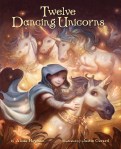

Twelve Dancing Unicorns, by Alissa Heyman, illustrated by Justin Gerard; Sterling Children’s Books, $14.95, 32 pages, ages 5-8. (September 2014)
Since its initial publication in 1812, The Grimm brothers’ classic fairy tale, The Twelve Dancing Princesses, has inspired movies, musicals, as well as adaptations and numerous retellings. In Alissa Heyman’s debut picture book the dozen princesses are now glittering unicorns who manage to break free of their golden chains every night. The king offers a reward to the person capable of solving his pets’ mysterious nocturnal ramblings, and a plucky young villager takes up the challenge. Young readers familiar with the original will quickly pick up on the similarities, while children new to the tale will enjoy it just the same. Veteran illustrator (DreamWorks, Disney) Justin Gerard’s paintings set an enchanted mood – fairies and flowers appear illuminated from within, while the unicorns gallop right out of this glowing fantasy world. Tones of purple, blue and radiant gold are a perfect accompaniment to this magical tale.
Follow the Twelve Dancing Unicorns blog tour tomorrow on My Friend Amy: http://www.myfriendamysblog.com/2008/07/about-me.html.
By Eva Watson-Schülze (1867-1935) [Public domain], via Wikimedia Commons
An old friend contacted me recently asking for book recommendations for his six and eight year old boys. They are voracious readers, having already inhaled the entire Harry Potter and Percy Jackson series,…
Choosing Books for Advanced Readers
By Eva Watson-Schülze (1867-1935) [Public domain], via Wikimedia Commons
An old friend contacted me recently asking for book recommendations for his six and eight year old boys. They are voracious readers, having already inhaled the entire Harry Potter and Percy Jackson series, along with many other titles. I sent a few suggestions, then thought that this might make an excellent blog topic.
Advanced readers may seem like a gift for parents, but you can’t just give them any book and say ‘read.’ To help parents find age-appropriate, engaging and stimulating books for children, I asked Beth Yoke, Executive Director of the Young Adult Library Services Association (YALSA) and Massachusetts children’s book librarian Nicole Basbanes Claire for ways parents can keep advanced readers reading happily at their level.
Meet your local librarian.
Claire, who works primarily with elementary-school children, suggests parents get to know their local librarian. “Going to your local library is the best (and free) resource to understand all the various kids books out there,” says Claire. “Tell the librarians about your child, and they will be able to find books related to your child’s interests.”
Choosing a book for young adults can be more difficult. Beth Yoke also advocates seeking out your local librarian in this situation. “It’s not so easy for busy parents to read young adult literature in order to determine if it’s a good fit for their teen,” says Yoke. “Librarians are not only well-read, but they are especially trained to find the right book for the right teen, and they’ll take into consideration the young person’s reading interest, ability level, family mores and more.”
Demonstrate reading behavior. If you tell your child that reading is important, set the tone. “Read in front of them whenever possible. Share what you’re reading with your child, whether it’s a novel, grocery list, or mail,” Claire suggests. Family time is reading time, too. “Set aside time in the family’s schedule on evenings and weekends expressly for reading,” says Yoke.
“George Hardy The evening hour 1877” by George Hardy (1822-1909) – Bonhams. Licensed under Public domain via Wikimedia Commons – http://commons.wikimedia.org/wiki/File:George_Hardy_The_evening_hour_1877.jpg#mediaviewer/File:George_Hardy_The_evening_hour_1877.jpg
Choice is crucial. Encourage young readers to enjoy a range of materials, from educational to recreational books. Offer choice of reading format as well. Tablets or hardcovers don’t make a difference, so long as children are reading.
Prevent reader burnout. Advanced readers need mental breaks to prevent reader fatigue. “Secondary students especially should be given the option to pursue lighter reads in their free time, as their required reading for school is academic-focused and sometimes challenging,” confirms Yoke.
Switch it up. If your child is in a book rut, recommend something different. Consider nonfiction and instructional books if your child generally gravitates towards fiction. “When younger readers burn out after reading chapter books, sometimes a switch over to nonfiction can be just what they need,” suggests Claire.
Support Related Reading Activities. Advanced readers will enjoy activities having to do with books, but that also offer a little respite. “Have children participate in library book clubs and creative writing, including writing “fan fiction,” says Yoke.
Provide transportation to the library. Children should have regular transportation to their local library, so they can borrow new reading material often. Some school districts provide transportation services to nearby libraries, so be sure to see what options are available in your community.
Below are e-resources available for elementary age and young adult readers to discover great new books:
-
YALSA’s free Teen Book Finder app, available on both Android and Apple, offers thousands of recommended titles for 12 – 18 year olds. These titles are also a perfect opportunity for a parent and their teen to read the same title together and discuss the book.
-
YALSA’s Alex Awards are a good option for older teen readers. These are adult books that appeal to teens.
-
The Cooperative Children’s Book Center (CCBC) groups books according to age and subject matter.
Was this helpful? Happy reading –
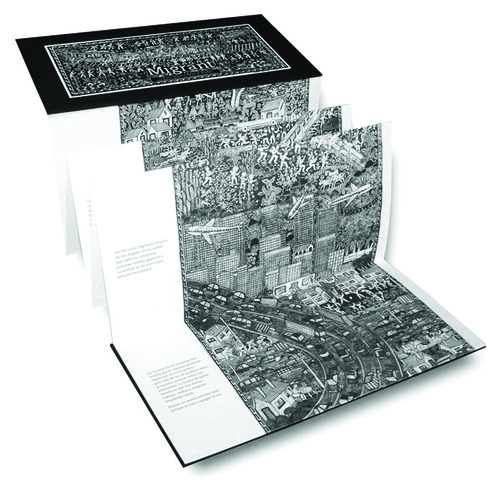
Migrant, by José Mateo, illustrated by Javier Martínez Pedro. illustrations © Javier Martínez Pedro.I spoke with author José Mateo about his inspiration for Migrant, the significance of the codex format, and what he hopes to achieve with this book’s publication.
In the spirit…
Nicole Claire leads the way with two books about very strong women!
Non-Fiction Female Leaders! Miss Emily and Pure Grit, 5-4-2014.m4v
Nicole Claire shares two YA books, both published by Poppy Press. Bring these to the beach for easy-breezy summer reading.
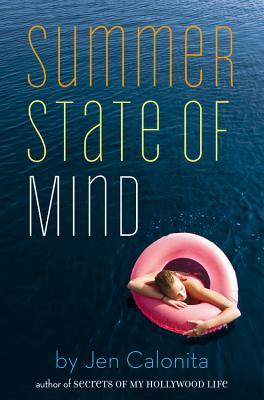
“Summer State of Mind,” by Jen Calonita; Poppy Press, 254 pages, $10.00, ages 11-14.
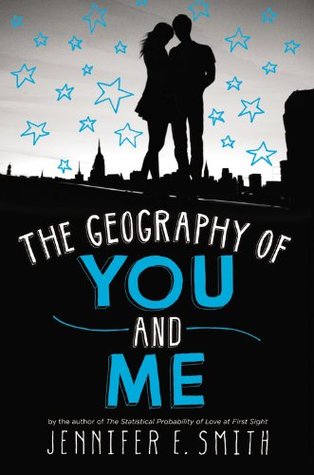
“Geography of You and Me,” by Jennifer E. Smith; Poppy Press, 352 pages, $18.00, ages 12-16.

Cat’s Meow
Banish the dog days of summer with these titles by two British author-illustrators that are just puurr-fect for summer road trips, bedtime, and anytime.
“Matilda’s Cat,” by Emily Gravett; Simon & Schuster, $16.99, 32 pages, ages 3-5. (June 2014)
Matilda’s cat doesn’t like tea parties, ghost stories, climbing trees, or drawing. Find out what the adorable creature does enjoy in this latest offering from our perennially favorite author and illustrator, Emily Gravett. (Previous titles include Again! and The Odd Egg.) Charming illustrations of an exuberant, cherubic little girl and her faithful feline are rendered in Gravett’s trademark pen and watercolor style. Children will relish in the playful mischief to be discovered on each page. If you’re not sure which books to pack for summer traveling, do include this lighthearted, lovely ode to unrequited love– it’s a snappy read, and will not lose its charm after being in heavy rotation.
“Naughty Kitty,” by Adam Stower; Orchard Books, $16.99, 32 pages, ages 4-6. (May 2014)
Adam Stower follows up his popular Silly Doggy! with a case of mistaken identity. If somehow you miss the looming cover image of a skulking tiger, be sure to read the newspaper-styled endpapers which relate the critical backstory of a large cat missing from the local zoo.
Meanwhile, little Lily desperately wants a dog, but receives a cat instead. While the girl adores her wide-eyed kitty, she can’t understand how such a small creature manages to make major messes, some right under her nose. Lily blames the silently suffering kitty, while its larger, striped doppelganger runs amok on the property. Stower portrays all the characters – including the escaped predator – with wide eyes and humorous facial expressions, all done in watercolors. Tongue in cheek humor and a happy ending will keep the whole family returning to this book.
Shared with Dropbox
ACTION! Nicole Claire reviews the following:
Chitty Chitty Bang Bang Over the Moon, by Frank Cottrell Boyce, illustrations by Joe Berger; Candlewick Press, $15.99, 240 pages, ages 9-12. (April 2014)
Loot: How to Steal a Fortune, by Jude Watson; Scholastic Press, $16.99 272 pages, ages 9-12. (June 2014)
Aaaaand, Action! Chitty Chitty Bang Bang Over the Moon and Loot! 6-29-2014.m4v
 Literary Features Syndicate