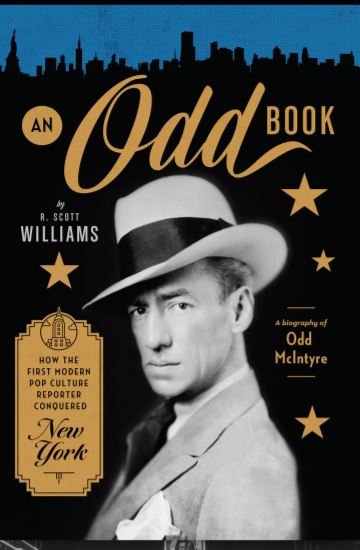
An Odd Book

An Odd Book: How the First Modern Pop Culture Reporter Conquered New York, by R. Scott Williams; R. Scott Williams, $18.99, 272 pages. 

“Since my earliest recollection, I wanted to be a newspaper reporter and I cannot tell you why.” –Odd McIntyre

At the height of his career, Oscar Odd McIntyre (1884-1938) reached millions of readers across America and Europe through his daily column that chronicled the glittering spectacle that was Manhattan of the early twentieth century. Odd’s “New York Day by Day” was syndicated in over 400 newspapers in the 1920s. His prolific output and widespread popularity more than paid the bills; Odd’s daily columns brought home an estimated $200,000 a year–no small potatoes in 1920 or 2017.

How this shy, high-school dropout from Gallipolis, Ohio, went from scraping by to hob-nobbing with the likes of Rudolph Valentino and Charlie Chaplin is the captivating topic of a recently published biography by R. Scott Williams.

An Odd Book: How the First Modern Pop Culture Reporter Conquered New York is actually a dual biography: the first chronicles Odd’s hard-fought battle to the top of the newspaper world, aided in no small part by his enterprising wife, Maybelle. The second is a parallel examination of the rise in power and influence of newspapers in the first half of the twentieth century. Media tycoons W.R. Hearst, E.W. Scripps, Joseph Pulitzer and others ushered in the golden years of journalism and the newspaper industry. The fierce competition between various newspaper outlets created the perfect environment to support Odd’s prolific career.

odd2

image courtesy of R.W. Williams 

After Odd died in 1938, the man who chronicled many of the major cultural events of the early twentieth century fell quietly into oblivion. Though this is not the first biography of the newsman–the first was written by Odd’s longtime editor and biographer, Charles B. Driscoll–little has been written about Odd until now.

As the chief operating officer of sales and marketing at the Newseum in Washington, D.C., author R. Scott Williams seemed uniquely suited to resurrect Odd’s story for a new generation. “Basically, I liked the way Odd wrote. I also liked the path he took to fame and the struggles he was up against.” (Odd was a notoriously terrible speller, suffered from severe anxiety disorders, depression, and likely undiagnosed pernicious anemia.)

Rather than pursue a traditional publisher, the author chose to create his own imprint (R. Scott Williams) and self-publish. The concept of a midlist author is practically nonexistent these days, with the big publishing houses throwing all of their resources behind established, “blockbuster” names. This leaves little money or interest in cultivating emerging and midlist authors, and some professional writers are giving up the gauntlet and self-publishing to make their books a reality.

Williams turned to self-publishing after learning that his book wouldn’t get much media support or advertising from a publishing house. “I floated the idea with a couple of publisher contacts but they felt like it was going to be a challenge because no one had heard of him. They suggested I write about someone people knew so that it would sell…but that’s no fun.”

So, how did this self-published book stack up against a traditionally published biography? As a journalist by trade, Williams knows how to craft a story, and a detailed bibliography highlights the author’s commitment to getting the facts right. But Williams didn’t just write everything in a Word document and then upload it to a self-publishing website–this sophisticated production was professionally edited, proofread, and designed. Williams put together the press release as well as a landing page for the book, and maintains robust Twitter and Instagram accounts. In short, he and a production team did everything a traditional publisher would have done, the entire package signaling a positive turn in the evolution of self-publishing. It’s not magic; it’s hustle and elbow grease, but the result is proof positive that a self-published book can be worthwhile and enjoyable, perhaps a harbinger of more well-crafted, thoughtful books written outside the mainstream publication route.

Now comes the hard part–getting the word out that An Odd Book is very much worth reading. Like his subject, Williams is tenaciously reaching out to readers through a carefully calibrated media blitz, one that will hopefully pay off. We wish him the very best of luck that An Odd Book finds an appreciative audience eager to read about a man whose words defined an era over a century ago.

Find out more about the book, as well as how to get a copy for yourself, here.
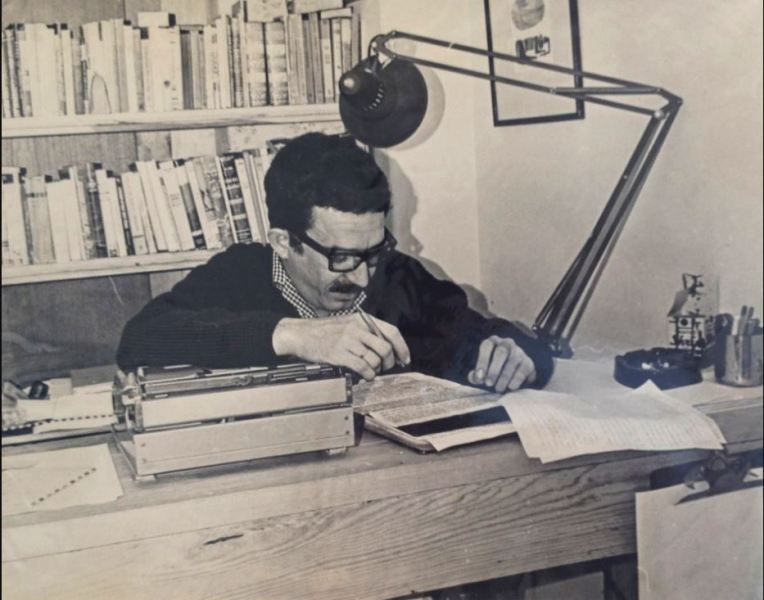
50th Anniversary of Marquez’s “One Hundred Years of Solitude” Celebration Includes Discussion and Digitization

Above: Gabriel García Márquez working on “One Hundred Years of Solitude.” Photograph by Guillermo Angulo. Image courtesy of Harry Ransom Center

Today marks the fiftieth anniversary of the publication of Gabriel García Márquez’s One Hundred Years of Solitude, and the Harry Ransom Center (HRC) at the University of Texas at Austin is marking the day by releasing an online collection documenting the creation of the novel that catapulted Márquez onto the world stage. Read my story about it on the Fine Books Blog.

Beatrix Potter Symposium at Connecticut College on June 12

The Beatrix Potter Society is hosting a three-day symposium at Connecticut College next month, the first of its kind on U.S. soil in five years. Read all about it on the Fine Books Blog

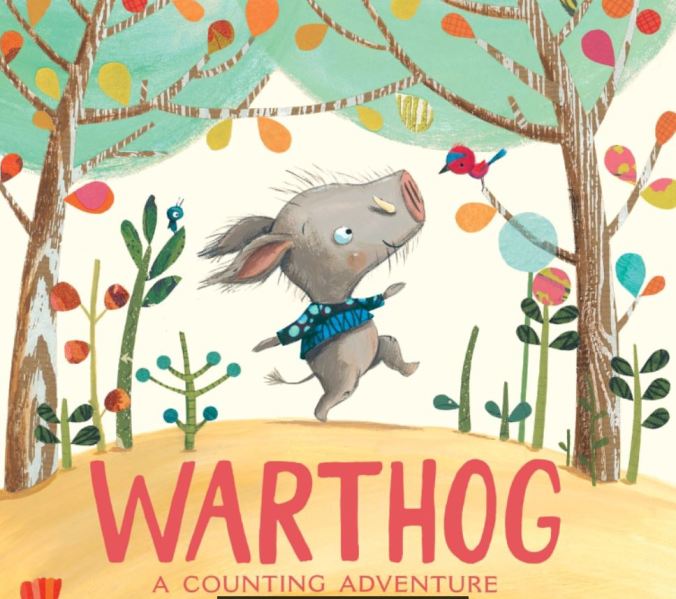
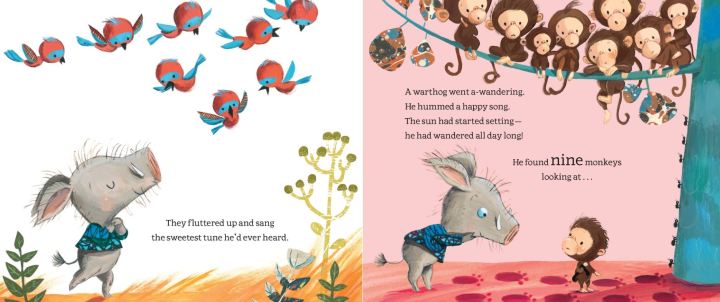
Warthog Goes A-Countin’

Warthog: A Counting Adventure, by Birdie Black, illustrated by Rosalind Beardshaw; Nosy Crow Books, $14.99, 32 pages, ages 1-3.

A playful combination of poetry and numbers makes this introduction to simple counting a welcome addition to the lift-the-flap genre. As little Warthog goes a-wandering, each adventure leads to another, with suspense building as he quickly reaches double-digits and a big surprise. Beardshaw’s bright mixed-media illustrations of a cheery menagerie of warthogs, birds, and butterflies matches Black’s quick-paced rhythm, creating just the right amount of suspense and adventure for the preschool set.

wart2
WARTHOG. Copyright © 2016 by Rosalind Beardshaw. Reproduced by permission of the publisher, Candlewick Press, Somerville, MA.


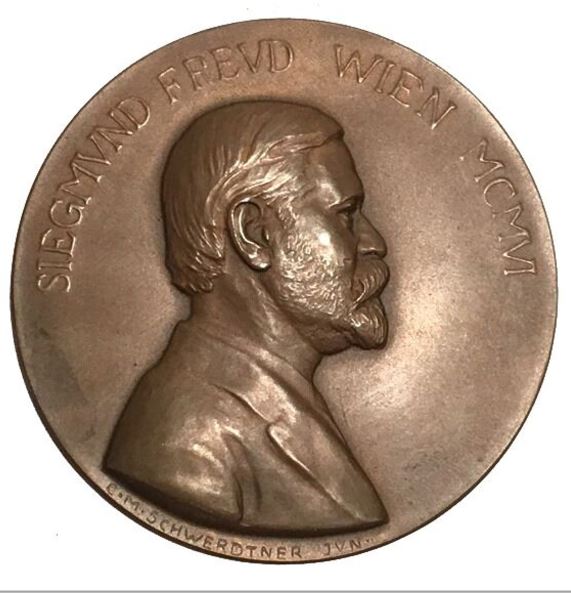
Massive Freud Collection for Sale

The 19th Century Rare Book and Photograph shop is offering an enormous research collection that documents the works, life, and circle of Sigmund Freud, one of the towering figures of the 20th century. Read all about it, and how much the collection costs, at the Fine Books Blog.

Bookseller Files Lawsuit over California’s Autograph Law

The Bay Area’s Book Passage filed a lawsuit seeking the repeal of California’s autograph law. Read all about it on the Fine Books Blog.

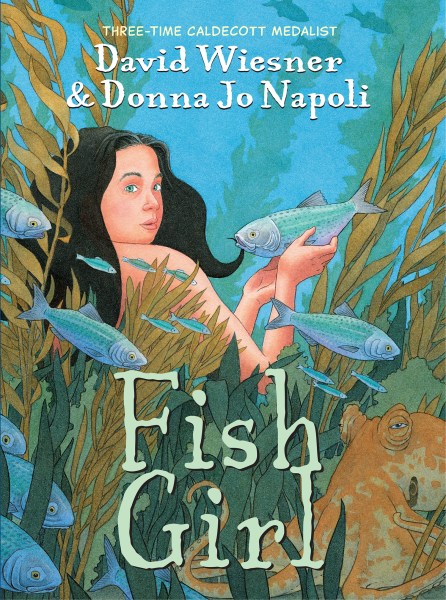
Fish Girl

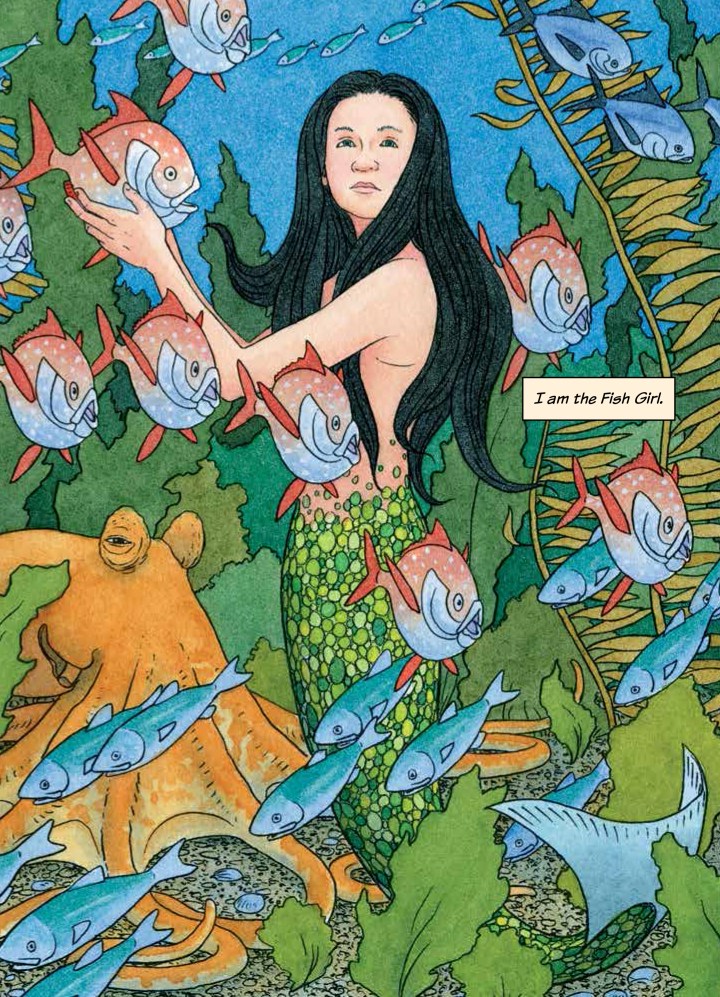
Fish Girl, by David Wiesner and Donna Jo Napoli; Clarion Books, $25.00, 185 pages, ages 7-10.

I am fish girl
Image copyright 2017 David Wiesner. Reproduced with permission from Clarion Books.

On a lonely stretch of seaside boardwalk stands a modest three-story building hiding a big secret: inside resides the mysterious Fish Girl, watched over by King Neptune. For a small fee, visitors are welcome to glimpse the girl for themselves. Fish Girl feels protected by Neptune and believes his stories–that she is the last of her kind, that this building full of exotic fish is the last refuge of his realm–until she befriends a neighborhood girl, Livia. Now, the mermaid (soon to be renamed Mira) wants to enjoy life on land, but an inability to talk and lack of legs hampers the process. Slowly, with steady determination, a little yoga, and some magic, Mira’s lonely life changes forever.

Three time Caldecott Medalist David Wiesner (Mr. Wuffles!) and Donna Jo Napoli (Albert) debut their first graphic novel with an exploration of trust, betrayal, and bravery–Mira is kept in what amounts to a water-filled cage, lied to about her family, and forced to perform tricks for money. Adults will no doubt make comparisons to children and young women conscripted into all sorts of unsavory labor around the world, but the mermaid element keeps this story squarely rooted in fantasy and will not spook young readers. Interestingly, the protagonist is mute–most of Wiesner’s best-loved books are wordless, relying on visual storytelling. That’s not to say Mira doesn’t share her thoughts–somehow, she communicates with her underwater and oxygen-breathing friends, and cultivates a language of friendship with Livia. Deft interplay of myth and contemporary folklore make this splashy story hard to resist.

Reexamining Mother’s Day with Margaret Atwood and “The Handmaid’s Tale”


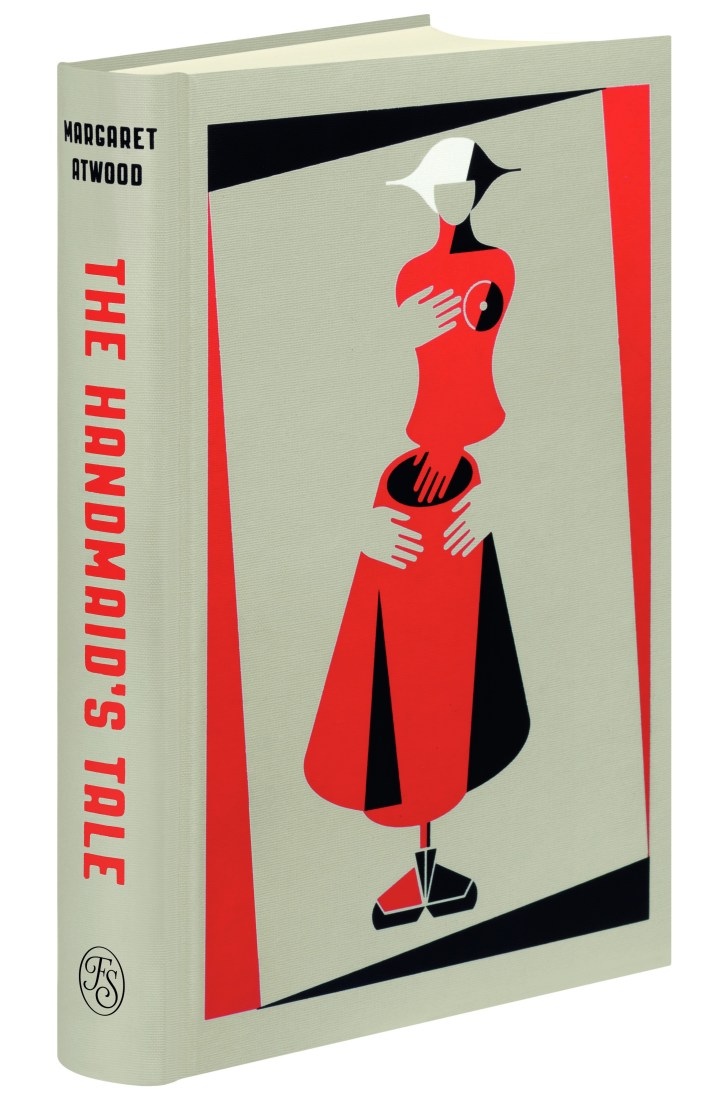
HDT_S_01


Motherhood means something other than candy and roses in The Handmaid’s Tale. Read about Hulu’s adaptation of Margaret Atwood’s classic as well as the Folio Society’s illustrated edition–on the Fine Books Blog. 

“To Survive, You Must Believe:” American Gods Collector’s Edition

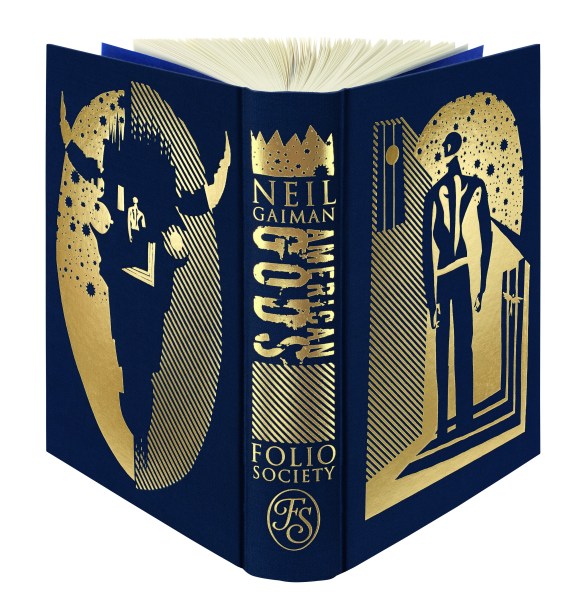
American Gods, by Neil Gaiman, illustrated by Dave McKean; Folio Society,  $120.00, 560 pages, ages 14+. 

004_ACG_Carousel-final-corr.jpg
Illustration copyright 2017 Dave McKean. Reproduced with permission from Folio Society.
Fans of Neil Gaiman’s award-winning American Gods (2001), rejoice: the Folio Society has recently released a commemorative edition of the 560-page genre-crossing tale of myth, fantasy, and faith. The timing is spot-on; recently adapted for television, American Gods debuted last month on the Starz network to such fanfare that the show has already been renewed for a second season.

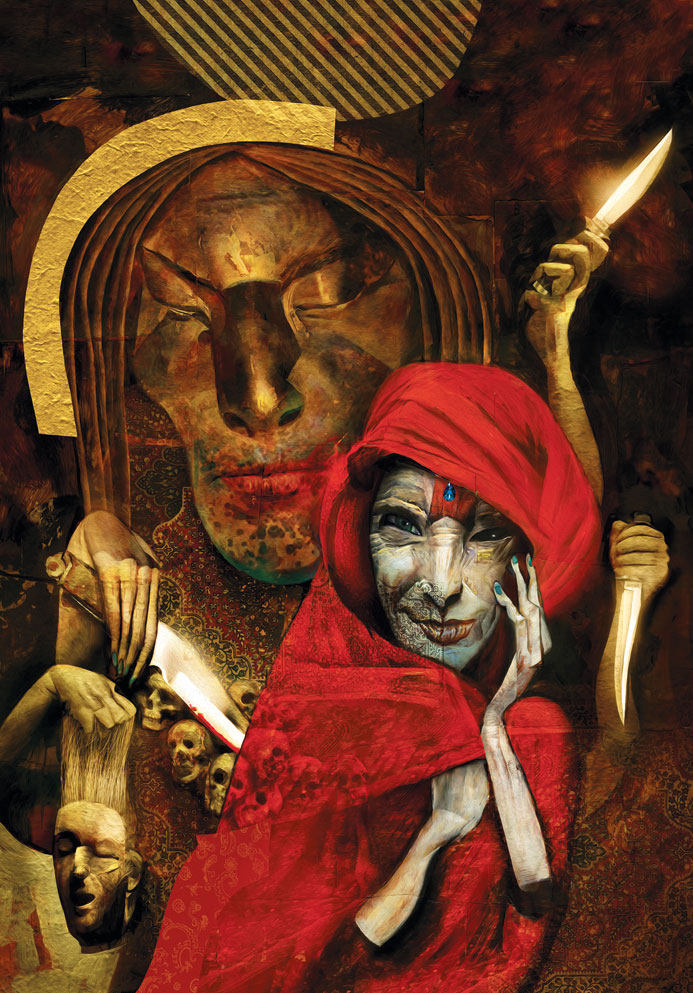
005_ACG_Mamag-final
Illustrsation copyright Dave McKean 2017. Reproduced with permission from Folio Society.
In the Folio Society edition of the book, Gaiman’s exploration of faith in ancient and modern mythology leaps off the pages with the assistance from longtime collaborator Dave McKean, who previously illustrated Gaiman’s Sandman and Violent Cases. Here, twelve surreal acrylic and cut paper illustrations, including three double-page spreads and an otherworldly slipcase design, create, as McKean writes in the introduction, “an off-kilter, unrealistic place, where perspective doesn’t work.”

009_ACG_Shadow-tree-final
Illustration copyright 2017 Dave McKean. Reproduced with permission from Folio Society. 
For the uninitiated, American Gods centers around a recently released convict named Shadow, who wanders aimlessly after learning of his wife’s fatal car accident during his time in prison. Shadow hooks up with con man Mr. Wednesday, and together they travel across America encountering Mr. Wednesday’s various associates–manifestations of old gods from ancient mythology now half-forgotten and wholly unimportant to 21st century folk. Gaiman’s premise is that the gods only exist so long as people remember them, and some gods resort to desperate measures to remain relevant. While the old gods fade into memory, a new breed of gods have taken over the American psyche, ones who represent humankind’s newfound obsession with social media, narcissism, and sexual power. A battle is looming, and Mr. Wednesday (who turns out to be an incarnation of the Norse god Odin) is leading the charge in a fight for the soul of America.

The Folio Society’s version of American Gods includes Gaiman’s “preferred text,” from the 2003 edition as well as the introduction from the 2005 edition, and fans unable to procure a Hill House 2003 limited edition–which fetch anywhere from $450 to over $1,000 these days–will find $120 for the Folio Society’s American Gods a relative steal.

Denshosha–Memory Keeper Chiharu Shiota Disembarks in Paris

03_SHIOTA-Savannah_museum.jpg
Shiota exhibit at Savannah Museum of Art. Reproduced courtesy of Galerie Templon.

Japanese artist Chiharu Shiota stages a new exhibition at Galerie Templon in Paris. Read all about it on the Fine Books Blog