Interview with Abigail, Episode One: Tracey Baptiste

Last week, children’s book author Tracey Baptiste visited The Voracious Reader bookstore in Larchmont, New York, to talk about her latest book Rise of the Jumbies (Algonquin 2017). Afterwards, Abbie had a chance to sit down with the award-winning author and ask Baptiste a few questions about characters and craft.

First, a little background: Raised in Trinidad on a steady diet of rich fairy tales filled with mythical beasts and monsters, Baptiste eventually decided that the world beyond her island ought to learn about these tales, too. Rise of the Jumbies is the second in the Jumbies series for middle-grade readers. Jumbies are creatures that roam the Carribbean at night, with the sole purpose to devour wayward children. Their queen is Mama Dl’eau, a merciless sea creature who turns people into stone.

In book one, Baptiste’s main character, Corrine, must stop a jumbie from taking over the island. Corrine returns in book two, which gets even darker with an exploration of the slave trade–important, Baptiste says, for all children to learn about, even when it’s difficult to fully comprehend. Rise of the Jumbies illustrates that though there’s much pain associated with Caribbean history, beauty can rise from it as well.

Listen to Abbie’s interview here.


IMG_0662

(Yes, that’s a press badge–never leave home without it!)

Photo credit: Barbara Basbanes Richter
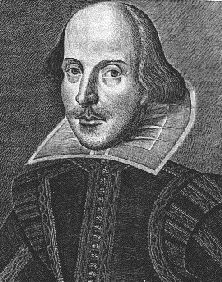
90 Shakespeare Documents Recognized on UNESCO’s Memory of the World Register

Shakespeare copy.jpg

Above: The first recorded purchase of Shakespeare’s Venus and Adonis, less than two months after it was entered in the Stationers’ Register. Richard Stonely, a government accountant, spent 12 pence on two books, Venus and Adonis and John Eliot’s The Survey, or Topographical Description of France, in addition to 10 shillings on food and 3 shillings, 12 pence on clothes.

Since 1997, UNESCO’s Memory of the World Register has raised awareness of the state of preservation of civilization’s documentary heritage by nominating a series of books or other documents that speak to our common history. Looting, war, illegal trading, and general lack of interest stirred UNESCO members to establish an annual list of documents that have national or global social relevance. The first inductees into the program included the Archangel Gospel of 1092, a collection of Mexican Codices, and a Holy Koran, and since then the register has grown to include the Magna Carta and the Gutenberg Bible. This international initiative calls for the preservation or, in some cases, the reconstitution of a country’s documentary heritage — creating a sense of permanence for these materials in an increasingly impermanent (read: digital) world.

This year, 90 documents relating to William Shakespeare’s life have been added to the register, mostly dealing with his baptism, burial, property records, and business transactions. Six of those documents hail from the Folger Shakespeare Library collection — the only American institution included — while the remaining 84 documents are in the United Kingdom’s Shakespeare Birthplace Trust, the National Archives, Worcestershire Archives and Archaeology Service, the College of Arms, the British Library, and London Metropolitan Archives.

The Shakespeare documents are accessible to anyone with internet access: they’ve all been scanned and uploaded to an online repository called “Shakespeare Documented,” launched on the 400th anniversary of the Bard’s death in 2016. With (appropriately) 400 items in its holdings, the site bills itself as “the largest and most authoritative resource for learning about primary sources that document the life and career of William Shakespeare.” This comprehensive portrait of the playwright offers hundreds of print and manuscript documents for in-depth examination, including contemporary accounts (and gossip), anthologies, literary criticism and diary entries–all providing testimony to how Shakespeare became a household name.

“The fact that these resources — supplied by a number of institutions — have been digitized and are widely available means that a vital part of the documentary record is able to speak to us from centuries past. If libraries are diary of humankind, this group of documents represents one of that story’s most exciting chapters,” said Folger Shakespeare Library Director Michael Witmore.

In an age where longevity of e-data is of increasing concern, to quote the Bard himself, “What’s past is prologue” (The Tempest, Act 2, Scene I). In other words, we cannot forget history’s lessons, or we are forever doomed to repeat them, and UNESCO’s initiative is a positive step in the right direction.

Credit: Richard Stonley. Diary labelled “KK.” Manuscript, May 1593 to May 1594. Folger Shakespeare Library.
This story appeared on January 26th on the Fine Books & Collections blog. 

Exiled Artists Find Footing in France

Europe is in the throes of a massive refugee crisis with millions of asylum-seekers fleeing war-torn lands like Syria, Afghanistan, and Somalia. Among those forced from their homeland include writers, artists, singers, and other creatives who now can find refuge and a place to practice their craft in Paris.

Since November 2017, the Atelier des Artistes en Exil (AA-E), or atelier for exiled artists, has welcomed painters, poets, writers, and musicians to its 10,000 square foot space on rue des Poissonniers in the densely populated 18th arrondissement, where immigrants, blue-collar workers and artists live and work side-by-side. The organization is the brainchild of Judith Depaule and Ariel Cypel, a pair known for piloting engaged communal artistic spaces throughout Paris.

The AA-E provides WiFi-enabled workspace and fully-equipped workshops and sound studios where displaced artists have the opportunity to return to their professions and to also regain a sense of stability during a most difficult and stressful time in their lives.

Additionally, the AA-E organizes French language courses, meetings with other artists, assists with resumé writing, facilitates contacts with fellow professionals in France and throughout Europe, and guides asylum seekers through lengthy and confusing French bureaucracy processes.

COURTESY AA-E, PHOTO BY MEDHAT SOODY

An artist in their AA-E studio


As a nonprofit, the AA-E is constantly looking for assistance from educators, artists, curators, teachers, psychiatrists, and librarians, as well as financial support and donations. The AA-E’s current wish list includes tables, chairs, notebooks, drawing supplies, and even food and temporary housing for its displaced patrons. To raise funds, the organization will be launching a crowdfunding campaign in January.

The AA-E lists over two hundred current members. Some work or practice in the studios every day, while others visit when they’re completing projects. Others stop by for meetings, workshops, or to receive legal advice. New visitors are always welcome. Learn more at http://aa-e.org/fr/category/atelier/  and check out some of the artists’ work on the AA-E instagram at https://www.instagram.com/atelierartistesexil/ .

This story appeared on January 20th at Art & Object.

Author Tracey Baptiste Talks Jumbies, Folklore, and Titles at Indie Bookstore

IMG_0662

Earlier tonight, children’s book author Tracey Baptiste visited The Voracious Reader bookstore in Larchmont, New York, to talk about her latest book Rise of the Jumbies (Algonquin 2017). Afterwards, Abbie had a chance to sit down and ask Baptiste a few questions about characters and craft. Be on the lookout for Abbie’s profile later this month! (Yes, that’s a press badge–never leave home without it!)

Pottering About: Catching Up With the Beatrix Potter Society

The Beatrix Potter Society has been keeping tabs on all sorts of various Potter-related events as well as preparing for a springtime gathering in California. Here’s some of the highlights from its winter newsletter:

squirrel nutkin.JPGThe Bookseller reported in December that a first-edition of Potter’s long-forgotten and recently published The Tale of Kitty in Boots, with illustrations by Quentin Blake, was auctioned at the “First Editions Re-covered” sale, fetching nearly $14,000. The event raised funds for Blake’s House of Illustration, a public art gallery in London. The two-hour event raised approximately $180,000.

 
In 2016, the Royal Mint struck a series of coins commemorating the 150th anniversary of Beatrix Potter’s birth, and plans to add new coins to the series in 2018. This year Mrs. Tittlemouse, the Tailor of Gloucester, Flopsy Bunny, and a new version of Peter Rabbit will appear on the 50-pence coins. The proclamation announcing the series appeared in the December 15 edition of the Edinburgh Gazette.

 
The United Kingdom’s National Trust celebrated 50 years of its Working Holiday program–an initiative aimed at encouraging participants to help care for and restore Britain’s beautiful coastlines, homes, and gardens–by planting 4,000 saplings near Moss Eccles Tarn in Cumbria’s Lake District. Stocked with water lilies and various fish, Potter once owned this charming fishing spot and donated it to the National Trust upon her death. Volunteers helped clear non-native plants to make room for the new trees–native oak, birch, and hazel.

 
Finally, the next meeting of the Potter Society will take place March 23-25 in San Diego, California. Among other activities–British afternoon tea on Saturday, for example–author Marta McDowell and librarian Connie Rye Neumann will share new research on the surprisingly parallel lives of Laura Ingalls Wilder and Potter.

Spring can’t get here soon enough.

                                                                                                                                                                  Image via Wikimedia Commons

Outsider Art Fair Returns to NYC

It’s always hip to be an outsider, especially when we’re talking about art. So, mark your calendars for the Outsider Art Fair (OAF) which returns to New York City for the 26th year in a row from January 19th through the 21st. This year the OAF welcomes artists from all walks of life to submit a piece or two to the Fair.

Never heard of the OAF ? Learn everything you need to know in my story over at Art&Object. 


Controversial California Autograph Law Amended

Change is in the air in California.
Readers of this blog may recall California’s passage of AB-1570 Collectibles: Sale of Autographed Memorabilia, which went into effect in January 2017. That law required all dealers of any autographed material worth more than five dollars to fill out a certificate of authenticity (COA) specifying date of sale, the dealer’s name and street address, and the name and address of the person from whom the autographed item was acquired if the item was not signed in the presence of a dealer. AB-1570’s goals were to prevent the distribution of forged autographs, but many booksellers felt they were swept up by a vague law with onerous requirements. Still others felt that portions of the law constituted an invasion of privacy, citing possible violations of California’s Reader Privacy Act of 2011.
Co-sponsored by the Antiquarian Booksellers’ Association of America (ABAA) and signed into law by Governor Jerry Brown on October 13, 2017, AB 228 amends the previous legislation to better address the needs of booksellers in California.
The new law excludes all books, manuscripts, correspondence, and any ephemera unrelated to sports or entertainment media from the “autographed collectibles” regulation set forth in AB-1570. Rather than provide a Certificate of Authenticity–a lengthy document requiring sellers to disclose where autographed items were purchased that many booksellers found onerous–dealers of autographed collectibles may provide an “Express Warranty” incorporated in an invoice instead. Additionally, civil penalties for failing to comply with the law have been lowered as well.
“We are thrilled,” said Susan Benne, ABAA’s executive director. “The amended law removes the unintended consequences of the previous law, while providing the protections to the consumers it was intended to. We thank the lawmakers, booksellers, organizations, and professionals who supported the effort and made this happen.” Joining the ABAA lobbying group were many ABAA members liks Brad and Jen Johnson and Laurelle Swann, as well as organizations like the Grolier Club, the Manuscript Society, and the Professional Autograph Dealers Association.
The 200 dealers descending on Pasadena for the California International Antiquarian Book Fair next month will no doubt be pleased with the changes.

Bibliography Week 2018

Bibliography Week is coming back to New York later this month. Here are the day-to-day highlights:

Festivities kick off on Tuesday, January 23, when the American Antiquarian Society opens a special viewing of the exhibition, Radiant with Color and Art: McLoughlin Brothers and the Business of Picture Books, 1858-1920, on Tuesday from 2:30 p.m. to 4:30 p.m. at the Grolier Club. Later, Georgia State University professor John McMillian speaks at 6 p.m. at Columbia University’s Rare Book & Manuscript Library about the underground press and the rise of alternative media in America in the 1960s.


Wednesday is another busy day, also at the Grolier Club, with a conference dedicated to the disposition of collections. Collectors, librarians, legal experts, and other members of the book trade will discuss all aspects of collections dispersal from 9 a.m. to 5:30 p.m.


Thursday’s events are led by the ABAA at the French Institute Alliance Françoise (FIAF), directly across the street from the Grolier Club. Over 30 ABAA members–including Rabelais, Bromer Booksellers, Les Enluminures, William Reese, Abby Schoolman, and others–and will be showcasing their specialties to the public from 10 a.m. to 4 p.m. Next, check out an assortment of fine press books from around the world at Brooklyn’s Fine Press Salon at 37 Greenpoint Avenue. (Contact Felice Teebe at felix@booklyn.org for further details.)


The Cosmopolitan Club hosts the annual meeting of the Bibliographical Society of America on Friday from 2 p.m. to 7 p.m., and the New York Academy of Medicine (1216 Fifth Avenue at 103rd Street) hosts its annual bibliographical lecture on Saturday, January 27 from 11 a.m. to 2 p.m. This year’s speaker is Amherst College’s head curator Michael Kelly, who will be discussing medicine and scientific racism.

Finally, the week concludes at the New York Public Library (Fifth Avenue and 42nd Street, Trustees’ Room), with the annual meeting of the American Printing History Association from 2 to 5:30 p.m.


The whole bookish enterprise will be, as in years past, a fitting warm-up (pun intended) for the California International Antiquarian Book Fair at the Pasadena Convention Center, February 9-11.


“The Ice House” Heats Up

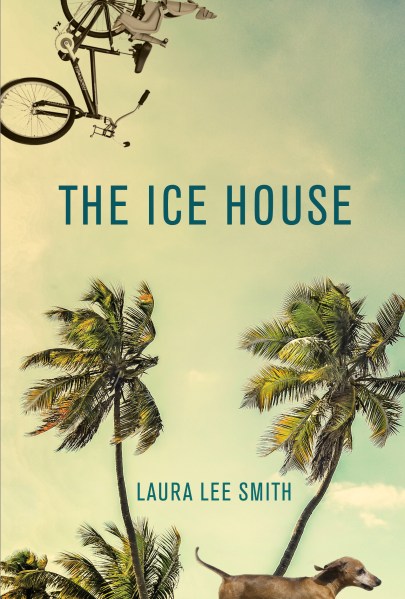
The Ice House, by Laura Lee Smith, Grove Atlantic; $25.00, 448 pages.

Yes, most of the country is currently in the throes of winter’s frosty grip, but don’t let that keep you from warming up to Laura Lee Smith’s latest novel, The Ice House, which offers an unfettered look at how a Southern family deals with love, loss, redemption, and, eventually, reconciliation.

Set in Jacksonville, Florida, where the Maxwell House factory forever singes the air with the aroma of burnt coffee, Scottish transplant Johnny MacKinnon has manned the Bold City Ice factory for decades. A mysterious accident at the plant has OSHA issuing fines that may force him to shutter the business. A potential brain tumor and an estranged relationship with his grown son–a recovering heroin addict and a father in his own right–weigh heavy on Johnny’s shoulders.

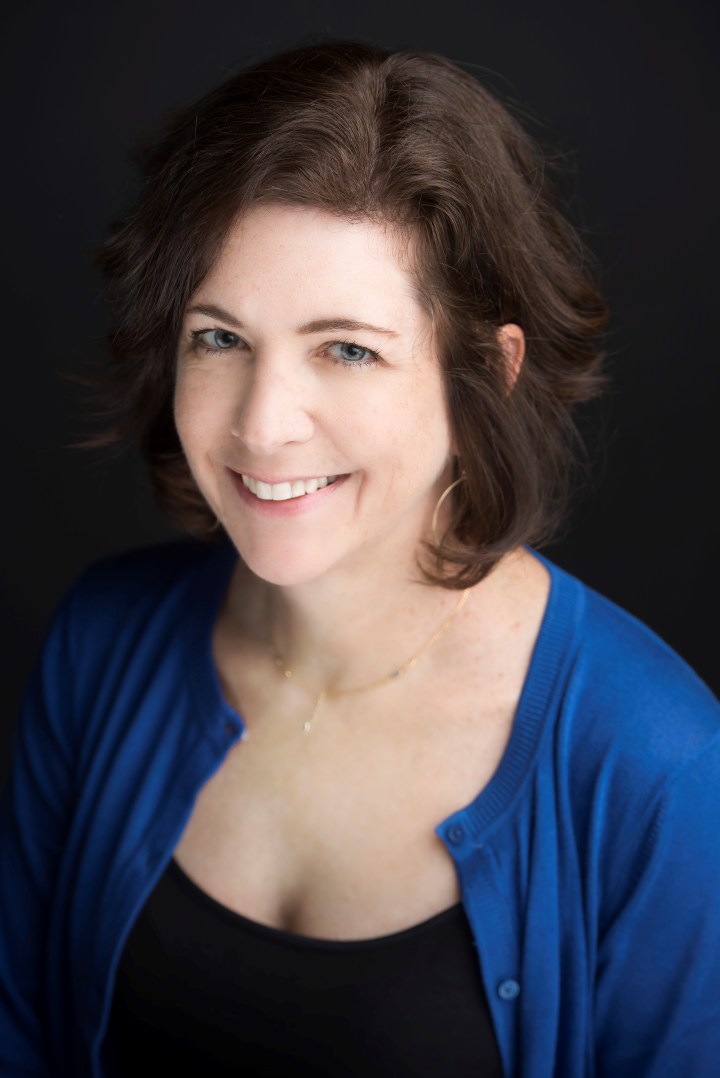
Smith, Laura Lee author photo - credit Zach Thomas
Photo credit: Zach Thomas

Like Johnny’s stock in trade, hurt feelings and old wounds take time to thaw, and at 448 pages, Smith does not rush the process, but be glad for it: The Ice House is full and complex, capturing much of what fills the current cultural zeitgeist–the opioid epidemic, class conflict, and racism–injected with equal doses southern charm and wit.

Richly layered, compassionate while providing no easy solutions, Smith masterfully demonstrates that love and forgiveness can melt the chill of icy hearts.

Toast 200 Years of “Frankenstein” at the Rosenbach’s Bibliococktail Hour

With the arrival of 2018 comes all sorts of bibliocentric events. One Philadelphia-based soirée to put on your calendar is the Rosenbach Library’s Bibliococktail hour on Friday, January 12th in honor of the 200th anniversary of the publication of Mary Shelley’s Frankenstein. (Be sure to check out Jonathan Shipley’s cover story in the winter issue of Fine Books & Collections dedicated to the bicentennial.)
Held on the second Friday of each month, the Bibliococktail series is dedicated to celebrating great literature while quaffing light libations created especially for the occasion by local distiller and distributor Quaker City Mercantile.
This 21+ event is free for Delancey Society members, and tickets (available here) start at $15 for Rosenbach members, $30 for general admission.