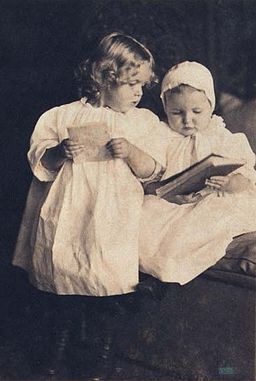
By Eva Watson-Schülze (1867-1935) [Public domain], via Wikimedia Commons
An old friend contacted me recently asking for book recommendations for his six and eight year old boys. They are voracious readers, having already inhaled the entire Harry Potter and Percy Jackson series, along with many other titles. I sent a few suggestions, then thought that this might make an excellent blog topic.
Advanced readers may seem like a gift for parents, but you can’t just give them any book and say ‘read.’ To help parents find age-appropriate, engaging and stimulating books for children, I asked Beth Yoke, Executive Director of the Young Adult Library Services Association (YALSA) and Massachusetts children’s book librarian Nicole Basbanes Claire for ways parents can keep advanced readers reading happily at their level.
Meet your local librarian.
Claire, who works primarily with elementary-school children, suggests parents get to know their local librarian. “Going to your local library is the best (and free) resource to understand all the various kids books out there,” says Claire. “Tell the librarians about your child, and they will be able to find books related to your child’s interests.”
Choosing a book for young adults can be more difficult. Beth Yoke also advocates seeking out your local librarian in this situation. “It’s not so easy for busy parents to read young adult literature in order to determine if it’s a good fit for their teen,” says Yoke. “Librarians are not only well-read, but they are especially trained to find the right book for the right teen, and they’ll take into consideration the young person’s reading interest, ability level, family mores and more.”
Demonstrate reading behavior. If you tell your child that reading is important, set the tone. “Read in front of them whenever possible. Share what you’re reading with your child, whether it’s a novel, grocery list, or mail,” Claire suggests. Family time is reading time, too. “Set aside time in the family’s schedule on evenings and weekends expressly for reading,” says Yoke.
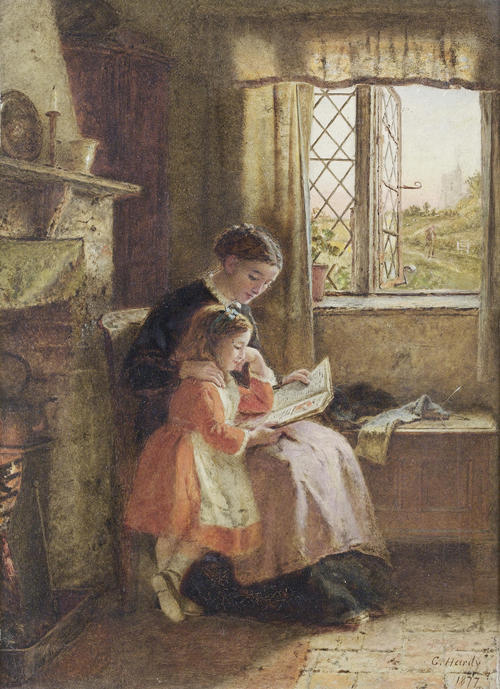
“George Hardy The evening hour 1877” by George Hardy (1822-1909) – Bonhams. Licensed under Public domain via Wikimedia Commons – http://commons.wikimedia.org/wiki/File:George_Hardy_The_evening_hour_1877.jpg#mediaviewer/File:George_Hardy_The_evening_hour_1877.jpg
Choice is crucial. Encourage young readers to enjoy a range of materials, from educational to recreational books. Offer choice of reading format as well. Tablets or hardcovers don’t make a difference, so long as children are reading.
Prevent reader burnout. Advanced readers need mental breaks to prevent reader fatigue. “Secondary students especially should be given the option to pursue lighter reads in their free time, as their required reading for school is academic-focused and sometimes challenging,” confirms Yoke.
Switch it up. If your child is in a book rut, recommend something different. Consider nonfiction and instructional books if your child generally gravitates towards fiction. “When younger readers burn out after reading chapter books, sometimes a switch over to nonfiction can be just what they need,” suggests Claire.
Support Related Reading Activities. Advanced readers will enjoy activities having to do with books, but that also offer a little respite. “Have children participate in library book clubs and creative writing, including writing “fan fiction,” says Yoke.
Provide transportation to the library. Children should have regular transportation to their local library, so they can borrow new reading material often. Some school districts provide transportation services to nearby libraries, so be sure to see what options are available in your community.
Below are e-resources available for elementary age and young adult readers to discover great new books:
-
YALSA’s free Teen Book Finder app, available on both Android and Apple, offers thousands of recommended titles for 12 – 18 year olds. These titles are also a perfect opportunity for a parent and their teen to read the same title together and discuss the book.
-
YALSA’s Alex Awards are a good option for older teen readers. These are adult books that appeal to teens.
-
The Cooperative Children’s Book Center (CCBC) groups books according to age and subject matter.
Was this helpful? Happy reading –
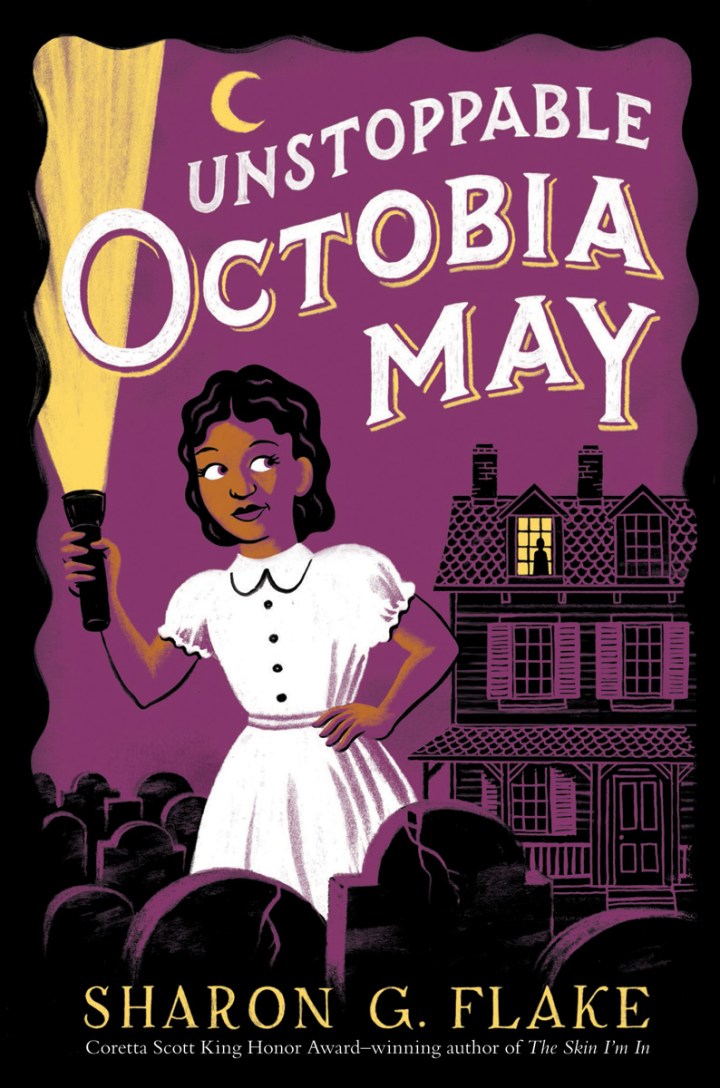
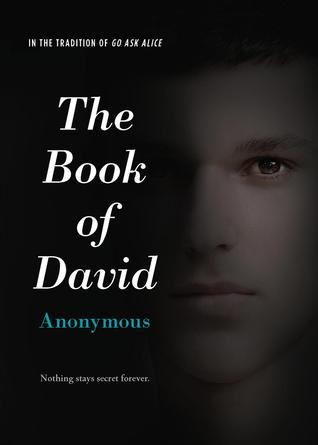
 Literary Features Syndicate