This Book is Magic!

Hello, World! series author Ashley Evanson is back with This Book is Magic! (Grosset & Dunlap, $14.99 32 pages, ages 0-4) an interactive picture book-board book hybrid for emerging readers. Evanson’s clearly got a knack for getting kids interested in reading and she kindly answered a few of our questions about her craft and the magic of childhood.

Below is an edited transcript of our question and answer session from January 17, 2017.

  1. What was the inspiration for this book?

A couple of years ago my little brother called to ask a few questions about the first Harry Potter book, which I happily answered since I’m a huge fan of the series. The phone calls continued and I decided to read the books along with him so we could call each other every night to chat. Over the next year we read all seven Harry Potter books, Lord of the Rings, and the entire Sherlock Holmes series. I looked forward to our “book club” with great much excitement. These nightly discussions had me constantly thinking about magic, which is why I dedicated my book to my little brother.

  1. Why focus on magic? You have a whimsical, bright style that youngsters gravitate towards.

I think childhood is its own element of magic, and everything in this book is something I imagined as a child or see my own children imagining.

  1. Your Hello, World series is adorable–I have all 4 titles here–do you have plans to add to that series?

I would love to create more Hello, World books! But first I’m publishing a companion book for This Book Is Magic.

  1. What’s your medium?

Everything I do is on Adobe Illustrator.

  1. How do you approach a project? What’s your process?

My approach is pretty primitive. I mean, my rough drafts contain stick figures! The concept always comes first and the art follows, but I only include concepts of things I know I would love to draw. I have inspiration boards of my favorite artists, color palettes, and photographs of the images I’m drawing.

  1. Do you work solely in children’s picture-book illustration? 

I feel like if I tried to illustrate anything else it would still end up looking like a children’s book illustration. It’s just who I am.

  1. Could you tell me how you think your work is helping shape and excite young minds. 

I feel like the most unqualified person to be publishing books so I tell people if I can do it, seriously, anybody can do it!

  1. What are you working on now?

I’m in the brainstorming phase for the companion book to This Book Is Magic, but it feels a little more like the writer’s block phase! I’ll get there!

  1. What else should I have asked you that I didn’t but that you would like our readers to know about you?

My occupation may be an author-illustrator, but my number one job is being a mother. There is nothing more magical or important than childhood and raising your little ones.


Ed Emberley Retrospective

Read the story on Friday at the Fine Books & Collections blog! (Image used with permission from Worcester Art Museum.)

@thebrucemuseum Wild Reading: Animals in Children’s Book Art

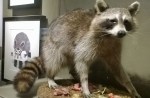
From the Big Bad Wolf to the Frog Prince and Peter Rabbit, animals have long played central roles in children’s literature. Now the Bruce Museum in Greenwich, Connecticut is exploring how and why artists highlight certain animal characteristics. Wild Reading: Animals in Children’s Book Art, which opened March 26, includes over thirty illustrations and original artwork by Lynne Cherry, Wendell Minor, Wendy Rasmussen, Maurice Sendak, Eric Carle, Fred Marcellino, and Brendan Wenzel. Taxidermy specimens from the Bruce’s natural history collection are paired with illustrated counterparts to demonstrate what makes each animal unique, and why artists choose to focus on one feature or another. A surprisingly alert raccoon, for example, is mounted next to a watercolor illustration by Brendan Wenzel, which emphasizes the creature’s large, inquisitive, eyes. A gray wolf, groundhog, chipmunks, three black bears, and other stuffed creatures offer plenty of opportunities to explore a range of artistic styles–Wendell Minor’s keen observation of animals in natural habitats contrasts nicely with Scott Nash’s swashbuckling, whimsical pirate, Captain Blue Jay. No matter the method, each illustrator engages children in the story at hand. The whole ensemble delightfully combines art and science.

Wild Reading: Animals in Children’s Book Art runs from March 26 through July 3, 2016 at the Bruce Museum in Greenwich, CT. Visit the museum website for hours of operation and special activity days.

On Saturday November 28, while a chilly rain fell outside, beloved author and illustrator Jan Brett arrived at the Northborough, Massachusetts Wegmans market in her massive tour bus and talked about the inspiration for her latest book, The Turnip, while also offering young fans a drawing tutorial.

A group of nearly four dozen children waited eagerly in a roped-off area of the market, surrounded by seasonal holiday items, while parents stood in the nearby dairy section. Brett arrived wearing turnip colors: a purple-velvet blazer with a jade green rooster brooch and banana-yellow pants. A Hedgie the hedgehog purse draped across her shoulder, holding the Prismacolor translucent markers that would be employed later in the program to create Badger Girl, one of the characters in The Turnip. Brett’s husband, Boston Symphony Orchestra Bass player Joseph Hearne checked Brett’s microphone and set up her easel.

Before the art demonstration, Brett introduced her husband and her pets, a rooster and a chicken who travel with her wherever she goes. The poultry were surprisingly calm and appeared unfazed by the throng of people. Next, she discussed the inspiration for this book. She and Hearne had traveled to Russia, and upon passing a rural farm, Brett was reminded of a folk tale where peasants attempt to unearth a giant turnip. “I loved the story, but why not turn the peasants into a family of badgers?” she explained to the children. “I think badgers are so expressive, don’t you?” The children, who, until that moment had been transfixed into silence, heartily agreed. Brett started outlining the face and body, and then stopped. She told the group that children often write to her asking how to draw expressions, and she always told them that the eyes are the most important feature. “I have a mirror next to my easel, so that I can make faces and sketch what I see.” To demonstrate, Brett covered her face, leaving only her eyes visible. Happy, mad scared–the children guessed correctly each time.

After adding the badger’s body parts, Brett added color, all the while offering tips on shading and outlining. Though this single sketch took less than forty minutes, Brett acknowledged that a single page spread often requires a week of steady work. “I know I’m finished with a drawing when I feel as though I could jump right into the page,” she said. The New York Times bestselling author offered encouragement to the group too. “To get better, you must draw, draw, draw! And be sure to sign and date your work, so that you can follow your progress.” Though some children may lament that their work doesn’t come out looking like Brett’s, she insisted that budding artists stick to it. “The more you draw, the better you get.”

Brett signed copies of The Turnip after her demonstration. Wegmans staff organized fans by ticket number, and though lines snaked through the aisles, order reigned. My daughter and I waited patiently with my mother, a longtime Brett fan who had orchestrated the outing, and when we reached the signing table, the author charmed us with her sweet inscription. Naturally, we had toted along a second book, The Night Before Christmas, which Brett happily inscribed as well, adding a reindeer portrait alongside the date.

Famished, my daughter inhaled a slice of pizza after the book signing. As I waited in line for a cup of coffee, I spoke with a woman I recognized from the event. She brought her seven year old son, though they had just moved from Virginia days before Thanksgiving and were still unpacking. “My son will only read Jan Brett books. They’re magical. So we had to come,” she explained. Another woman, a teacher at Seven Hills Charter School in nearby Worcester, brought eleven of her 21 students, and raised funds so that every child in her class could have their own copy of The Turnip. “Jan [Brett] has a way of inspiring and encouraging these children. It means so much to them.”  Powerful words to remember during this holiday season, when we’re bombarded with ads for gadgets we don’t really need, and when children are so easily distracted by gimmicks and flashing doo-dads. Books, beautiful books, are magic.

The Turnip, by Jan Brett; Putnam Books, $17.99, 32 pages, ages 4-7. (November 2015)

Jan Brett will be visiting 23 cities and towns on this tour. http://www.janbrett.com/2015_fall_tour.htm