Tourists Overwhelm Beatrix Potter’s Beloved Lake District

Last month, the Lake District National Park Authority (LDNPA) issued a statement declaring that off road vehicles would not be banned from the park, a move that has upset some locals who say dirtbikes and cars are ruining the countryside. 

**This article has been updated with new information.**

Named a UNESCO World Heritage site in 2017, the Lake District has welcomed a surge of visitors over the past twenty years, and not all sightseers have left the land as they found it: according to a recent report in The Guardian, off road vehicles, 4x4s, and dirtbikes are increasinglychewing up the delicate lands forged in the last Ice Age, damaging dirt roads and surrounding fields. Farmers complain that the roads are so poor that they cannot drive their equipment on them anymore.

The Lake District ‘s spokesperson Sarah Burrows said in a recent email that The Guardian’s article “is inaccurate and, as such, we wrote to the editor in response. We highlighted that the headline Lake District heritage at risk as thrill-seekers ‘chew up’ idyllic trails is misleading and inflammatory, furthermore, parts of the article itself are factually incorrect. The two public roads are open to all users and make up just 0.09 per cent of our rights of way network, so to infer that this is a Lake District-wide ‘problem’ is misleading. Indeed, the overwhelming majority of people enjoying the national park’s 3,280km of trails are highly unlikely to encounter recreational motorists on these routes.”

Lake District residents say the tension between meeting the wants of tourists while preserving the bucolic landscape is at least a decade in the making. In 2006, the LDNPA posted the now-ubiquitous red and white “hierarchy of trails” guides, notifying visitors of proper road etiquette, however local groups say these signs have only encouraged thrill-seekers to take their ATVs off roading. Members of the Save the Lake District Group say that vehicles using these roads have leapt from 90 a month in 2008 to over 400 in 2017. Burrows, meanwhile, provided usage data on the LDNPA website saying that tracking motorized vehicles on the roads has been historically spotty and that the numbers quoted by Save the Lake District “may not be very reliable.” The LDNPA report goes on to state that it has noticed a decrease on vehicular traffic on those roads that have been repaired.

The roads bearing the brunt of these adventure seekers are High Tilberthwaite and High Oxenfell. Part of the appeal lies in these roads’ proximity to Potter’s farm, which she purchased in 1929 and is now part of the National Trust. Meanwhile, the LDNPA maintains that the Lake District trails have historically been a mix of dirt, asphalt, and stone, and that recent severe weather has deteriorated the roads that now require repair. Paving these highly trafficked roads would keep motorists from destroying the surrounding area, and the LDNPA posted before and after images of repaired roads on its website, where some of the “before” roads look downright impassable, but Save the Lake District maintains that these pictures aren’t telling the whole story.

Earlier this month, LDNPA committee members voted not to ban ATVs from trails despite a recommendation from the International Council on Monuments and Sites suggesting that banning these vehicles would drastically improve the quality of the trails and preserve the beauty of the area. The latest vote has lead to frustrated protests and angry outbursts from locals, who fear that this is only another step towards stripping the Lake District of its charm and turning it into a roadside attraction.

Burrows counters that the LDNPA is trying to meet the needs of all park users. “As a national park representing everyone’s right to enjoyment, the decision to restrict anyone’s right to use these roads must not be taken lightly. In line with government guidance, legal intervention through a TRO (Traffic Regulation Order) is a last resort and we should explore other management options first. We completed a comprehensive evidence gathering exercise and the findings were presented to our Rights of Way Committee on 8 October where Members decided on the future management of these roads and whether or not a TRO is required.

“The decisions we have to take are often complex, but we do this in an open and transparent way so that everyone can see in detail what the perceived issues are, how we’ve gathered our evidence, and how we’ve come to the reasoning behind our recommendation to committee,” Burrows wrote. The committee’s findings can be read here

Jennifer Morla’s Career-Spanning, Kickstarter-funded Autobiography Makes a Splash

Entitled, fittingly, Morla: Design, this Kickstarter-funded memoir explores the career of Jennifer Morla her creative process, design philosophy, and provides behind-the-scenes stories about various high profile projects like her campaigns for Swatch, Levi’s, and Nordstrom.

MorlaDesign_Stories
Reproduced with permission from Letterform Archives.

Though an autobiography, Morla is a designer, and so it makes sense that her story be draped in a style that speaks to her lively aesthetic. There’s neon bookmark ribbons, metallic inks, vacuum-formed, debossed white covers, and bold stripes that all manage to play well together.  In other words, the designer’s touch is visible on every inch of the book.

MorlaDesign_RegularOverhead
Reproduced with permission from Letterform Archives.

Essays and insight fill the 400+ page volume, spanning Morla’s career and providing advice to design acolytes. Typohiles, meanwhile, have plenty to rejoice about: Morla explores twenty-six of her most beloved typefaces, from newer fonts to her “oldest typographic friends.” The designer waxes poetic over the sloping curves of the italic Garamond C to when she fell in love at first sight with Obsidian when it first appeared in 2015.
Earning over 300 accolades including the Cooper Hewitt award, the AIGA medal, and the Smithsonian Design Museum National Award, Morla’s work is found in the permanent collections of the Library of Congress and MOMA, and when not running her design firm, Morla teaches at the California College of the Arts. Her book is a vibrant reflection of a designer whose work combines type and image to express a range of concepts. “Design,” as Morla writes, “is understanding made visible.”
Morla: Design, by Jennifer Morla; Letterform Archive, $125, 432 pages. 

Counting Crows…and Robins, Jays, and Chickadees

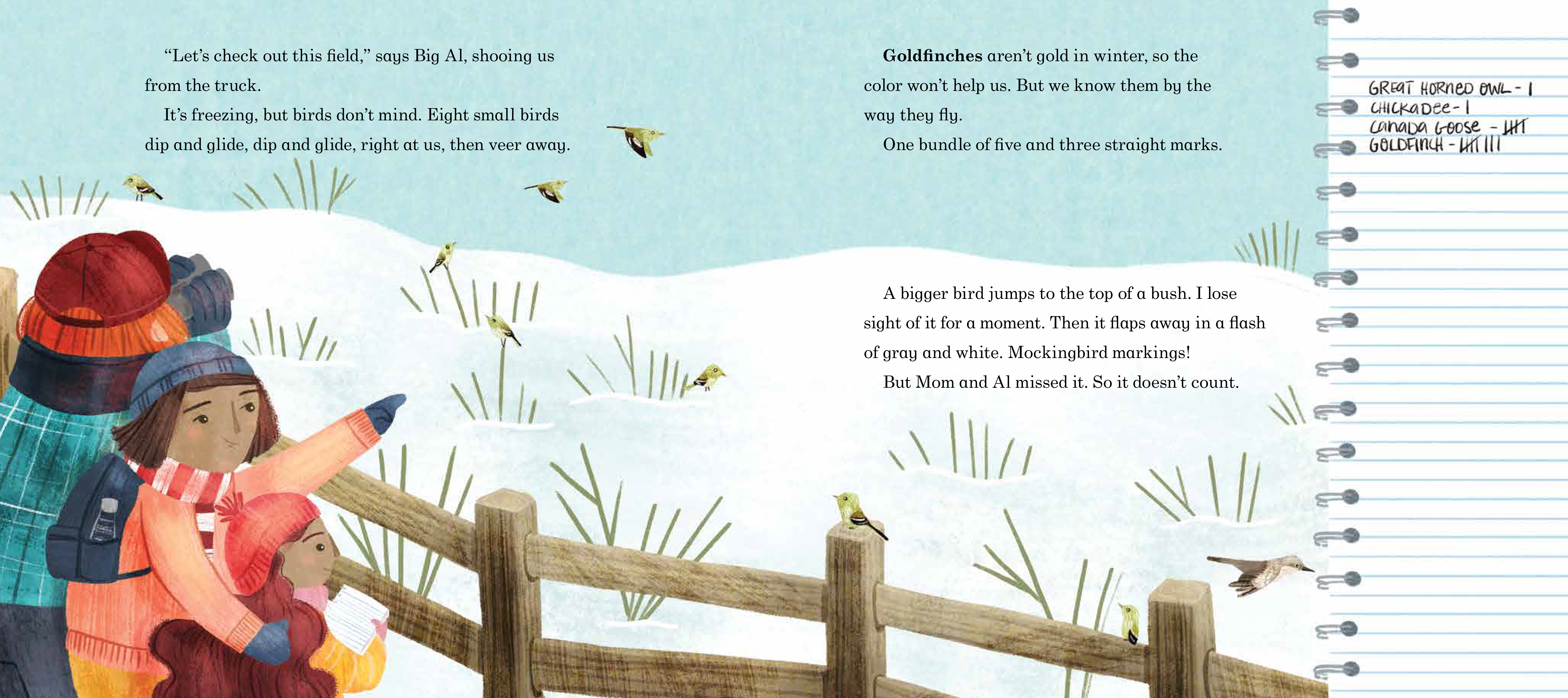
Bird Count_interior-7
Copyright 2019 Susan Richmond and Stephanie Coleman. Reproduced with permission from Peachtree.

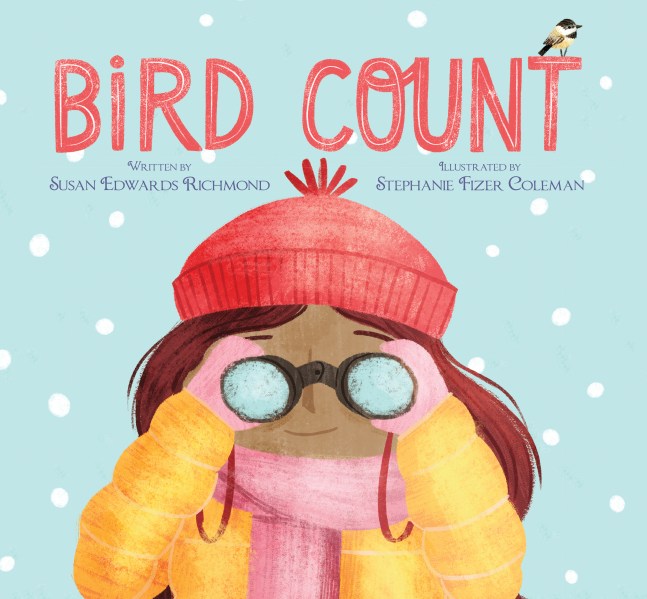
Bird Count, by Susan Edwards Richmond, illustrated by Stephanie Fizer Coleman, Peachtree Publishers; $17.95, ages 4-8. October 2019.

Fall birdwatching is more challenging now that mating season is over–the bright plumage of some birds gives way to more muted tones–but scouting them out is excellent preparation for the annual Audubon Christmas Bird Count. In Susan Edward Richmond’s first children’s book, Bird Count, Ava, whose name is Latin for “like a bird,” is tasked with recording and identifying birds for the wintertime roundup.

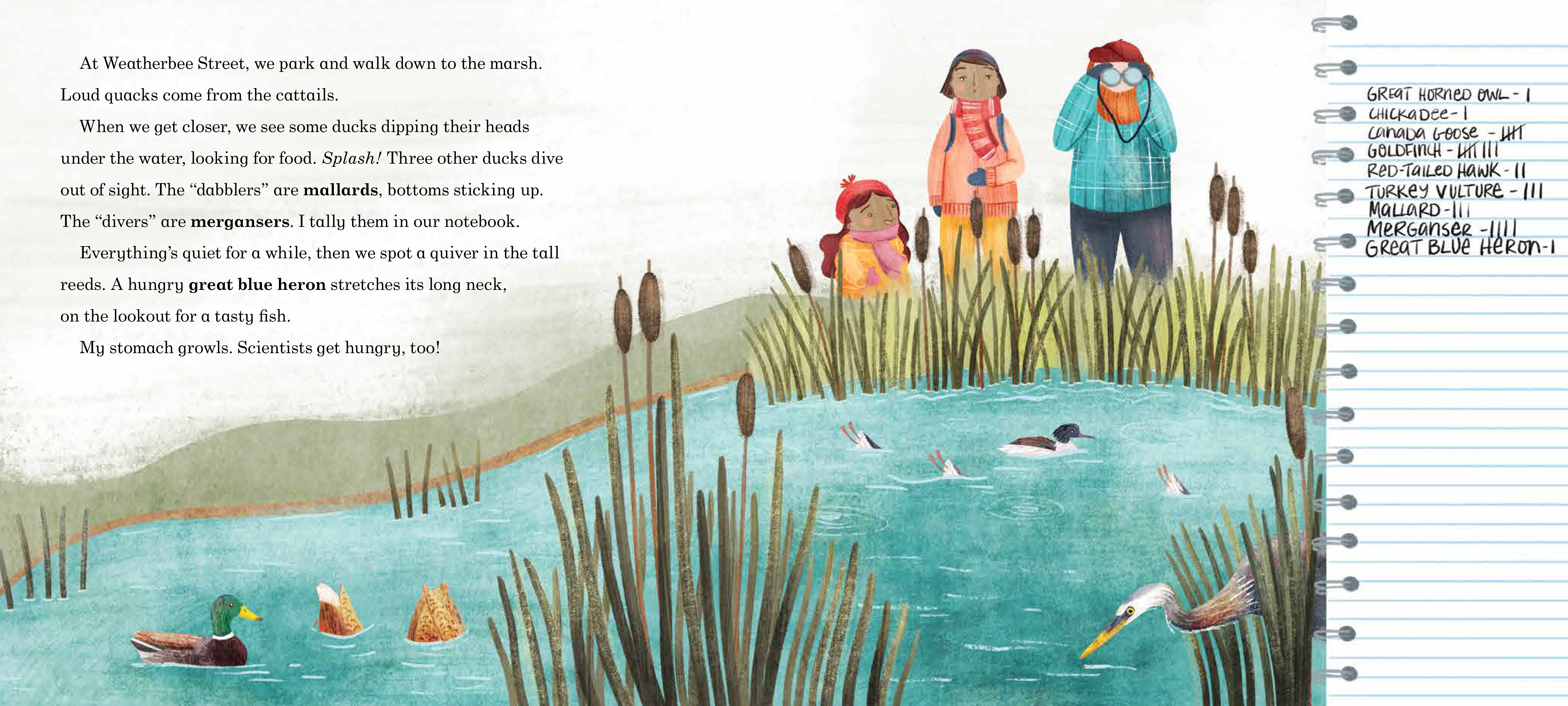
Bird Count_interior-10
Copyright 2019 Susan Richmond and Stephanie Coleman. Reproduced with permission from Peachtree.

A bird can only be counted if at least two people confirm hearing or seeing it, so Ava must pay close attention with her eyes and ears. The singsongy text flies with ease from one page to the next, while young readers can keep abreast of Ava’s bird tally in the page margins. Stephanie Coleman’s deft illustrations of mallards, mergansers, and merlins prove the adage that practice makes perfect: last year she challenged herself to paint one bird a day for 100 days. (See the entire flock here.)

A joyous introduction to birdwatching while also fostering a love of the outdoors, Bird Count will delight fledgling ornithologists as well as wise old owls.


The Dog Who Lost His Bark

Rehabilitation and redemption are possible, and in the right homes, both animals and humans can forge lifelong bonds of love and friendship, as masterfully told in Artemis Fowl series author Eoin Colfer’s latest, The Dog Who Lost His Bark (Candlewick, $16.99, 144 pp, ages 7-10).

Here, we meet a young pup whose lot in life is filled with sadness; sold and boxed up as a surprise Christmas present, Dog is not an overnight success–he’s a puppy after all. Puppies need patience and love, both in short supply at his first home, and he is quickly cast aside, neglected and forgotten, until one day Dog is rolled into a sheet of flooring and tossed into the local trash heap. Dog is so traumatized that he loses his bark. But he winds up at a local shelter, where he’s discovered by a young boy named Patrick whose  father is a musician on tour in Australia, and the child hopes a dog will fill the ache in his heart. Patrick is drawn to Dog’s sadness and makes it is mission to rehabilitate Dog, rechristened Oz in an attempt to summon Patrick’s father.

After much trial and error and unrelenting patience, Oz becomes every child’s dream of a pet. Then Patrick’s life is thrown into disarray, and now it’s time for Oz to rescue his boy. This canine adventure saga is classic children’s book fodder–right up there with Lassie, Come Home and Where the Red Fern Grows. Readers of all ages will be reaching for the tissues while avidly turning each page to see what happens next. Kate Greenaway medal winning illustrator P.J. Lynch’s (The Boy Who Fell Off the Mayflower; Lincoln and His Boys) soft pencil illustrations are an expert match for a text that is sure to become a household favorite.


Charlotte Brontë Before Jane Eyre

The reading public has long been fascinated with anything having to do with Charlotte Brontë, the author of Jane Eyre and the source of untold spinoffs, movies, and commentary. In fact, Jane Eyre has never gone out of print and has been translated into nearly 60 languages.

Now from the Center for Cartoon Studies and Hyperion Books comes a book that explores the woman behind the classic in Charlotte Brontë before Jane Eyre (Hyperion, $17.99. September 24, 2019). Written and illustrated by cartoonist Glynnis Fawkes, the 112-page graphic novel takes middle-grade readers on a trip back to 1837, when young Charlotte faced unrelenting discouragement and setbacks on the path to literary success, all set to the brooding backdrop of the isolated parsonage the Brontë family called home.

Fawkes’ pen-and-ink illustrations are crisp and vivid, capturing in shades of black, white, and gray the oppressive and highly patriarchal world Brontë navigated. It’s a biography that examines Brontë’s formative years and the challenges she faced. Fawkes intersperses Brontë’s own words, where possible, to better express her personality.

Fellow cartoonist Alison Bechdel provides an introduction into why Jane Eyre remains as relevant today as it did when first published under the pen name “Currer Bell” in 1847. A postscript and panel discussions explaining Fawkes’ thought process behind certain illustrated panels rounds out the book.

Charlotte Brontë Before Jane Eyre is a fantastic introduction to one of Western literature’s most enduring authors. Tuck this one into your child’s backpack, there’s much here to inspire anyone apprehensive about heading back to school. And though most middle-grade readers may not be quite ready to pick up Jane Eyre, Fawkes’s biography will whet their appetite.

Brave Flies and Barking Spiders Featured in New Series by Kyle Sullivan

HOBGOBLIN AND THE SEVEN STINKERS OF RANCIDIA by Kyle Sullivan (Hazy Dell Press. 168 pp. $15.95). Ages 6-8.


         Are you somebody that likes fart jokes and happy endings? If so, then this is the book for you! Hobgoblin and the Seven Stinkers of Rancidia, the first book of the Hazy Fables series, is the hilarious second coming of Snow White and the Seven Dwarves. (Do you see the resemblance?)


          In this funny tale, the last hobgoblin in the world sets out to stop the bad-tempered King Fiddlefart from cleansing his subjects and making them smell wonderful. On his heroic mission, Hobgoblin acquires some friends who want to help as well: a squirrel, a ball of dung, a mummy, a skeleton, a bug, a sloth, a furry thing with glasses, something named Grody that can’t be explained, six flies, and some spiders that bark like dogs.


          This story is like nothing you’ve ever read before. With gross heroes, a guide to the characters, and a map, it’s something you’ll instantly fart with glee about.


Fish Tales at Martha’s Vineyard Book Festival


Martha’s Vineyard’s reputation as a haven for writers and poets is well-documented–Dorothy West, Art Buchwald, David McCullough, and Judy Blume represent a few who have called the island home–and since 2005 the Martha’s Vineyard Book Festival has brought authors from far and wide to celebrate reading and writing. Originally conceived as a biannual event, the free festival turned into an annual August rite starting in 2015. The brainchild of Suellen Lazarus, a former director at the World Bank Group and longtime summer Island resident, the festival is modeled on the National Book Festival in Washington D.C. as a space where authors can discuss their work and engage in thoughtful conversation.

The event has grown over the past decade; this year, the festival opened on August 2 with a conversation between Chelsea Handler and Seth Meyers at the island’s Performing Arts Center. The next two days brought over thirty authors to four separate stages set up under billowing tents in the up-Island town of Chilmark. Among others, bestselling authors John Grisham, Henry Louis Gates, Jr., Joan Nathan, and Richard Russo talked about their work and participated in panel discussions ranging from the role of the press to the future of life on earth.

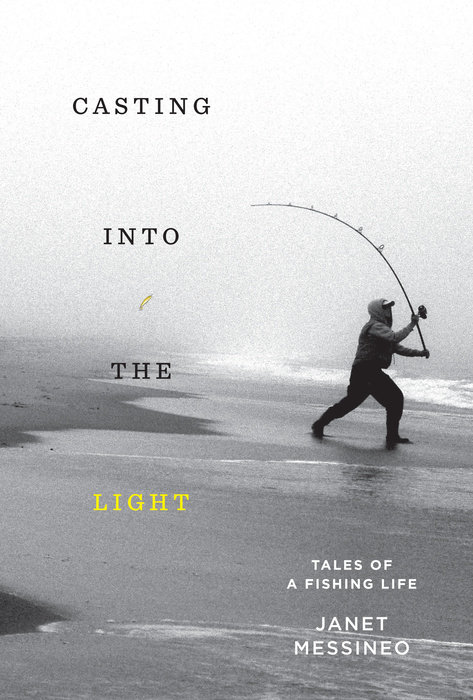
COURTESY OF PANTHEON

On Sunday, local author Janet Messineo closed out the festival by sharing stories from her book, Casting into the Light: Tales of a Fishing Life (Pantheon), which chronicles her path to becoming an expert striped bass fisherman and, eventually, fish taxidermist. “I guess you could say I’m obsessed with catching striped bass,” she said to an audience filled with fellow anglers and casual observers. “To me, catching the fish is the thrill these days. I don’t keep anything I’m not going to eat. These are beautiful and clever animals.” Messineo swapped tales with moderator and Chilmark selectman Warren Doty about fishing under cover of darkness–striped bass are nocturnal–and thrilling at the beauty of the species and the ever-present opportunity to hook “the big one.”

As the day came to a close, festival-goers filed out of the tents clutching reusable totes filled with hefty hardcovers and trekked the half-mile or so to the field-turned-parking lot, wondering which book to tackle first during these waning days of summer.

Maira Kalman Retrospective Opens This Month at High Museum

© MAIRA KALMAN, COURTESY OF JULIE SAUL GALLERY
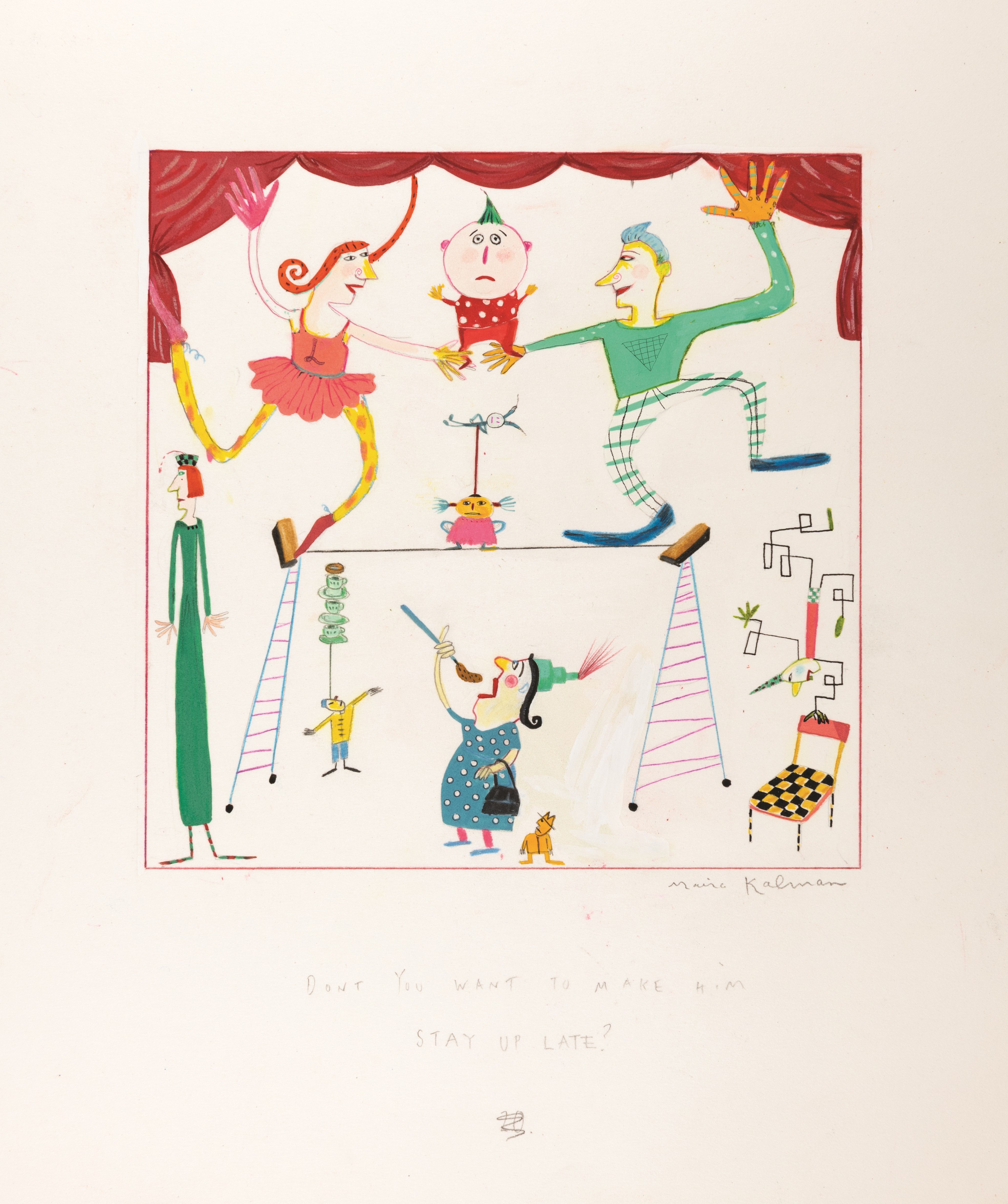
Kalman’s illustration for Stay Up Late.

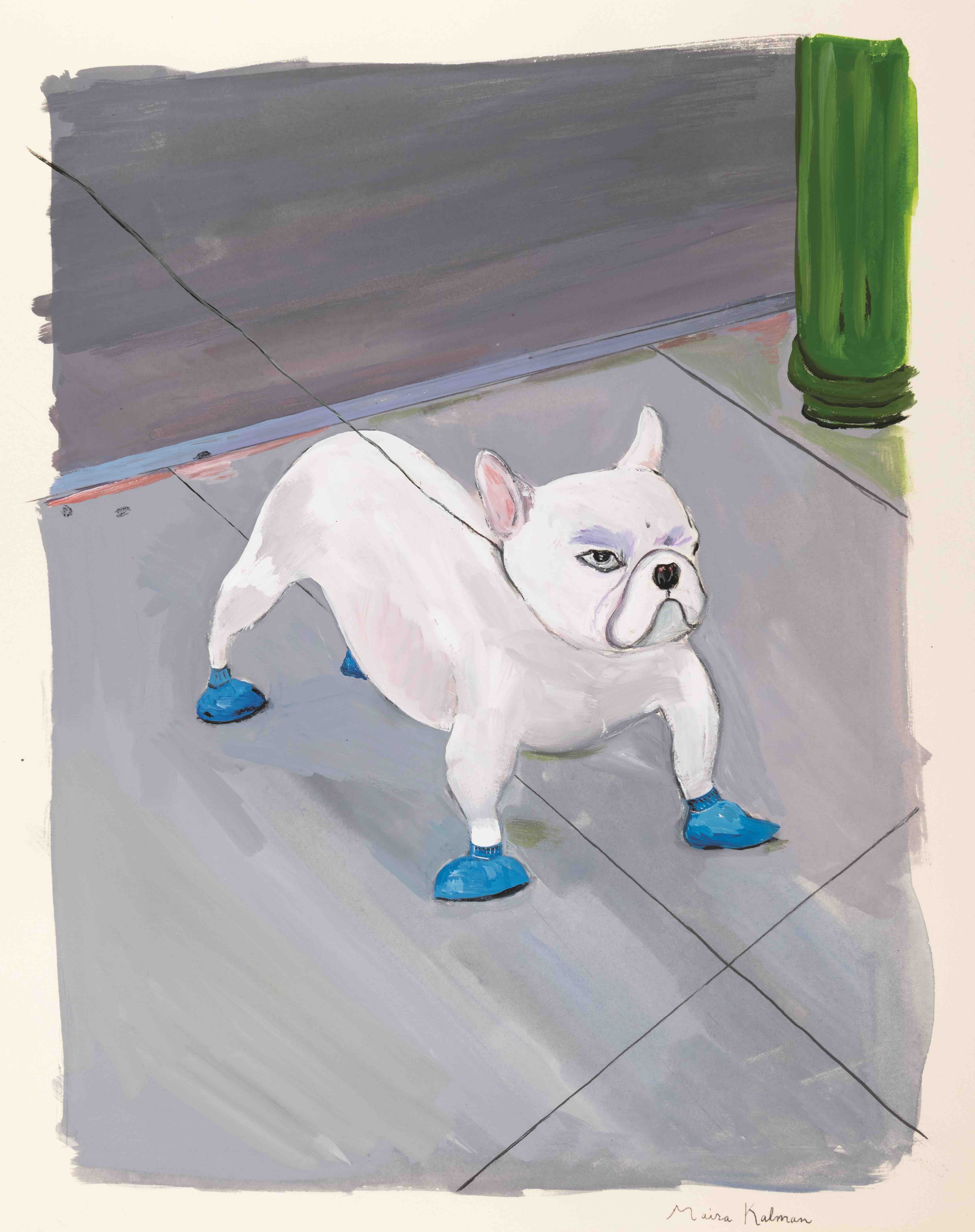
Author-illustrator Maira Kalman’s bibliography is an impressive one. In addition to creating whimsical covers for the New Yorker, Kalman claims dozens of books to her credit: she debuted in 1985 with the picture book debut, Stay Up Late, and since then titles have included instant classics like Last Stop, Grand Central (1999), Looking at Lincoln (2012), Fireboat (2002), and, even an illustrated picture book called Cake (2018). Each book explores complex topics while maintaining a certain lightheartedness that makes her work accessible to people of all ages, but especially children.  In fact, Kalman is adamant that children can handle any subject – slavery, love, even death – as long as it’s done the right way.  “There’s always a way to talk to children as long as you are candid and kind,“ Kalman said in an interview with us back in 2014. “You don’t have to scare them beyond their understanding or above their age level.”

Later this month, Atlanta’s High Museum will host an exhibition dedicated to exploring Kalman’s work in a show entitled The Pursuit of Everything: Maira Kalman’s Books for Children. This is the fourth collaboration between the High Museum and the Eric Carle Museum of Picture Book Art in Amherst, Massachusetts, and will span nearly the entirety of Kalman’s career. On loan from various institutions, the 100-piece show features a mix of books, original drawings, manuscripts, and even illustrated correspondence between Kalman and her two-year-old granddaughter.“We are thrilled to partner again with the High to bring children’s picture book art to Atlanta,” said Ellen Keiter, chief curator at The Carle. “Kalman is an astute chronicler of our time as well as someone who makes history accessible.”

© MAIRA KALMAN, COURTESY OF JULIE SAUL GALLERY
Kalman’s illustration for Your Beloved Dog.


“Both captivating and moving, Kalman’s work challenges all of us to rediscover the childlike curiosity that lives deep down inside,” said High director of education Virginia Shearer.

Additionally, Atlanta’s Alliance Theater will present the world premiere of the play “Max Makes a Million,” from June 20-July 21, 2019. Adapted by and directed by Liz Diamond, the play incorporates jazz, poetry, and the visual arts in a tale starring Kalman’s beloved poet puppy character, Max Stravinsky.

The Pursuit of Everything is both a celebration of Kalman’s work and a reaffirmation of the artist’s belief that children deserve honesty in their literature. “It’s absolutely possible to talk about anything with children,” Kalman said. “Because they do understand contradictions, and they do understand sadness and they do understand kindness. There isn’t a child in the world who doesn’t.”

The Pursuit of Everything is on display at the High Museum from June 22 through September 15, 2019.

“On Paper” Gets a Makeover

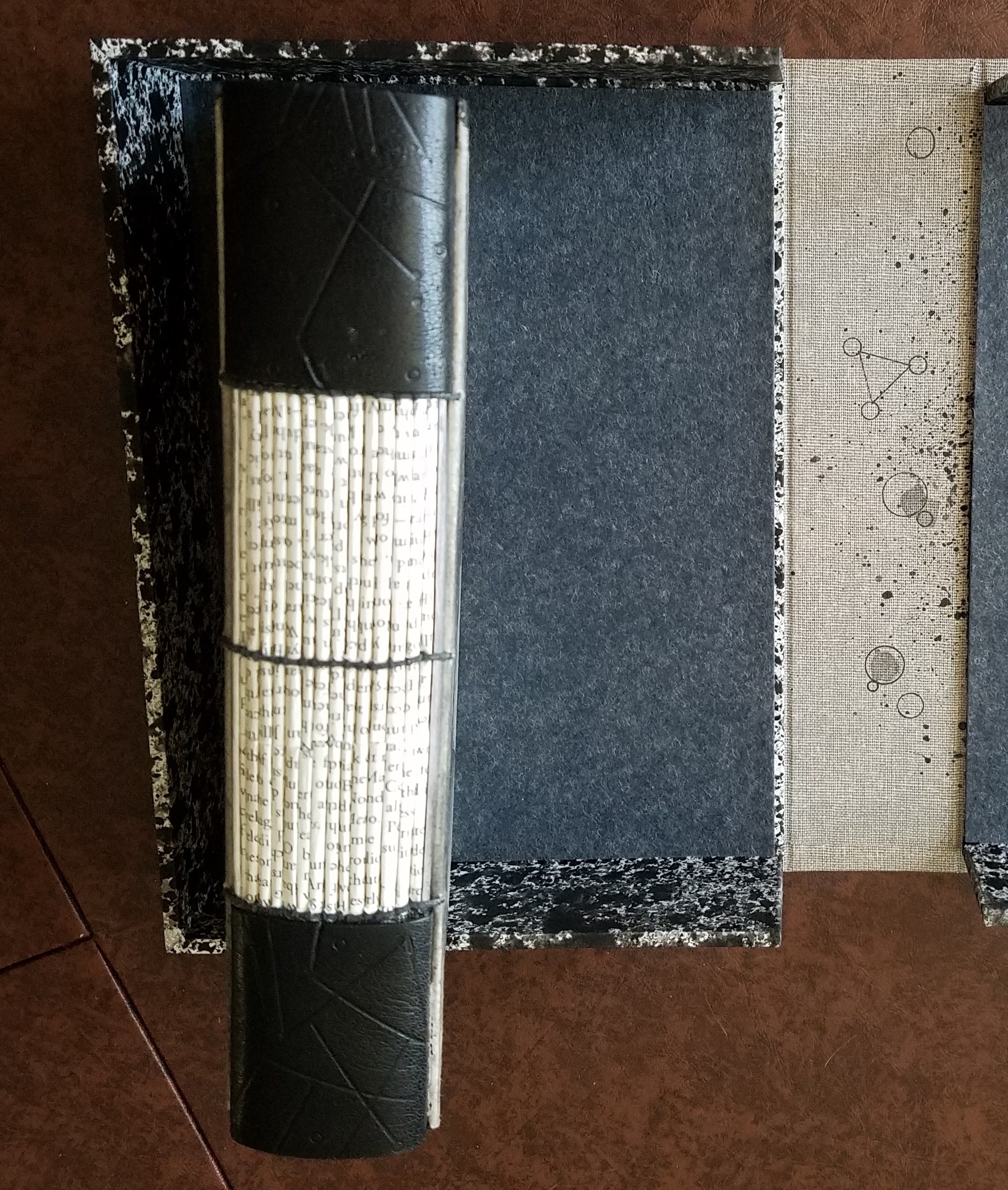
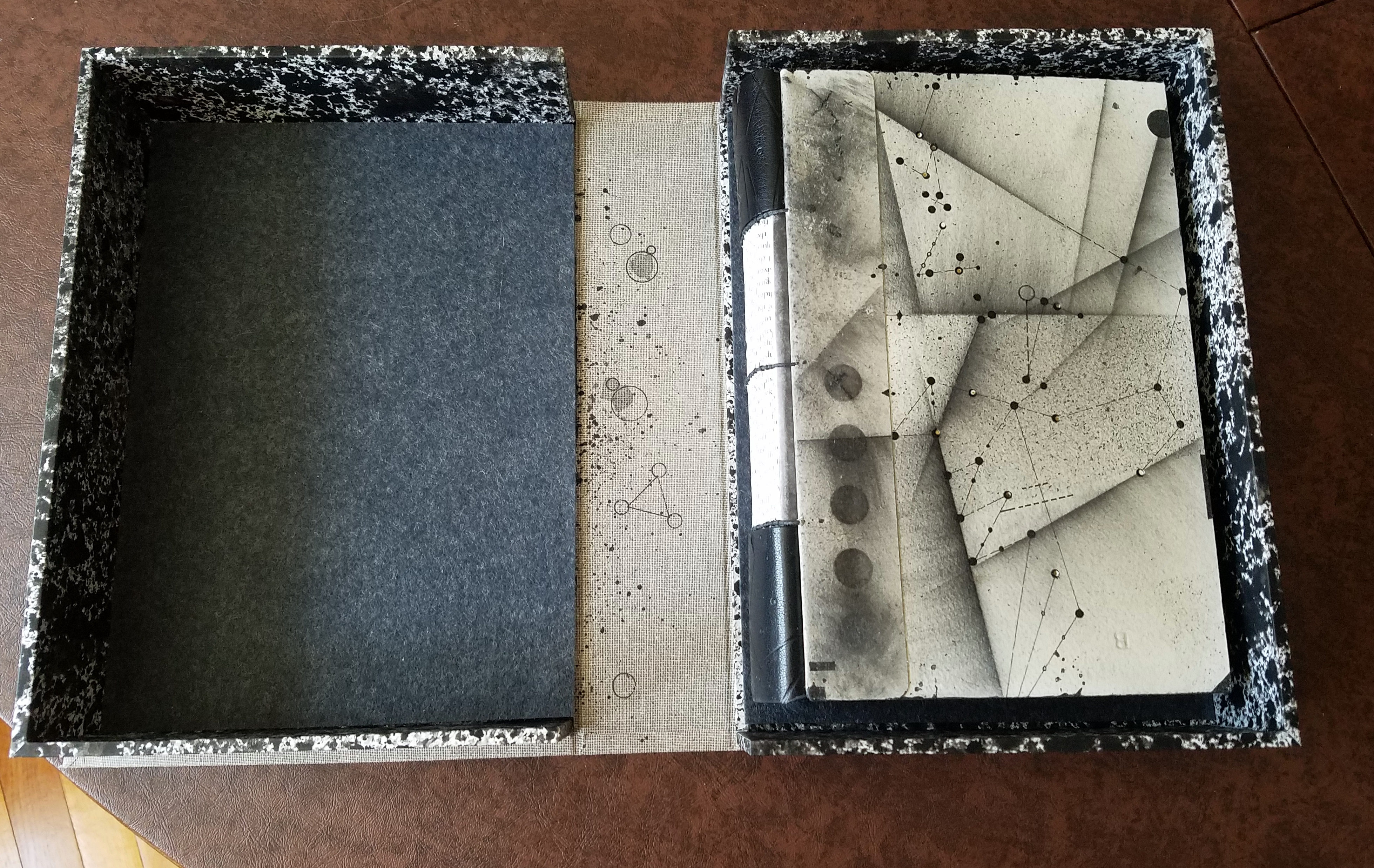
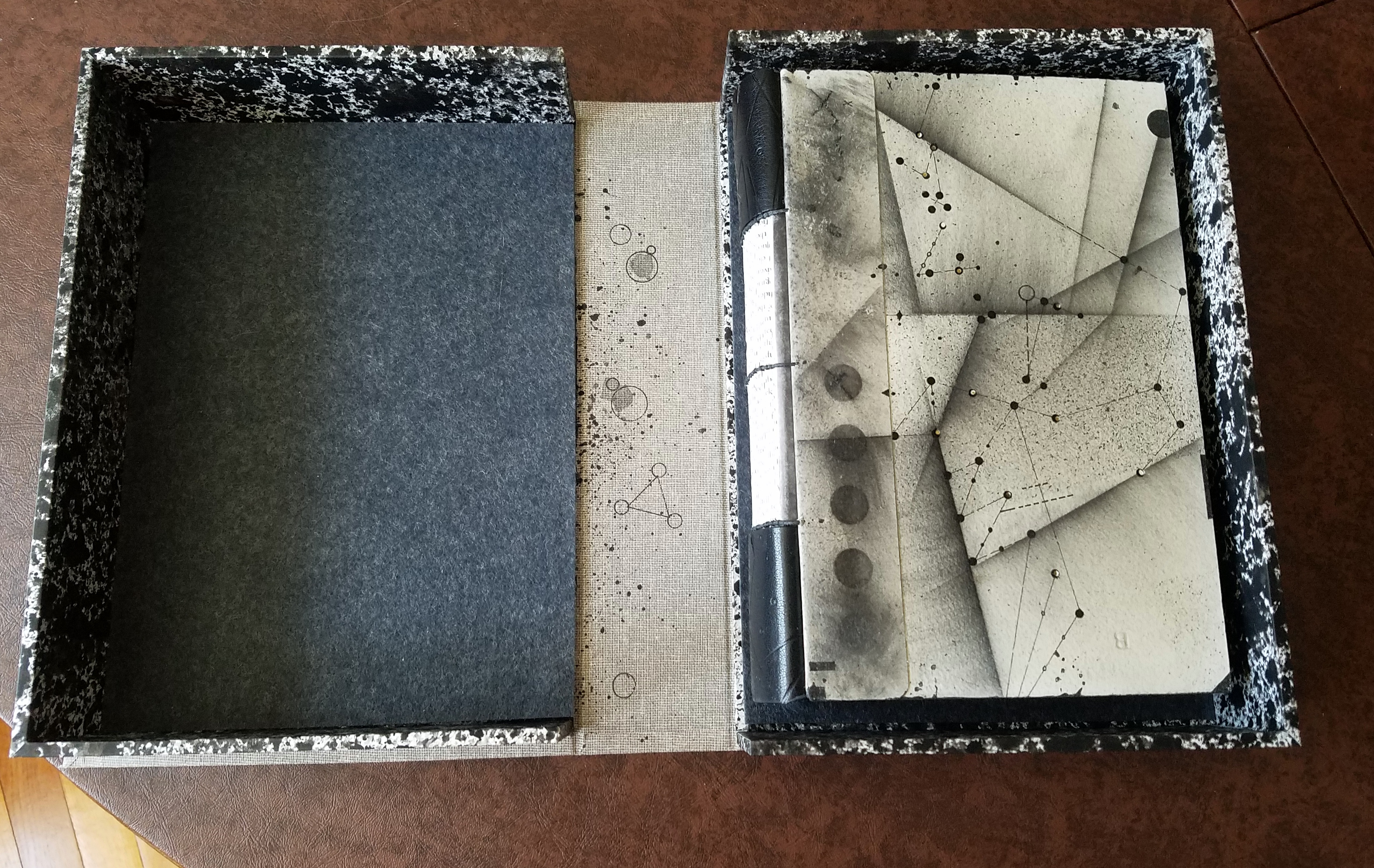
After the 2013 publication of Nick Basbanes’s On Paper, book artist Tim Elycalled the author and requested the unbound sheets of the book, just as they appeared off the press. Basbanes’s editor kindly obliged, and off On Paperwent to Washington State to Ely’s art studio where he forges one-of-a-kind, handmade books that have been compared to illuminated manuscripts for their impeccable detail and expression. Photo credit: Nick Basbanes

Basbanes didn’t hear from Ely for five and a half years, but, considering that Ely’s work is found in private collections as well as the Library of Congress, Yale University, Smith College, The Victoria and Albert Museum, the Lilly Library, and the Boston Athenaeum, there was hardly any rush. Then, earlier this spring, the artist sent Basbanes a note saying the book was ready, and had it shipped to Massachusetts under the most careful of conditions.

Unwrapped, Basbanes came face-to-face with his book, now clad in a creamy off-white clamshell box with marbled borders. The book itself is now bound with strips of handmade Japanese paper, papyrus strips, and leather. Peppering the front and back boards are Ely’s own glyphs–symbols the artist calls “cribform” that take on different meanings depending on their placement and the tool used to create them. It is, said Basbanes, “a most exquisite piece of art.”


Ely, who had been doing what he called “a slow deep read of On Paper,” set himself a goal to “require every self-proclaimed book artist to read it and know it,” likening the use of paper to the “idea of drawing as a major expression,” finding inspiration in using paper as “a medium for telepathy.”

Spine of "On Paper." Photo credit: Nick Basbanes

“Beyond deep reading, I have found that the best way to become informed about an event or gather a bit of enlightenment is to make an expressive book,” Ely said a few years back. Indeed, his work is a kind of bookmaking alchemy, fusing the ancient art of monastic manuscript binding with contemporary expression.

PHOTO CREDITS: NICK BASBANES

Catalogue Review: Librairie Metamorphoses

The second catalogue to appear from Librairie Métamorphoses is a tour de force. No surprise, considering that the Parisian firm was founded by Michel Scognamillo, former librarian and confidante to French collector Pierre Bergé, the lifelong business and romantic partner of fashion designer Yves Saint Laurent.

Before we talk about the contents, let’s look at the front matter. Smartly sheathed in a matte black binding and illustrated with a black-on-red silkscreen self portrait of Marcel Duchamp (#21 in the catalogue; price available on request), this volume is dedicated to Cédric Herrou, the 39-year-old olive farmer who ferried dozens of asylm seekers through France via what has been dubbed the French Underground Railroad. It is a fitting tribute, considering the contents of the catalogue are dedicated to the ideals of equality and freedom of expression.


So, what’s inside? Where to start? With the selection of material dedicated to poet Guillaume Apollinaire? Or the handwritten sheet music by George Bizet (€15,000)? Correspondence from George Sand to her dear friend Gustave Flaubert (€12,000) is marvelous, too, but perhaps the pièce de résistance is a 1671 edition of Molière’s The Middle Class Gentleman (Le Bourgeois gentilhomme), printed at the playwright’s expense and bound in its original vellum.


This particular volume is exceptional as a masterpiece of French literature and as a turning point in the editorial emancipation of Molière, who had personally financed the publication of his play Tartuffe in 1669. With The Middle Class Gentleman, Molière declined to transfer his rights to a bookseller after the play became successful, as he had done with Tartuffe. Now, the playwright retained all legal rights and profits for himself. And yet the haste with which this edition was printed is evident: typographical errors, erratic punctuation, and sloppy copy calibration abound, but these characteristics only add, according to the catalogue, “a certain charm” to the volume and to its rarity. Price available upon request.

There’s no website for Librairie Métamorphoses, but interested parties can visit the shop at 17 rue Jacob in the 6th arrondisement in Paris, call 33 06 13 92 76, or email at scolivre@gmail.com.

More treasures fill this beguiling catalogue, while the bibliographical notes are reason enough to seek it out. If only I had more than “pure praises” for Libraries Métamorphoses, but for now it will have to do