Klutz Glitter Clay Charms Product Review

Glitter Clay Charms, by Klutz Press; $21.99, 48 pages, ages 8 and up. 

Klutz has built its reputation on building fun activity kits that encourage and stimulate open-ended creativity. We recently received the Glitter Clay Charms book kit and tested it. Here’s what we learned:

What it is: A 48-page design booklet with materials necessary to create sparkly charms: a metal link bracelet, charm loops, clay, even a drying rack complete the kit. Precise, easy-to-follow-instructions are Klutz’s hallmark, and cover every conceivable clay-related outcome here.

You will need: Patience. Plus a toaster oven to “bake” the charms.

Who it’s for: Children eight years old and up. Tiny metal pieces, polymer clay, and functional sharp points can puncture tiny fingers and other body parts. Less dexterous children should be supervised. Note that the book only comes with one metal bracelet, which could make sharing this project with others problematic unless another bracelet is provided.

The project: We were feeling adventurous so we skipped the simple charms and headed straight for the adorable orange fox. There’s no orange clay, so we blended a small pink ball and a medium yellow ball of clay, as instructed. Rather,  we tried to–this clay doesn’t blend well, and after about ten minutes of kneading, we still had clay in a darker shade of pink. No matter, we soldiered on, following the step-by-step instructions to mold the charm into the desired form. Even with minimal artistic skill, we were able to compose something that resembled the example in the book. Next we added the charm loop and then placed the fox on a foil-lined cookie sheet, which went in a 250°F toaster oven for twenty minutes. (This is where parental supervision is crucial.) After letting the charm cool, we attached it to the metal bracelet. The loop came loose from the charm, but Klutz discusses how to remedy that on page 13.

Here’s how our charm turned out:

img_0097
A rare pink fox on a charm, modeled by my assistant. 

Total time commitment: We spent roughly forty-five minutes (including twenty minutes baking) from start to finish creating one charm. The only frustrating moment we encountered was blending the clay into our desired shade of orange, but we worked through it.

The verdict: Detailed instructions encourage close reading and following directions. Creative types who love to work with their hands will enjoy this satisfying project. I found molding the clay especially soothing, even when the color didn’t blend as desired. Those easily frustrated by manipulating small objects may not enjoy Glitter Clay Charms. Parents will want to cover workspaces with newspaper and put kids in an old t-shirt or smock–polymer clay stains.

Would we do it again? Definitely.

Have you tried any Klutz products? Share your experiences in the comments below!


The Valentine Bears

vbears2
Text copyright 1983 Eve Bunting, art copyright 1983 Jan Brett, reproduced with permission from HMHCo.

The Valentine Bears, by Eve Bunting, illustrated by Jan Brett; Houghton Mifflin Harcourt Books for Young Readers, $8.99, 32 pages, ages 4-7. 

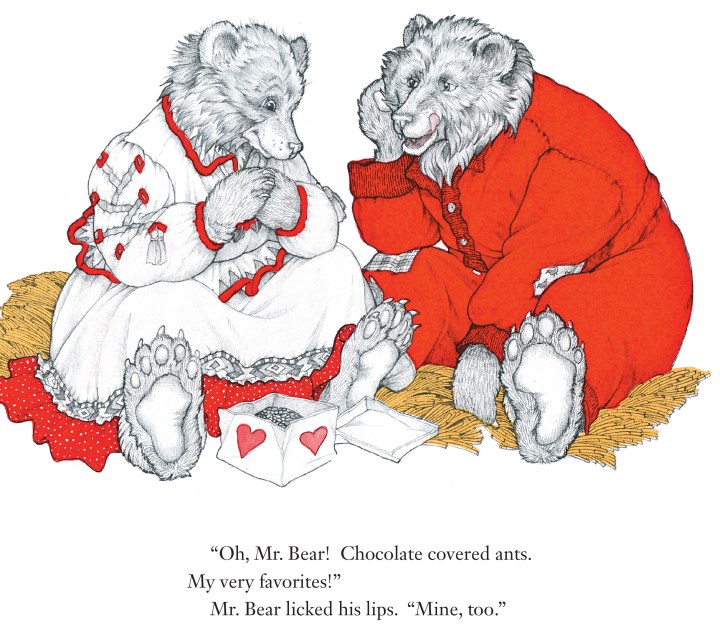
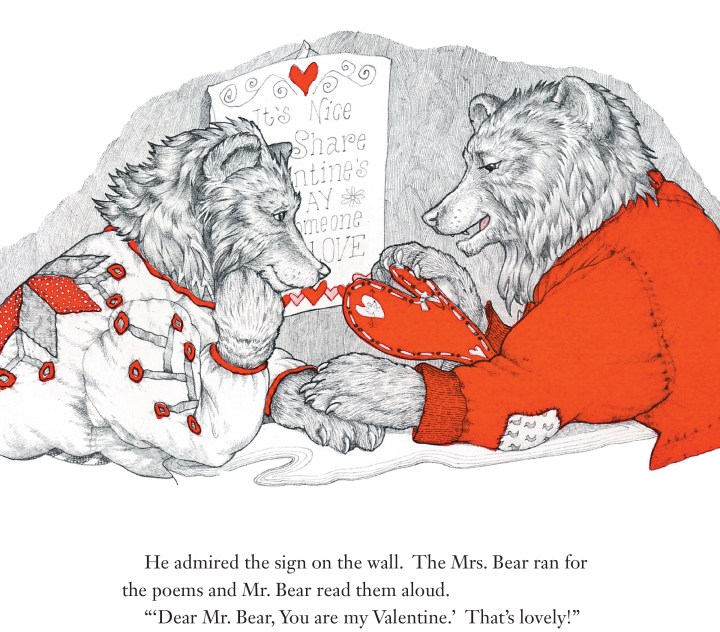
Say “I love you” with this beary adorable picture book from master children’s picture book makers Eve Bunting and Jan Brett. Originally published in 1983, this edition is updated with a pretty pink hardcover embellished with a garland of wild berries. The story, however, remains the same: Mrs. Bear rouses early from hibernation to to celebrate Valentine’s Day–a first for her and Mr. Bear. She gathers all of Mr. Bear’s favorite things–crunchy dried beetles, summertime honey–along with homespun poems of love. Mr. Bear has a few surprises in store, too. Brett’s illustrations are some of her finest, full of detail and expression. Share this with everyone you love–there’s just enough humor to keep The Valentine Bears from being too lovey-dovey for little boys.

gentle tale of an old married couple keeping the flame alive.


vbears3
Text copyright 1983 Eve Bunting, art copyright 1983 Jan Brett. Reproduced with permission from HMHCo.
vbears4
Text copyright 1983 Eve Bunting, Art copyright 1983 Jan Brett. Reproduced with permission from HMHCo.
vbears1
Text copyright 1983 Eve Bunting, Art copyright 1983 Jan Brett. Reproduced with permission from HMHCo.

Fairy Tales Transformed

The Singing Bones, by Shaun Tan; Arthur A. Levine, $24.00, 192 pages, ages  14 and up. 

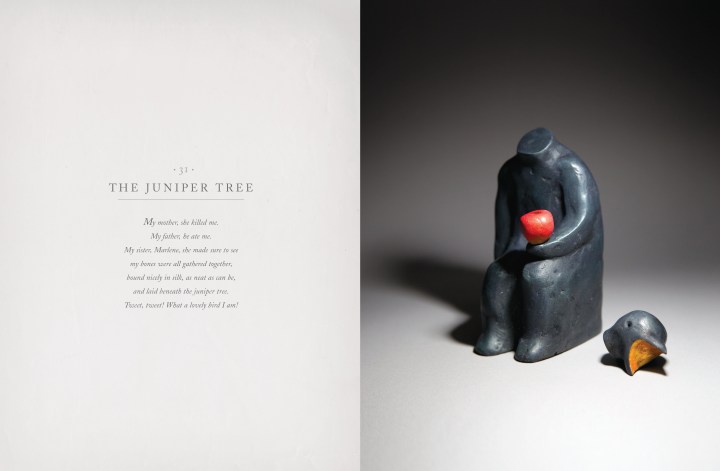
Australian artist Shaun Tan has made his name creating surreal, slightly peculiar works of art with the ultimate goal of encouraging dialogue and social engagement–Tan worked on the science-fiction animated film WALL-E, for example–and in The Singing Bones he tackles the Grimm brothers’ literary canon with similar verve. Seventy-five pieces of original art are accompanied by a portion of text from obscure and beloved tales by Jacob and Wilhelm Grimm. Inspired by Inuit and pre-Columbian stone carvings, Tan’s compositions are molded of earthy, unpretentious materials–papier-mâché and air-drying clay adorned with acrylic paint and shoe polish–resulting in art that looks like it has weathered the passage of time.

Many of the selections may not be well known to contemporary readers, at least not in the forms referenced here: in “Mother Trudy” an overly inquisitive young girl is turned into a block of wood and cast upon the hearth by a witch, and Tan’s sculpture depicts a demonic-looking old creature nestled comfortably in front of a recently lit blaze. A wicked stepmother decapitates her stepson in “The Juniper Tree” and the attending artwork is a disturbingly complex rendering of multiple moments that unfold in the narrative. Snow White and her long-forgotten sister Red Rose gleefully traipse on a magical bear in another excerpt. Though summarized in an annotated index, only the basic sketch of each story is provided, encouraging readers to explore the fairy tales separately.

Reigning master of macabre Neil Gaiman and renowned fairy-tale expert Jack Zipes  provide thoughtful introductions and commentary on the enduring importance of the Grimm fairy tales for our generation.

The Singing Bones is a powerful examination of the range of human emotion, and how much greater that range can be for children, if adults will allow it. 31-juniper-tree9780545946124_interior-101

Something for Everyone

The Borrowers Collection, by Mary Norton, illustrated by Beth and Joe Krush; HMHCo, $24.99, 1004 pages, ages 8-11. 

The charming adventures of the miniature Clock family have captivated readers since the Eisenhower era, and this hefty volume presents five fantasy-filled adventures. The first story won the Carnegie medal in 1952, and today The Borrowers remains as magical and rewarding as ever. A captivating gift to share with first-timers and lifelong Borrowers fans.

Muddle & Mo, by Nikki Slade Robinson; Clarion Books, $14.99, 32 pages, ages 0-3. (available February 21, 2017)

muddle.JPG

Originally published in New Zealand,this cuddly picture book by Nikki Slade Robinson  lands stateside in less than a month, and it’s worth putting on your wish list; this adorable story about a goat and a duck exploring what makes them different subtly teaches important life lessons like kindness, patience, and love.

see.JPG

Did You Ever See? by Joanna Walsh; Tate, $16.95, 32 pages, ages 2-5.

Kids wonder about everything–why the sky is blue, what the smallest living creature is, and even what the inner workings of a television look like. Author-illustrator Joanna Walsh examines the world from a youngster’s point of view, and her oversized images of big eyes staring out at the world in bold stamps of color encourage imaginative exploration. Walsh’s jaunty text nicely coordinates with the retro-jam feel of the illustrations. Art lovers of all ages will find something to enjoy here.

Little Red

LittleRed_spread.jpg
Little Red text and art copyright Bethan Woollvin. Reproduced with permission from Peachtree Publishers


Little Red, by Bethan Woollvin; Peachtree Publishers, $16.95, 32 pages, ages 3-6.

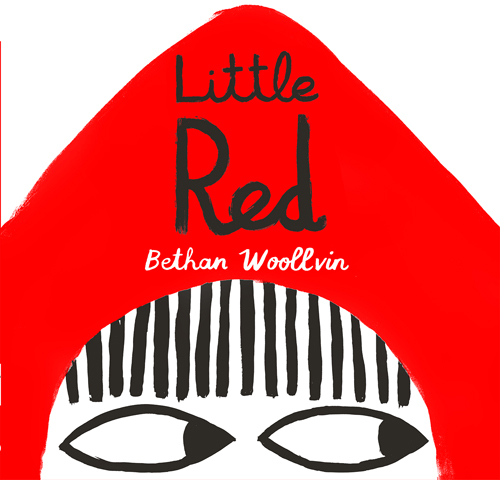
Wolves remain popular subjects in picture books this year–check out our October write-up on the topic–and in this sly retelling of Little Red Riding Hood, the wolf cuts a mean figure. In debut picture-book creator Bethan Woollvin’s hands, however, the menacing wolf meets his match. Swathed in scarlet red from head to toe, Little Red is nobody’s fool, and when she crosses the wolf en route to her grandmother’s house, our plucky heroine knows right away what he’s planning to do, and won’t let him get away unpunished for it, either. A chance wolf encounter might scare some little girls away, “but not this little girl,” says the narrator. (This refrain is repeated throughout, highlighting Little Red’s steely composure.) Little Red follows the traditional storyline, but, as with any retelling, there’s a twist–take a wild guess who wields the axe in this version and comes home with a brand-new fur coat. (Grandma, sadly, never comes back.)

Bold graphic gouache illustrations rendered in black, white, red, and gray have a strong, slightly retro feel, and Little Red, with her unsmiling, unfazed demeanor would fit right into any Jon Klassen book.

An edgy re-examination of an already twisted fairy tale, Little Red shows that smart girls can take care of themselves.

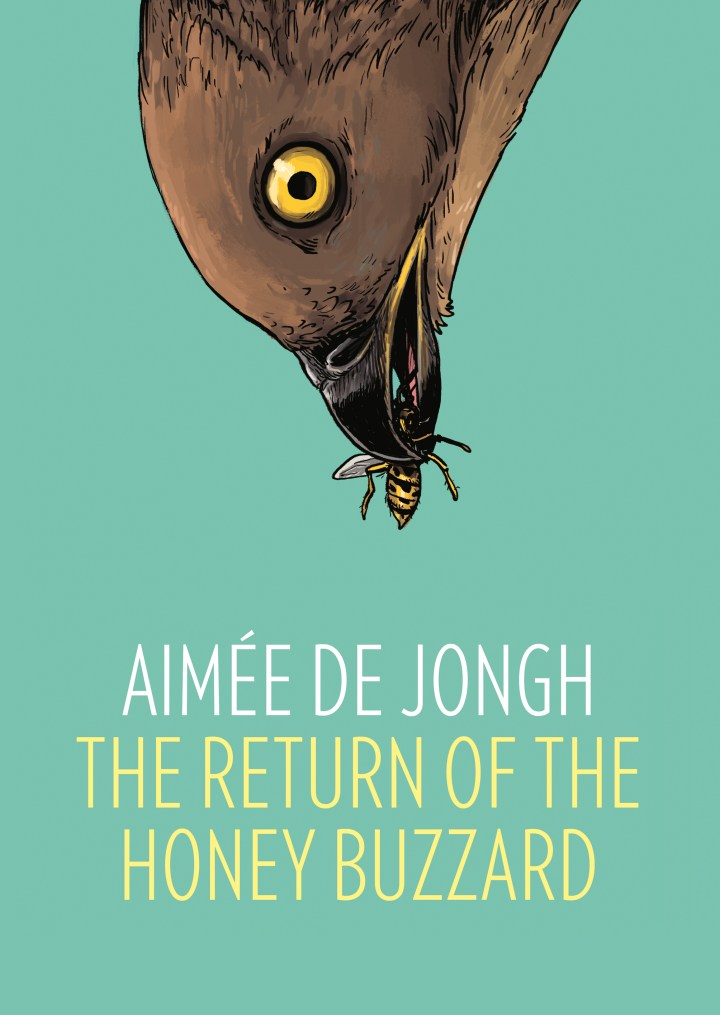
The Return of the Honey Buzzard

honeybuzzard_cover

honeybuzzard_7
Images copyright 2016 Aimee de Jongh. Reproduced with permission from Self Made Hero.

The Return of the Honey Buzzard, by Aimée de Jongh; Self-Made Hero, $22.95, 160 pages, ages 14 and up. 

We may have entered the holiday season, but some people find this time of year  downright depressing, and children (especially teenagers) can be as vulnerable as adults to downshifts in mood. To soothe wayward souls, Aimée de Jongh’s debut graphic novel poignantly deals with bullying, death, grief, and finding hope in the aftermath of trauma.

Simon is a third-generation bookstore owner forced to sell his shop during an economic downturn, and driving home one day he witnesses a suicide. While processing his emotions, memories from Simon’s childhood come surging forth, and through conversations with a mysterious girl named Regina, Simon’s long-repressed guilt over a friend’s death takes over all his thoughts. Did he ever process his friend’s untimely demise? Why does Simon blame himself for what happened to his friend? Why can’t he let these feelings go? de Jongh’s stark pen and ink illustrations are appropriate counterpoints to the difficult topics she explores. A deceptively quick read, some teenage readers may get tripped up by the author’s discussion of magic realism, but the illustrations do a good job of merging the protagonist’s daily life with allegorical elements.

Return of the Honey-Buzzard explores gun violence and suicide, and includes some strong language, but is a sensitive and powerful selection for teenage readers who themselves may be in crisis. It is also a reminder that actions have consequences–for better and for worse. But we have to face our choices, no matter how painful, in order to make progress. As Simon says in the text, “Sometimes you have to make a fresh start to survive.”

honeybuzzard_5

Images copyright 2016 Aimee de Jongh. Reproduced with permission from Self Made Hero.


Holiday Gift Guide

It’s gift-giving season, and there’s not a moment to lose! We present a rundown of the year’s best gifts for children from 1 to 92.

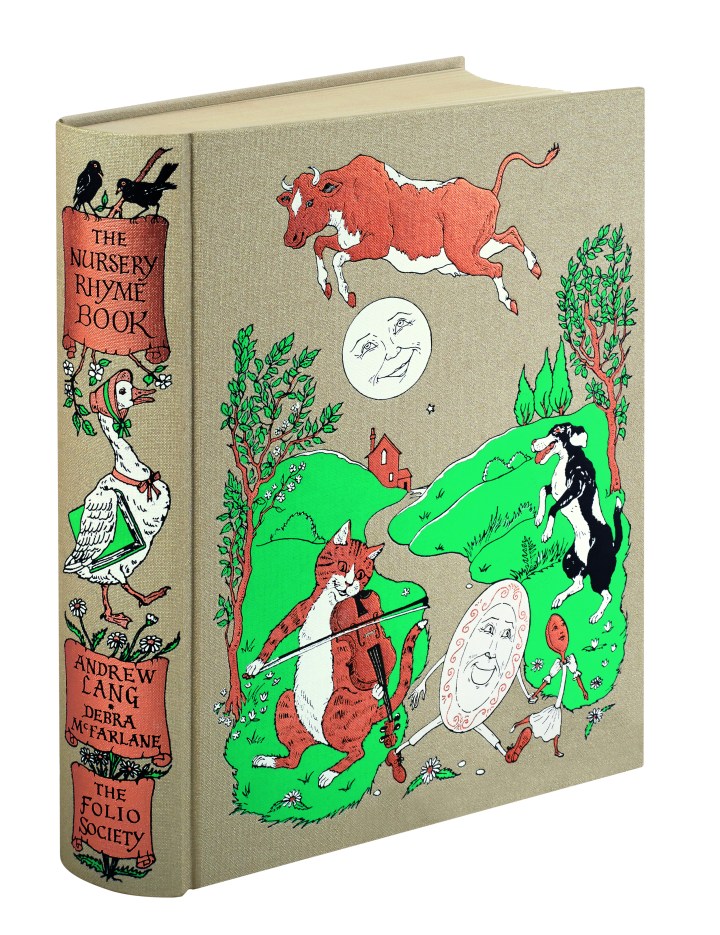
The Nursery Rhyme Book, by Andrew Lang; The Folio Society, $59.95, 280 pages, all ages. 

NRB_S_01.jpg

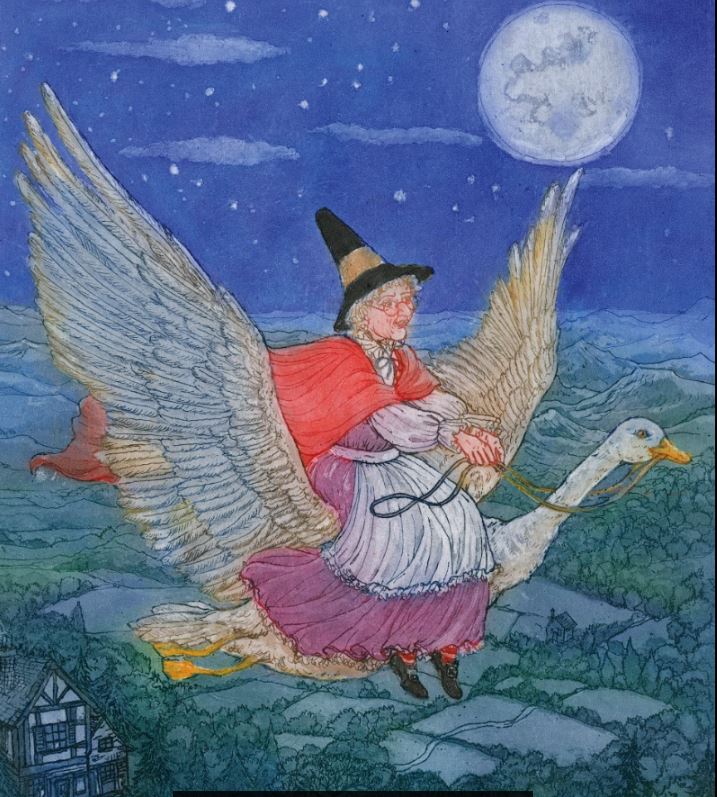
Acclaimed Scottish folklorist Andrew Lang (1844-1912) scoured the world of children’s literature to compile volumes of stories, and this charming, thematically-organized collection of over 300 nursery rhymes includes well-known ditties like “Hickory, Dickory, Dock” and “Jack and Jill,” as well as lesser-known rhymes like “Ring the Bell” and “Old Betty Blue.”  Introduced by award-winning children’s book author Michael Rosen and accompanied by over 100 black and white illustrations by L. Leslie Brooke and six color paintings by Debra McFarlane, The Nursery Rhyme Book is a beautiful gift fit to stand the test of time.

*N.B.:Folio titles are only available through the Folio Society. Order early to ensure on-time holiday delivery.

goose1
The Nursery Rhyme Book by Andrew Lang. Illustrated by Debra McFarlane and L. Leslie Brooke. Copyright 2016 Debra McFarlane. Reproduced with permission from The Folio Society.

9780763683269

9780763683269-int-1
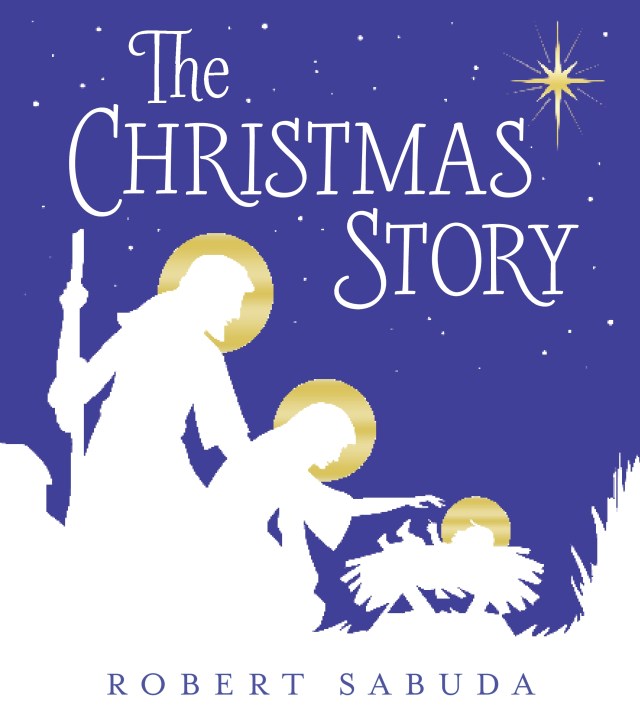
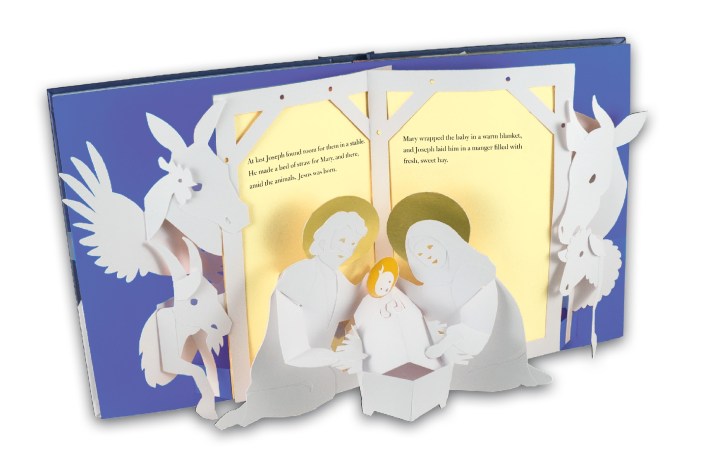
The Christmas Story.  Copyright 2016 by Robert Sabuda. Reproduced by permission of Candlewick Press, Somerville, MA.

The Christmas Story, by Robert Sabuda; Candlewick Press, $35.00, 12 pages, all ages.

The birth story of Christ is told in six deceptively simple pop-ups rendered in stark white and gold, and though this book is delicate–the manger scene is a remarkable feat of construction–The Christmas Story would make a magnificent present to those celebrating the holiday. Sabuda gave Hanukah a similar treatment in 2011 when he and poet Michael Rosen explored the 2,000 year-old Festival of Lights.

The Christmas Boot, by Lisa Wheeler, illustrated by Jerry Pinkney; Dial Books, $17.99, 32 pages, ages 3-7.

the-christmas-boot

A version of this book was published ten years ago (same author and illustrator) and it’s been updated for 2016. Caldecott Medal winner Jerry Pinkney’s masterful illustrations are a perfect accompaniment to Wheeler’s story about a lonely but warm-hearted woman whose generosity earns the admiration of a certain red-dressed sleigh driver.

boot
The Christmas Boot. Image Copyright 2016 Jerry Pinkney. Reproduced with permission from the publisher. 

The Complete Adventures of Curious George: 75th Anniversary Edition, by Margret and H.A. Rey; Houghton Mifflin Harcourt; $34.99, 432 pages, ages 2-8.

curious-g

At seventy-five, George is still a curious little monkey, and this banana-yellow hardbound volume with thick red spine will quickly settle into nightly bedtime rotation. In addition to the seven original tales, the book comes with a free audiobook code to listen to actor John Krasinski read the stories aloud. A lovely gift for adventurous grandchildren everywhere.

Layout 1

BEAR THAT WAS
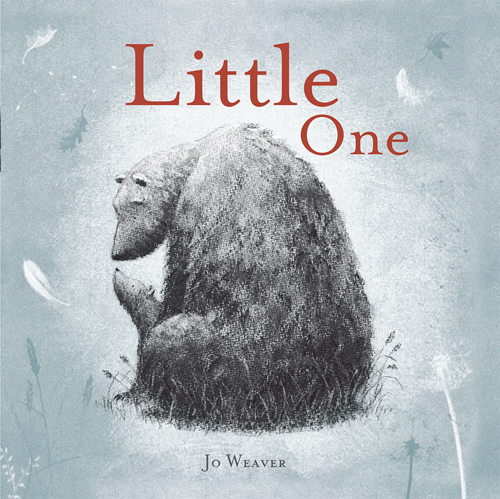
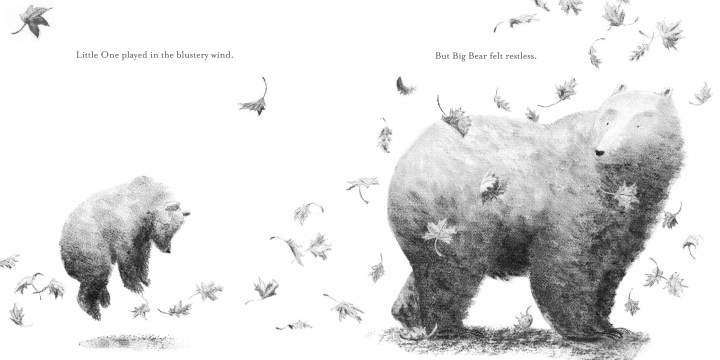
Little One, by Jo Weaver. Copyright 2016 Jo Weaver. Reproduced with permission from the publisher.
BEAR THAT WAS
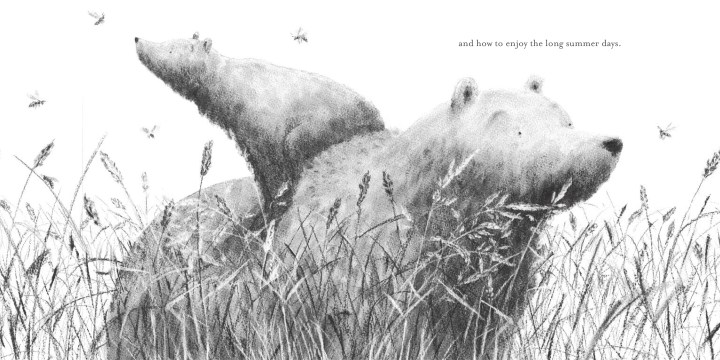
Little One, by Jo Weaver. Copyright 2016 Jo Weaver. Reproduced with permission from the publisher.

Little One, by Jo Weaver; Peachtree Publishers, $16.95, 32 pages, ages 2-6. 

Debut picture book author-illustrator Jo Weaver hits it out of the park with this lovely examination of the pull between a mother’s love and a child’s need to develop independence. Simple, singing text accompanied by Weaver’s soft black and white pencil illustrations highlight the beauty in nature and in family bonds. A perfect read-aloud while snuggling on a cold winter’s night.

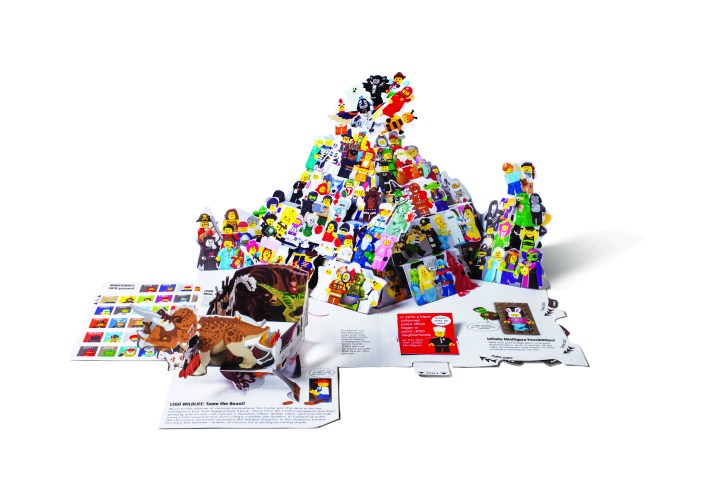
Lego Pop-Up: A Journey Through the LEGO Universe, by Matthew Reinhart; Scholastic, $29.99, 10 pages, ages 7-10. 

Paper engineer Matthew Reinhart takes readers on a tour through the LEGO galaxy in this bright and bold pop-up book. Castles, dinosaurs, and ninjas all leap from the pages accompanied by short bursts of text. A must for LEGO fans of all ages.

legopopup_cover

lego-interior1
Lego Pop-Up, copyright 2016 Matthew Reinhart. Reproduced with permission from Scholastic.

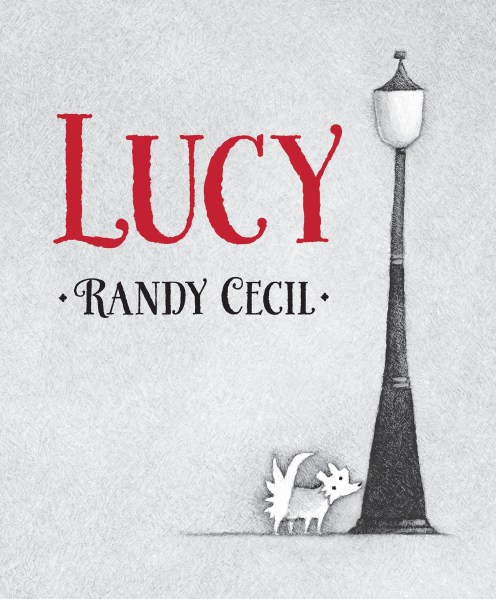
Lucy, by Randy Cecil

9780763668082-int-2
LUCY. Copyright 2016 by Randy Cecil. Reproduced by permission of Candlewick Press, Somerville, MA. 

Lucy, by Randy Cecil; Candlewick Press, $19.99, 144 pages, ages 4-8.

Lucy is a homeless dog living on the streets of Bloomville, and every morning she trots to an apartment building where she waits on the stoop for little Eleanor to drop a piece of string from her window to play with the pup. Meanwhile, Eleanor’s father, a juggler, heads off to work, where he never makes it to the end of a show without a hook prematurely pulling him under the curtains. And so the stage is set for this charming tale in four acts that chronicles how the lives of these three characters intersect. Each “act” reveals slight derivations in the narrative’s internal repetition, encouraging readers to be diligent about noticing details. Randy Cecil’s round black and while oil illustrations give the impression of watching an old-time film through a lens. Weighing in at a surprising 144 pages, this picture book targets five to eight year olds; a group often recently weaned from big-format children’s picture books and anxious to move into short chapter books and graphic novels–in short, a demographic that doesn’t want baby books but still enjoys full-page illustration.

Cecil’s smart, sensitively crafted picture book hits all the right marks.