Biopic on Pippi Longstocking Creator in Theaters Now

Astrid Lindgren gets the silver screen treatment in a new film that explores a child forced to grow up all too soon.

Pippi.PNG

  Who among us hasn’t heard of Pippi Longstocking, a nine-year-old Swedish orphan of prodigious strength and fortitude whose adventures result in all sorts of well-intentioned mischief and fun? Unfortunately for English readers, translations of Astrid Lindgren’s (1907-2002) Pippi Longstocking series read a bit clumsily, but the protagonist still charms with steadfast outspokenness against bullies of all sorts. No matter what, Pippi and other characters from Lindgren’s vast cast of characters are always resolutely on the side of children.


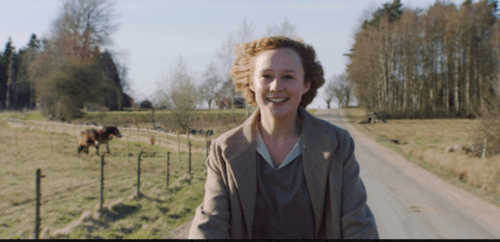
Now comes a film biopic that traces Lindgren’s formative years as a clever girl with a gift for storytelling but whose childhood is cut abruptly short by an unplanned pregnancy. Becoming Astrid, directed and co-written by Pernille Fischer Christensen (A Soap; Someone You Love) offers a captivating examination of the events of Lindgren’s childhood that fueled Lindgren’s eventual rise to fame. Starring a masterful Alba August as the young Astrid, the 123-minute film is a nuanced look at a girl who must grow up all too soon and face life as an unwed mother largely on her own. Though Lindgren’s situation is as old as human history, how she deals with it is mesmerizing.


And yet, as good as Becoming Astrid is, it leaves much on the table. After refusing to marry the older newspaper editor who impregnated her, Lindgren heads to Stockholm where she learns stenography while waiting to give birth. The baby boy is sent to a foster mother in Denmark while she finds her footing and regains her family’s acceptance.


And then the film ends. Concluding director’s notes say that Lindgren eventually married her work supervisor, Sture Lindgren, and went on to write the books that made her an international sensation. It’s a pity the film ends where it does because it leaves so many questions left unanswered, such as: When did Lindgren transition from oral storytelling to putting pen to paper? How did she land her first book deal? Additionally, the film suggests nothing of Lindgren’s lifelong devotion to fighting for various causes like banning seal hunting, ending child pornography, and championing equality for the downtrodden and forgotten.


Becoming Astrid offers a tantalizing glimpse of an inspirational woman and provides, in part, an explanation for why Lindgren’s stories are full of abandoned, parentless children. And though the film is not a full biographic treatment, it is still very much  worth watching as it ignites a desire to know more about the subject. In fact, a recently published biography by Jens Anderson entitled Astrid Lindgren: The Woman Behind Pippi Longstocking (Yale University Press) fills in those gaps.


In the final analysis, like her characters, Lindgren was a child forced to take care of herself but didn’t have the right tools to do so. She made mistakes, learned from them, and despite it all, grew up strong, which is certainly what we all hope for our children.


Becoming Astrid opened in New York on November 23rd at the Film Forum  followed by a national roll out. Watch the trailer here.   Image courtesy of Music Box Films

Children’s Books that Explore the Worlds Around Us

Worlds collide in this trio of exciting new children’s books that explore realms near and far and that are sure to entertain any intrepid adventurers. 

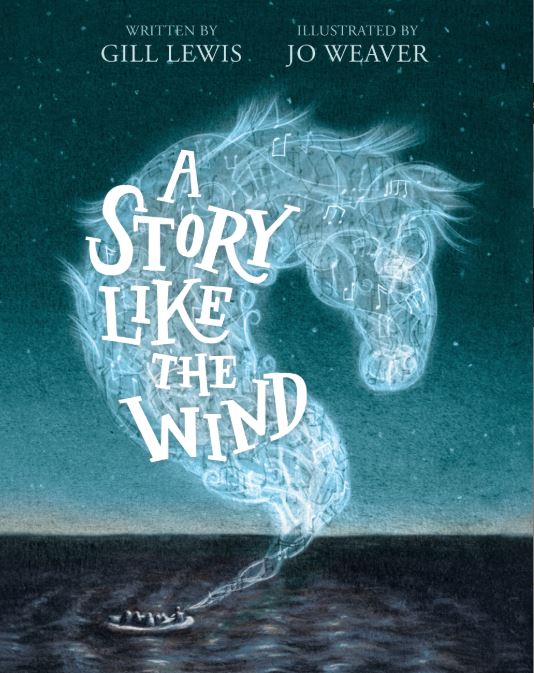
A Story Like the Wind, by Gill Lewis, illustrated by Jo Weaver; Eerdmans, $16.00, 80 pages, ages 9 and up.

Anyone who can get through this book without tearing up must have a heart of stone. Award-winning author Gill Lewis’s tale of channeling hope despite facing an uncertain future starts in a rudderless boat bobbing about in a vast ocean carrying refugees away from war. As the situation seems to take a turn for the worse, the passengers begin to talk about the lives they left behind. Young Rami only had time to grab his violin before fleeing and shares a musical story about a white stallion unwilling to bend to an evil overlord. The creature pays a heavy price for its actions, but in turn inspires hope that the struggle is worth the pain. Kate Greenaway award finalist Jo Weaver’s inky-toned illustrations are an evocative and powerful match for the stirring prose. A beautiful and heart-wrenching celebration of love, kindness, and freedom for all. 

The King of Nothing, by Guridi, translated from Spanish by Saul Endor; The New York Review of Children’s Books; $16.95, 32 pages, ages 2-6.

Originally published in 2013 in Spanish, the English translation of Guridi’s book offers a wry look at different ways of welding power.  Here, we meet Mimo the First as he rules over his domain of nothingness–perfectly outlined by dash marks throughout the book–and maintains law and order with unprecedented tenacity. All is right until one day when Mimo is confronted by something and goes on the offensive to eradicate this unwelcome interloper. But this intruder is stubborn, too, and the little king is faced with some unpleasant choices. Will there be war or compromise? 

A caveat, please: parents will make this book immensely more enjoyable if they can refrain from political commentary while reading with their children. To be sure, for some adults, the temptation to editorialize does exist here. Instead, delight in this absurd and whimsical examination of the power of the human imagination and leave politics out of it. 

Image reproduced with permission of NYRCB. copyright 2013 Guridi.

Image reproduced with permission of NYRCB. copyright 2013 Guridi.

The Boy Who Went to Mars, by Simon James; Candlewick Press, $17.99, 32 pages, ages 2-6.

Award-winning children’s book creator Simon James is back with a story reveling in the joys of active imaginations. Young Stanley is taken by surprise when his mother leaves on an overnight work trip and decides that he, too, must take a trip. Except that Stanley flies off to Mars, and his spaceship returns to Earth carrying a slightly petulant little martian. And this extra-terrestrial doesn’t like to play by earthling rules: no hand washing, no vegetables, and certainly no tooth brushing. An altercation between the martian and a playmate leads to an emotional internal reckoning, leaving the boy/martian to figure out how to make things right. James’s pen and watercolor illustrations capture both the boundless pleasures of imaginative play and the unequivocal love of strong family bonds. 

Change Comes to New Haven’s Antiquarian Book Scene


“I am eternally grateful that in the summer of 2000 Bill Reese offered me the opportunity to become an associate at the William Reese Company,” Aretakis said recently. “Over the next fourteen years, I learned from Bill every day. I am proud of the business I built over the past four and a half years [in California], and during that time I learned new skills as I developed a business on my own. I bring these skills, as well as all that I learned from Bill Reese, with me as I return to the Reese Company.”
Aretakis’s official start date was November 1, and he will be manning the Reese booth at the Boston Antiquarian Book Fair November 16-18.
“I am excited to be part of the team that will guide the William Reese Company into the future,” Aretakis said, “and continuing on in Bill’s tradition and adapting to the ever-changing environment of antiquarian bookselling.”
Meanwhile, longtime Reese associates Teri Osborn (a FB&C “Bright Young Bookseller” in 2011) and James McBride (a 2017 BYB) recently launched McBride Rare Books, also in New Haven.
“This certainly is an interesting and exciting time for us,” said McBride and Osborn. “Together, we have a combined experience of nearly two decades in rare books, including academia, librarianship, and the trade. With McBride Rare Books, we look forward to continuing our roles as trusted and valuable members of the antiquarian book trade, working closely with our clients and colleagues.” As they did at Reese, the pair plan to continue focusing on Americana and are making their inaugural appearance as freshly minted bookstore owners at the Boston Book, Print, and Ephemera show on November 17. “It’s a consistently great fair, and we’re very much looking forward to exhibiting.” And though McBride and Osborn have chosen to hang their shingle in New Haven for now, they plan to move to New York City in spring 2019.
As for thoughts concerning Aretakis’s move to Reese: “Nick will be a much-needed steady hand at the tiller,” team McBride said, “and we have no doubt that he will carry the business forward in the finest traditions of the firm.”


Many heartfelt congratulations to all in what appears to be a bright new chapter in the field of antiquarian bookselling.

Ephemera Dealer Peter Luke Knows What You Want, Even if You Don’t–Yet

Peter Luke knows what you want, even if you don’t know what you want—yet. As a familiar face at the Book and Paper Fairs for almost three decades, the dealer specializing in Americana and ephemera can usually be found in a large room at the fair that he’s crammed with all sorts of treasures selected specifically for his waiting customers.

Read the whole story at the Book & Paper Fair blog!


Abigail’s Q&A with Children’s Picture-Book Creator Artie Knapp

Children’s picture-book author Artie Knapp has a knack for writing charming children’s books, and with the publication of  The Wasp and the Canary in 2006, Knapp found his life’s calling and now claims five children’s books and over forty published stories to his credit.
Last month, Ohio University Press published the Green Earth Book Award shortlist finalist’s latest book, Little Otter Learns to Swim ($15.95, 32 pages)a tale that follows a baby river otter as she learns how to navigate her environment. Unlike a baby otter at the Columbus Zoo where a baby otter was plunged into the water by its mother–sink or swim, as the saying goes–Knapp’s creature is guided by a far more understanding mama. Accompanied by sweet and charismatic illustrations by wildlife artist Guy Hobbs, the rhyming picture book is a lovely introduction to water habitats, conservation, and the importance of trying new things.
Abigail spoke recently with Knapp about Little Otter Learns to Swim and asked about his writing process, his favorite books, and how he overcomes the dreaded writer’s block.
otter
1. What inspired you to write this book? While watching my daughter learn to swim one afternoon, I wondered what animals have to be taught as well. So when we arrived back home, I began doing some research. I would have guessed that river otters know how to swim the moment they’re born, like some other animals do. But I was surprised to learn that river otters are taught to swim by their mothers when they’re one to three months old. That intrigued me and got me started with writing my story.

 
2. Do you always write about nature? I don’t always write about nature specifically, but nature is something that I am passionate about. I did write the picture book Living Green: A Turtle’s Quest for a Cleaner Planet. Animals are usually the main characters in my stories. I care about the well-being of animals, so I suppose that’s why I use them in my writing so frequently.

3. Are all of your books written in rhyme? Little Otter Learns to Swim is my first book written in rhyme. I have however had children’s poems published in publications such as Humpy Dumpty’s Magazine, and in Oxford University Press course-books.

 
4. Do you always work with the same illustrator? If not, do you have a choice in who illustrates your book? I don’t always work with the same illustrator, and it’s ultimately the publisher who decides who will illustrate the book. I have been very fortunate with the illustrators who have illustrated my stories.


5. Is your favorite animal an otter? If not, what is? I like river otters a lot, but if I had to pick a favorite animal, it would be my cat, Bella. Her nickname is Bell-Girl. She is often sitting on my desk as I write my stories.

 
6. How do you know when the story is just right? Do you read it out loud? I do read my stories aloud. As I have progressed in my career, I’ve learned to set my work aside when I think it’s done. Then after a couple of weeks, I’ll reread my story to see if I still like it. A fresh set of eyes after some time has passed has helped to make my work better. If it still reads the same to me after coming back to it, then I usually feel that the story is right. Other times I’ll come back to a story after a break and make changes. Then I’ll set it aside again and come back to it until I feel that it’s where I want it to be.

 
7. Do you visit schools or libraries? I have visited both schools and libraries, but mostly schools. It’s a lot of fun doing author visits. I enjoy speaking with students, and they inspire me to keep writing.  

8. When did you know you wanted to be a children’s book author?  I originally started out writing science-fiction stories. Randomly, I wrote a children’s story titled The Wasp and the Canary. That story along with another one I wrote titled The Hummingbird Who Chewed Bubblegum were published simultaneously on a popular site called Candlelightstories.com. Getting published is a great feeling for an author. Those two stories getting published encouraged me to write another children’s story. After writing my third children’s story Sprinting Spencer Still Wants to Run, I felt that I was onto something. From there, I began to write children’s stories frequently and now cannot imagine not writing stories for kids.

9. What kind of books did you read growing up? I didn’t read as much as I should have growing up. I was always outside playing and watched a lot of T.V. I did enjoy comic books and read a lot of classic picture books stories. The Hardy Boys series are the first books that I remember finding hard to put down.

 
10. What are your favorite children’s books? I enjoy stories that don’t necessarily have a defined ending, but make you the reader left to ponder what happened. My favorite picture book creators are Peter Brown, Don Freeman, Kevin Henkes, Robert McCloskey, Chris Van Allsburg, and Maurice Sendak. Where the Wild Things Are by the late Maurice Sendak is my all-time favorite picture book.
 
11. What do you do when you’re having a hard time writing or coming up with an idea? I like to take walks. I enjoy the exercise and the fresh air helps too. I also enjoy listening to music. Music often helps me to get back into the zone of being creative. 

Kids Books Quick Picks

Fall always heralds the arrival of great children’s books, and this year’s crop doesn’t disappoint. Behold a few of our favorites of the season:

stanley

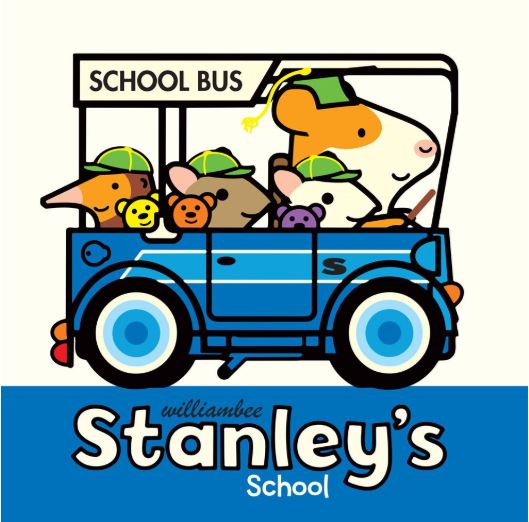
Stanley’s School, by William Bee, (Peachtree; $14.95, 32 pages, ages 2-5) is the latest in a series starring a charming hamster. As the title suggests, Stanley is running things at school and leads his furry charges through a typical day: from arrival to read-aloud, lunch, and dismissal, these pint-size creatures demonstrate the inner workings of pre-k and elementary school. Bee’s large, cheerful illustrations invite young readers to revel in heading to class. The padded covers invite little hands to fully explore while also signaling the transition from board books to picture books.

squirrel

In another rodent-driven narrative, Martin Jenkins’s The Squirrels’ Busy Year (illustrated by Richard Jones, Candlewick; $16.99, 32 pages, ages 3-6), introduces changing seasons and weather patterns by following a year in the lives of two inquisitive squirrels. Foraging for acorns and dodging owls are a few of the daily adventures these busy critters face, depending on the season. Straightforward and uncomplicated prose is accompanied by front matter offering specifics in case adults get peppered with a few “why” questions after a read-through. An index with follow-up questions meand to encourage further inquiry roud out this smart volume, while Richard Jones’s mixed-media renderings of the natural world are textured and comforting.

creature

National Book Award Finalist Sy Montgomery’s How to Be A Good Creature: A Memoir in Thirteen Animals (illustrated by Rebecca Green, HMH; $20.00, 208 pages, ages 7-up), examines a life spent in the company of animals and how those relationships taught her compassion, love, and forgiveness. From a family pig named Christopher Hogwood to a giant Pacific octopus named Octavia, each vignette imparts life lessons that only a non-human can provide. “Other species, when we are allowed to know and care about them, give us a chance expand our moral universe,” says the author. “We learn to embrace the Other. We have a lot in common with our fellow animals–we share about 90% of our DNA with fellow mammals, and animals from clams to elephants share our same neurotransmitters, responsible for perceptions and emotions.” Montgomery’s poetic text proves her ability to write for readers of all ages. Accompanied by author photos and Rebecca Green’s whimsical, folk-art inspired sketches, How to Be a Good Creature affirms what many of us already know: that human-animal bonds are not just real, they are powerful agents of change, acceptance, renewal. Consider reading this in tandem with your child–there’s plenty here to encourage a robust dialogue on many of life’s big questions.

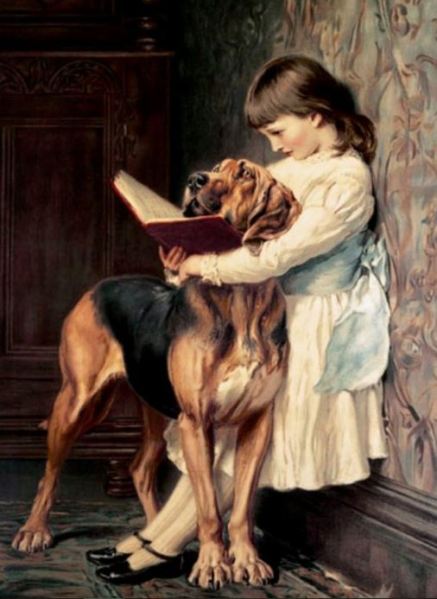
Cover image: “Compulsory Education,” by Charles Burton Barber. 1890. Public Domain.

Lessons in Bad Behavior from Ancient Greece: A New Translation of “Characters” by Theophrastus

9780935112375_FC.jpg

If there’s anything new to learn from Characters, a series of personality portraits written by the ancient Greek Theophrastus (c. 371 – c. 287 BC), it is that gluttons, chatterboxes, drunks, idiots, and others are not unique to any time or place in human history.  This robust little volume of character sketches has been widely published and translated since its first appearance twenty-three centuries ago–Jean de la Bruyère’s Les Caractères (1688), Character Writings of the Seventeenth Century (1891) and the Loeb Classical Library’s edition are a few that come to mind–but each translation is an interpretative undertaking, meaning there is always a renewed need for fresh viewpoints.

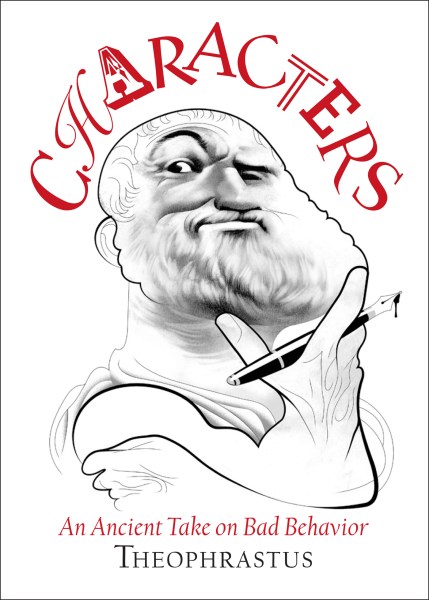
On October 1, Characters will be once again published in English, this time by Callaway Arts & Entertainment. Translated by Pamela Mensch with vibrant pen-and-ink illustrations by acclaimed caricature artist André Carrillo, this edition includes insightful annotations by Bard College classics professor and Guggenheim recipient James Romm.

Part the enduring appeal of Characters is that bad behavior, however caustic, is, whether we like it or not, universal; who doesn’t know a busybody who “stands up and promises what he can’t deliver,” a slovenly fellow “afflicted with dull-white eczema and black fingernails, go[ing] about saying that these illnesses are hereditary,” and the friend of scoundrels who “fraternizes with men who have been defeated in court and convicted in public trials; he assumes that if he’s friendly with them, he’ll become more worldly and formidable.”


“These are flesh-and-blood people, with very familiar flaws and foibles,” Romm explained. “They remind us that ancient Greeks were actual human beings, not marble busts. The past no longer feels like a foreign country. It’s a true gift to be able to ‘feel’ the reality of the classical world.” As Romm points out in his introduction, some previous translators could not square with the lack of judgement in Theophrastus’s sketches and inserted their own. This edition strips away those addendums, allowing the original descriptions to be read on their own merit.


And yet, English-speakers don’t suffer for lack options: Penguin released a paperback version as recently as 2015, so why a new translation now? “There’s a very practical reason,” Romm said. “The Greek text of Characters is rather messy, with lots of sentences in dispute (or simply unintelligible) due to copyists’ errors in the transmission process. Only a few years ago, a new edition of the Greek text by James Diggle sorted out many of these problems. This new English version by Pamela Mensch takes advantage of that cleaned-up Greek text.”


Contemporary readers may be familiar with Theophrastus’s exhaustive Inquiry into Plantsand Causes of Plants. However, Characters reveals more of the author’s natural verve and wit, which has led some scholars to dispute whether Theophrastus deserves the attribution. “The contrast between Characters and the botanical works is indeed sharp,” Romm said. “Assuming Theophrastus wrote both, he seems to have wanted to take an occasional break from science to compose light satire, and perhaps, like all good teachers, sought a way to bring some levity to his ‘classroom’ — in his case, the Lyceum, founded by Aristotle.”


We may see a bit of ourselves, our friends, and our political leaders in these portraits, but how might have an ancient Athenian reacted? After all, these were sketches based on actual people Theophrastus encountered on a daily basis. Romm believes the Greeks would have taken it in stride– “With a laugh and a nod of recognition, and probably a bit of embarrassment!”

Society needs writers who document human behavior, even if that behavior never seems to change. But those records needn’t always be gloomy. “Thucydides famously wrote that human nature is constant over time, so that the deeds he recorded in the Peloponnesian War would be seen again,” Romm said. “In his case, that’s a tragic message, since he mostly records atrocities. Theophrastus supplies the comic side of the same equation.”

Theophrastus’ Characters: An Ancient Take on Bad Behavior, by James Romm, André Carrilho, and Pamela Mensch. Callaway Arts and Entertainment; $24.95, 119 pages.


This story first appeared on the Fine Books Blog on September 28, 2018.

 “For the first time he learned to think before he spoke.” Johnny Tremain: A Classic Revisited

Esther Forbes’s 1944 Newbery Medal-winning story set on the eve of the Revolutionary War turns seventy-five this year. To commemorate the milestone, publisher Houghton Mifflin Harcourt recently released an updated edition with new jacket art and includes an illustrated forward by author-illustrator Nathan Hale (not the American spy executed by the British in 1776).

As riveting as ever, Johnny Tremain should be required reading for everyone, adults included. The book has never been out of print and Walt Disney turned it into a movie in 1957. Let’s not forget that Forbes also won a Pulitzer in 1942 for Paul Revere and the World He Lived In, a vivid biography of the patriot’s life based largely on his correspondence.

Forbes, for her part, was a dyed-in-the-wool New Englander and a trailblazer in her own time: born the fifth of six children to William and Harriette Forbes in Westboro, Massachusetts in 1891, she moved with her family to the county seat of Worcester, where her father practiced law. Forbes and her sisters were among the first girls to attend the private Bancroft School where, dyslexic and nearsighted, the young Forbes was once accused of plagiarism after sharing a story she had written to amuse her siblings. Undeterred, she continued to write, and at her death in 1967 was working on a book about witchcraft. The first woman to become a member of the American Antiquarian Society, Forbes left the Worcester institution the rights to her books as well as material for her unfinished final volume.

Johnny Tremain 75th Anniversary Edition, by Esther Hoskins Forbes, illustrated by Nathan Hale; Houghton Mifflin Harcourt, $14.99, 320 pages. ages 9-12. 

Q&A with Jennifer Morla, Designer and Subject of Forthcoming Book from Letterform Archive

MorlaDesign_DeluxeOverhead.jpg


Jennifer Morla is a legend in her own time: for forty years, her shadow has loomed over the world of graphic design. Earning over 300 accolades like the Cooper Hewitt award, the AIGA medal, and the Smithsonian Design Museum National Award, Morla’s work has graced publicity campaigns for some of the world’s best-known brands like Levi’s, Design Within Reach, Swatch, and Nordstrom. The Library of Congress and MOMA have her pieces in their permanent collections, and when she’s not running her eponymous design firm, Morla is teaching design at the California College of the Arts.


Now, Morla is the subject of a forthcoming biography being published by Letterform Archive. Entitled, fittingly, Morla: Design, the Kickstarter-funded project explores Morla’s career, her creative process, design philosophy, and also offers behind-the-scenes stories about various high profile projects. Staying true to Morla’s contemporary and lively aesthetic, the book features neon bookmark ribbons, metallic inks throughout, and a vegan leather case, itself a design triumph. Letterform’s all-or-nothing Kickstarter campaign ends Saturday, September 8, though it has already surpassed its $50,000 goal. Donations in all amounts are still very much welcome, but those willing to pledge $125 and up will receive a copy of the book.


Morla graciously answered a few questions recently about the book, the importance of listening to clients, and whether words remain as important as art in our increasingly image-saturated world.


1. Your book is the second book to be published by Letterform Archive, following on the heels of W.A. Dwiggins: A Life in Design. How did your project come about?


It seemed like the appropriate time for me to discuss my design approach and identify the issues that I consider when formulating my design process. Letterform Archive showed an immediate interest in publishing my monograph and has been a true partner in bringing this book to print.


2. You founded Morla Design in 1984. What drew you to this field?


My aunt was an editor at Condé Nast in the 60s and would occasionally cast my sister and myself in photoshoots when we were young. By the time I was 10 years old, I already had been exposed to the workings of a magazine and an in-house “art department.” Another great influence was visiting MOMA’s design wing as a child and seeing chairs, posters and books displayed in a museum.  Those events, coupled with my ability to draw, solidified my decision to become a designer.


3. What is it like to know your work will exist in perpetuity in institutions like the LIbrary of Congress and is considered a touchstone of American design?


It is very, very humbling. I consider myself so very fortunate to have had clients who have collaborated with me in defining communication goals without defining the solution.


4. Was yours an artistic household? Growing up in Manhattan, I imagine you took great advantage of your surroundings. What were (or remain) your New York design influences?


My mother was an art history major and would take us to museums often when we were young. One of my favorites was the Guggenheim, an architectural icon, so very different from any other museum in the city. I was in love with the building, and what nine year old doesn’t love skipping down a six story ramp? Another big influence was The New York Times. Type, illustrations, fashion, a magazine, and those wonderful, full page Ohrbach’s ads! In 1970, the Vietnam War was raging and political images proliferated all around the city: in the media, on construction barricades, in subway ads. Push Pin’s posters, an Evergreen magazine cover by Paul Davis of Che Guevara, the musical “Hair,” all had a profound influence on me understanding the power of design in its many forms.


MorlaDesign_Projects.jpg


5. Your first job out of college was at San Francisco’s local PBS station, followed by a move to run the art department for Levi Strauss. What was that leap like? Was it challenging going from a nonprofit to a commercial entity?


The biggest difference was design budget. Although my meager salary was the same for both positions, the Levi’s creative budget allowed me the opportunity to produce big ideas. At the PBS station, the creative budgets were so tight that I hand-cut rubylith [masking film] to save money. I handled every project from beginning to end: photography, lettering, illustration and animation. At Levi’s, I was able to hire great photographers, print thousands of posters, and create high end brochures using every specialty printing technique. Both jobs were extremely informative and gave me the confidence to open my design studio at 28 years old.


6. I’m going to ask you a question you’ve probably been asked hundreds of times: what makes good design? Does good design change with the times, or are their classic elements that never go out of style?


Great design is, quite simple, innovation that reflects the spirit of an era and becomes a classic because of its timeless appeal.


7. How has your design aesthetic evolved, if at all, over the course of your career?


Although I can see some influence of a certain time period in my work, I have always maintained that design should be appropriate to the problem rather than a stylistic conceit.  I hope the work shown in the book is a testament to that belief.


MorlaDesign_Typefaces.jpg


8. It seems our society is moving away from verbal communication towards more visual marketing and communication. Has this trend changed how you work? Or do words remain as relevant as ever?


As designers, we often underestimate the impact we have on the world at large, and how our visual vocabulary is influenced by political, social and cultural events. I created Designisms, a listing of my observations and reflections on design and designing. Specific to your question, a designism: Words are as important as images and images can be more powerful than words.


9. How do you approach a project? What’s your process?


I always start with sketching. Many sketches. The final sketches identify the solution, including typeface considerations, color, illustrative style and final form. I often consider whether the solution can be accomplished with just type.


10. Have you ever worked on a project that didn’t turn out as expected, for better or for worse?


Oh yes, I believe in allowing the process to help define the solution. And accidents are an important part of the process. Only the creator can identify when an accident, something you did not expect, adds an informative detail to the solution.


11.  Are you a collector? If so, what do you collect. And why?


Not a collector at all, I am a minimalist. But I do love to read and read about 50 books a year. I guess I collect books.


12.  What are your favorite books?


I especially like fiction and my list of favorites is vast: Orlando by Virginia Woolf, the way she shocks the reader with the unexpected, to John Updike’s uber-realistic Rabbit series. From contemporary novelists like Jenny Egan to Flaubert’s classic, Madame Bovary. When my girls were in eighth grade, I read what they were reading and I got to fall in love again with Huckleberry Finn and Pride and Prejudice. Current favorite authors beside Egan are George Saunders, Don DeLillo, Ian McEwan, Zadie Smith and for a chuckle, David Sedaris.


13. Could you talk a little about the design process for Morla: Design. It is encased in vegan white leather with a vacuum-formed cover. What do you hope the design of your book will convey to readers?


That design is not only about two dimensional space, that form can surprise and generate curiosity. I relish experimenting with materials; the vacuum-formed and debossed covers both are seductive and amplify the pattern cover art. Fluorescent inks act as chapter dividers and bring attention to the section of the book I dedicated to my best loved typefaces and characters. I utilized many of my favorite printing and binding techniques in designing the book: Fluorescent and metallic inks are used to identify my essays, vellum sheets with white ink display my “designisms”, full bleed images throughout showcase projects and the ribbon markers allow the reader to mark favorite images. The book itself is a tactile and visually rich object.


14. In addition to running Morla Design, you teach at California College of the Arts. What are some of the most common questions you receive from students about making a living as a designer?


I believe that a good designer is a great listener, and if you carefully, the client nearly always gives you the solution to the problem.


Images courtesy of Letterform Archive
 

Hope Never Dies: A Q&A with Obama-Biden Mystery Writer Andrew Shaffer

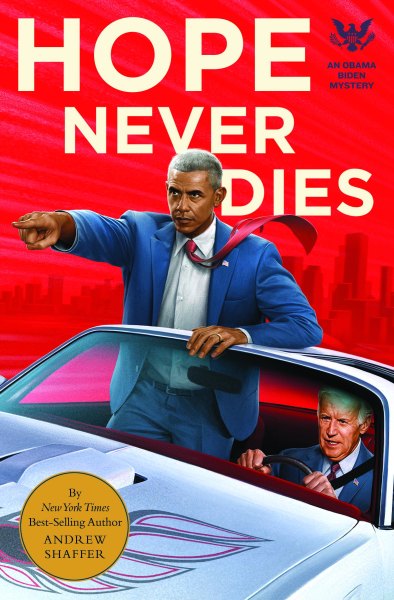
It’s August. It’s hot. Perhaps you’ve already got kids back in school. Perhaps you’re still at the beach. Whatever you’re doing, it’s still officially summer, which means you’re entitled to enjoy a frothy, kicky, beach-appropriate book whether you’re seaside or stuck at work. Andrew Schaffer’s latest adventure, Hope Never Dies: An Obama Biden Mystery, checks all those requirements with equal parts bromance, action thriller, and detective mystery.

After having spent a lifetime serving the people, former vice-president Joe Biden is lonely and lost. Puttering around his Wilmington, Delaware home while wife Jill is off teaching, Joe misses his good pal Barack, who’s living his best life ever, which involves kitesurfing, base-jumping, and hanging out with A-list celebrities. Then, one day, Barack shows up with news that Joe’s friend, an Amtrak conductor, was found dead, struck by a speeding Acela. Something smells fishy to Joe, but as a private citizen, there’s little he can do–at least, until he ropes a cigarette-smoking, sawed-off-shotgun-toting POTUS 44 into uncovering the truth. Their sleuthing leads to run-ins with dangerous biker gangs, strange women, and drug runners lurking in the dark underbelly of Wilmington. Hope Never Dies may star two famous Democrats, but the political barbs are sure to entertain folks on both sides of the aisle.

We spoke earlier this summer with Hope author Andrew Schaffer and asked why he felt the time was right for a Biden-driven action-mystery, how he knows he’s struck the right comedic tone, and what’s up next for this crime-fighting duo.

What inspired this book? Why now?

I’d toyed with the idea of a Biden mystery novel for years, but it finally picked up steam when the bromance memes started being shared during Obama and Biden’s final months in office. It started off as a parody of classic noir novels. After a few pages, however, I could already see that it was going to have more heart than my other parodies. The message—that “hope never dies”—isn’t a joke. It’s a message that I think many of us need to hear right now.

Are you planning a Hope sequel or series?

There will, at the very least, be a sequel—Hope Rides Again, on sale next summer from Quirk Books. It will be set in Obama’s adopted hometown of Chicago. Expect more malarkey.

Do you lean in a particular political direction? This book doesn’t make any major political statements other than taking jabs at the current administration, but you’ve also written The Day of the Donald: Trump Trumps America. Are all political figures fair game? 

The Day of the Donald was a satire about a reality-TV show host becoming president of the United States. We released it during the Republican primaries in 2016. I voted for the Obama/Biden ticket in 2008 and 2012, so you can probably guess which way my politics lean. When it comes to satire, though, all politicians are fair game. There were jabs at both Trump and Hillary Clinton in the book. The shots at Bill Clinton in The Day of the Donald were just vicious. It did decent numbers, but I hadn’t realized while writing it just how partisan politics had become in this country. I don’t see Hope Never Dies as a satire—it’s a mystery that happens to star two well-known public personas.

When did you realize you had a knack for writing humor?

I wrote and illustrated humorous comics in grade school, which would get passed around in the back of class. They were a little on the bawdy side. I was never the class clown, but I realized early on that I could make people laugh through my writing. It occasionally got me into trouble, which only furthered my belief that words had value.

How do you know when you’ve struck the right (funny) tone? What’s your process?

I’m in a local writing group, so I will sometimes read pieces out loud to see what kind of reaction they get. I’ve also read new material at book tour events. A live audience will let you know very quickly if you’re on the right track. There’s nothing more sobering than silence. Other than that, I rely on my editor and a few other early readers.

Your wife, Tiffany Reisz, is also a writer. Do you bounce ideas off each other? 

Tiffany writes erotica, romance, and gothic fiction, but her stuff can be very, very funny. She will occasionally punch up jokes in my books—the “POTUS, SCOTUS, or FLOTUS” game in Hope Never Dies was all her. I wish I could say I punch up her sex scenes, but my contributions are more along the lines of copy editing.

Do you think you’ll ever try your hand at other genres?

In addition to mystery, I’ve written parody, satire, romance, science fiction, and horror. I might be running out of other genres to write in! I plan to stick with mysteries for now. At least until something else catches my eye.