Brave Flies and Barking Spiders Featured in New Series by Kyle Sullivan

HOBGOBLIN AND THE SEVEN STINKERS OF RANCIDIA by Kyle Sullivan (Hazy Dell Press. 168 pp. $15.95). Ages 6-8.


         Are you somebody that likes fart jokes and happy endings? If so, then this is the book for you! Hobgoblin and the Seven Stinkers of Rancidia, the first book of the Hazy Fables series, is the hilarious second coming of Snow White and the Seven Dwarves. (Do you see the resemblance?)


          In this funny tale, the last hobgoblin in the world sets out to stop the bad-tempered King Fiddlefart from cleansing his subjects and making them smell wonderful. On his heroic mission, Hobgoblin acquires some friends who want to help as well: a squirrel, a ball of dung, a mummy, a skeleton, a bug, a sloth, a furry thing with glasses, something named Grody that can’t be explained, six flies, and some spiders that bark like dogs.


          This story is like nothing you’ve ever read before. With gross heroes, a guide to the characters, and a map, it’s something you’ll instantly fart with glee about.


Fish Tales at Martha’s Vineyard Book Festival


Martha’s Vineyard’s reputation as a haven for writers and poets is well-documented–Dorothy West, Art Buchwald, David McCullough, and Judy Blume represent a few who have called the island home–and since 2005 the Martha’s Vineyard Book Festival has brought authors from far and wide to celebrate reading and writing. Originally conceived as a biannual event, the free festival turned into an annual August rite starting in 2015. The brainchild of Suellen Lazarus, a former director at the World Bank Group and longtime summer Island resident, the festival is modeled on the National Book Festival in Washington D.C. as a space where authors can discuss their work and engage in thoughtful conversation.

The event has grown over the past decade; this year, the festival opened on August 2 with a conversation between Chelsea Handler and Seth Meyers at the island’s Performing Arts Center. The next two days brought over thirty authors to four separate stages set up under billowing tents in the up-Island town of Chilmark. Among others, bestselling authors John Grisham, Henry Louis Gates, Jr., Joan Nathan, and Richard Russo talked about their work and participated in panel discussions ranging from the role of the press to the future of life on earth.

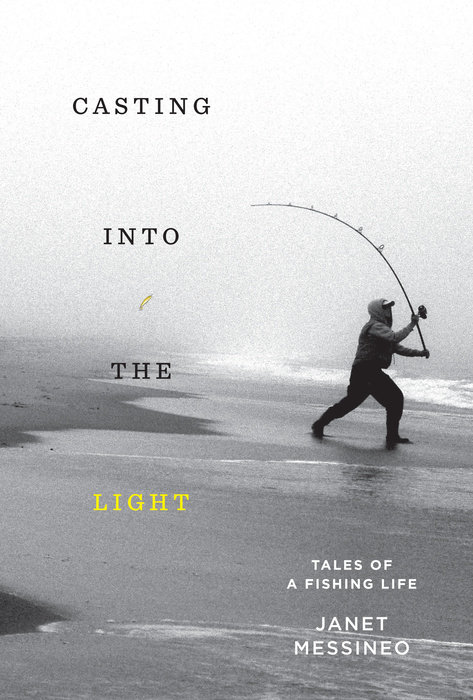
COURTESY OF PANTHEON

On Sunday, local author Janet Messineo closed out the festival by sharing stories from her book, Casting into the Light: Tales of a Fishing Life (Pantheon), which chronicles her path to becoming an expert striped bass fisherman and, eventually, fish taxidermist. “I guess you could say I’m obsessed with catching striped bass,” she said to an audience filled with fellow anglers and casual observers. “To me, catching the fish is the thrill these days. I don’t keep anything I’m not going to eat. These are beautiful and clever animals.” Messineo swapped tales with moderator and Chilmark selectman Warren Doty about fishing under cover of darkness–striped bass are nocturnal–and thrilling at the beauty of the species and the ever-present opportunity to hook “the big one.”

As the day came to a close, festival-goers filed out of the tents clutching reusable totes filled with hefty hardcovers and trekked the half-mile or so to the field-turned-parking lot, wondering which book to tackle first during these waning days of summer.

Maira Kalman Retrospective Opens This Month at High Museum

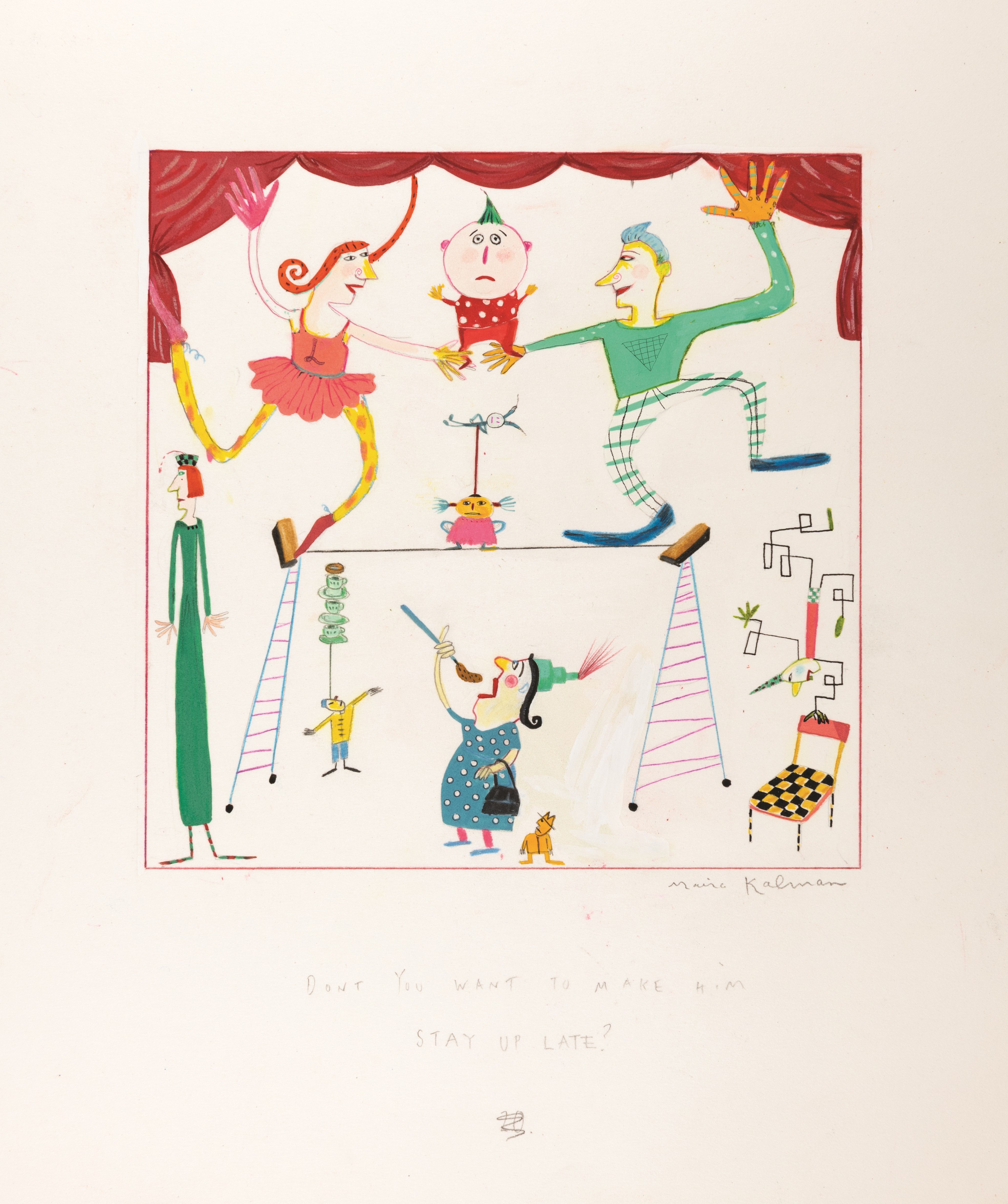
© MAIRA KALMAN, COURTESY OF JULIE SAUL GALLERY
Kalman’s illustration for Stay Up Late.

Author-illustrator Maira Kalman’s bibliography is an impressive one. In addition to creating whimsical covers for the New Yorker, Kalman claims dozens of books to her credit: she debuted in 1985 with the picture book debut, Stay Up Late, and since then titles have included instant classics like Last Stop, Grand Central (1999), Looking at Lincoln (2012), Fireboat (2002), and, even an illustrated picture book called Cake (2018). Each book explores complex topics while maintaining a certain lightheartedness that makes her work accessible to people of all ages, but especially children.  In fact, Kalman is adamant that children can handle any subject – slavery, love, even death – as long as it’s done the right way.  “There’s always a way to talk to children as long as you are candid and kind,“ Kalman said in an interview with us back in 2014. “You don’t have to scare them beyond their understanding or above their age level.”

Later this month, Atlanta’s High Museum will host an exhibition dedicated to exploring Kalman’s work in a show entitled The Pursuit of Everything: Maira Kalman’s Books for Children. This is the fourth collaboration between the High Museum and the Eric Carle Museum of Picture Book Art in Amherst, Massachusetts, and will span nearly the entirety of Kalman’s career. On loan from various institutions, the 100-piece show features a mix of books, original drawings, manuscripts, and even illustrated correspondence between Kalman and her two-year-old granddaughter.“We are thrilled to partner again with the High to bring children’s picture book art to Atlanta,” said Ellen Keiter, chief curator at The Carle. “Kalman is an astute chronicler of our time as well as someone who makes history accessible.”

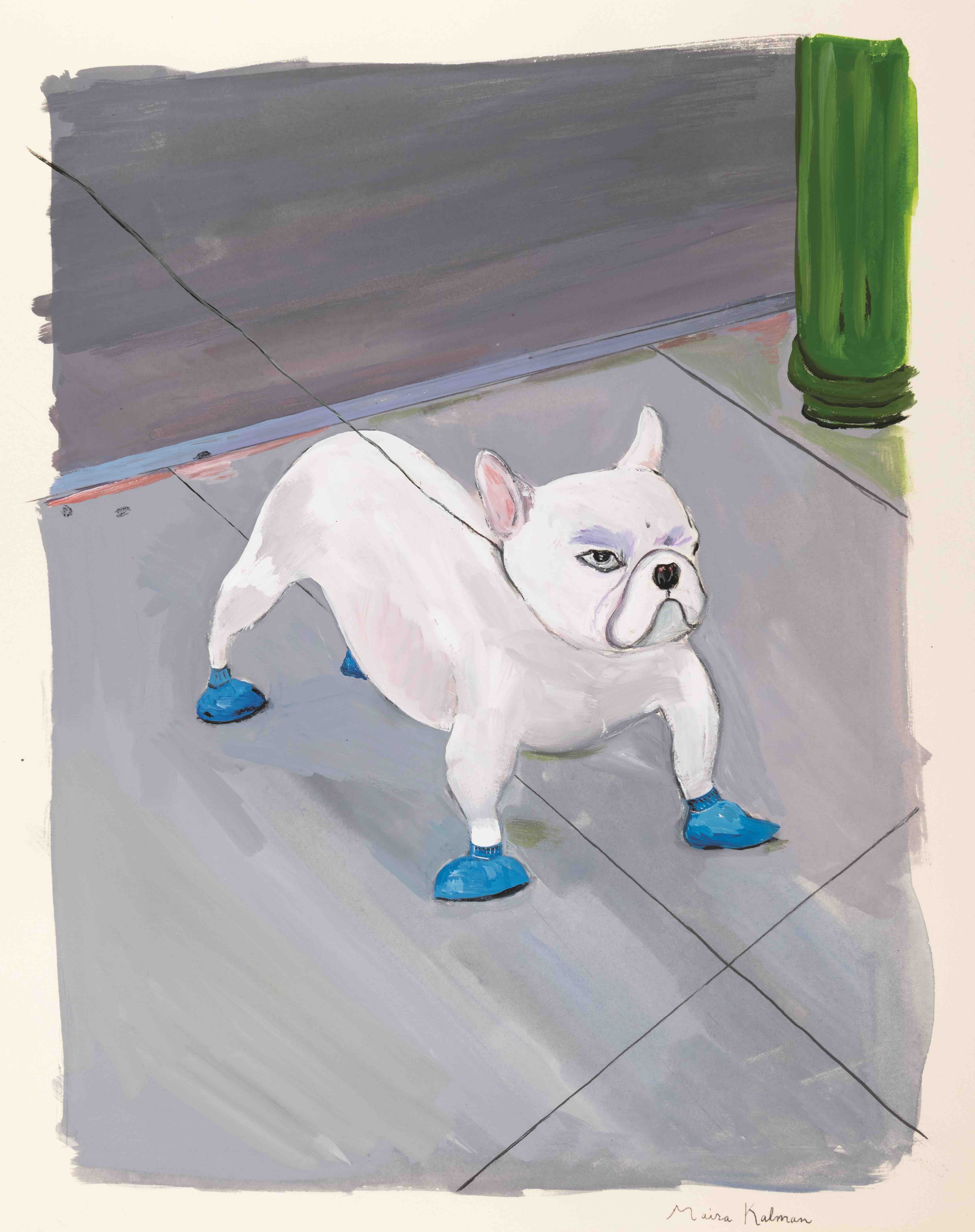
© MAIRA KALMAN, COURTESY OF JULIE SAUL GALLERY

Kalman’s illustration for Your Beloved Dog.


“Both captivating and moving, Kalman’s work challenges all of us to rediscover the childlike curiosity that lives deep down inside,” said High director of education Virginia Shearer.

Additionally, Atlanta’s Alliance Theater will present the world premiere of the play “Max Makes a Million,” from June 20-July 21, 2019. Adapted by and directed by Liz Diamond, the play incorporates jazz, poetry, and the visual arts in a tale starring Kalman’s beloved poet puppy character, Max Stravinsky.

The Pursuit of Everything is both a celebration of Kalman’s work and a reaffirmation of the artist’s belief that children deserve honesty in their literature. “It’s absolutely possible to talk about anything with children,” Kalman said. “Because they do understand contradictions, and they do understand sadness and they do understand kindness. There isn’t a child in the world who doesn’t.”

The Pursuit of Everything is on display at the High Museum from June 22 through September 15, 2019.

Cotsen Library Publishes Massive Dual-Volume Catalogue

133665a.jpg


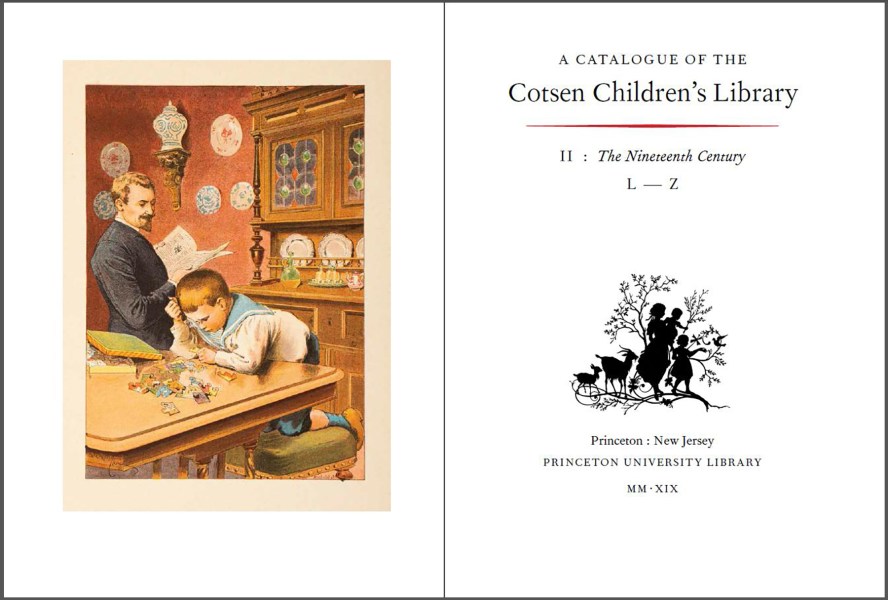
Turn to any page of the recently published, two-volume, folio-size Catalog of the Cotsen Children’s Library: The Nineteenth Century  — say, page 24 of volume II — and the bibliographical detail accompanying each entry and illustration are case studies in thoroughness. In my case, page 24 reveals a charming, full-page, illustration of Theodore Léfèvre’s Bébé saurait bientôt lire (approx. 1880), a hand-colored wood engraving frontispiece for an elementary reader.

 
This project didn’t come together overnight; for over twenty years, a team of dedicated librarians and staff at the Cotsen Children’s Library at Princeton University have been fastidiously compiling a complete catalogue of that library’s research material. To put it mildly, this has been no small undertaking. Out of the nearly 100,000 items donated by Princeton alumnus (‘50) and Neutrogena executive Lloyd Cotsen, 23,000 non-circulating items spanning the 15th through the 20th century and written in thirty languages will ultimately be included in the multi-volume compendium.

133665.jpg
Included in the Nineteenth Century are descriptions of 6,370 children’s books in the library’s holdings and 270 full-color illustrations. Titles were selected for this publication based on their illustrations or their representation of a particular style or development. As the focus is on the 19th century, work by well-known illustrators like Charles Perrault and Kate Greenaway figure prominently, as do examples of then-revolutionary printing and illustrating techniques.

 
These lavender, gilt-stamped cloth volumes are arranged alphabetically, with each entry given meticulous bibliographic detail. The pair is being sold through Oak Knoll Press for $250. Nineteenth Century joins the Cotsen’s earlier two-volume catalogue, published in 2000 and 2003, chronicling the library’s 20th-century holdings. A final, two-volume project is in the works that will examine the Cotsen’s children’s books dating from the 1400s through 1801.

 
Among some of the treasures in the Cotsen’s holdings include picture letters by Beatrix Potter, incunables, drawings by Edward Lear, and even an early-Coptic schoolbook. Though the Cotsen collection is non-circulating, the library hosts an array of impressive virtual exhibitions using its holdings.


Images courtesy of Oak Knoll

Photography’s First Superstar: The Work of William Mortensen on Display at NYC Book and Ephemera Fair

Some saw him as a provocateur. Others, like Ansel Adams, called him the Antichrist. However you felt about him, photography’s first superstar was arguably William Mortensen (1897-1965).  Never heard of Mortensen? Go read all about him and a forthcoming exhibition dedicated to his work here.

Wiilliam Mortensen (1897 - 1965). "Untitled (Woman with Mask)", circa 1924 - 1926 Photograph Courtesy of Stephen Romano Gallery

WIILLIAM MORTENSEN (1897 – 1965). “UNTITLED (WOMAN WITH MASK)”, CIRCA 1924 – 1926 PHOTOGRAPH COURTESY OF STEPHEN ROMANO GALLERY


https://bit.ly/2TvMZC4

Ticknor Society Announces Book Collecting Prize for New England-Based Bibliophiles

Here’s the details: Collections must be compiled, curated, and owned by the contestant, who must reside in one of the six New England states. Eligible collections may include books, manuscripts, and ephemera. Collections will be judged on their originality and creativity and not market value or size.
Applicants are asked to submit an essay of up to 1,500 words describing the inspiration behind the creation of the collection, as well as its history, current status, and anticipated direction. Images of one or more items in the collection and a bibliography of the collection are also requested.
The bibliography should include the author, title, place, publisher and date of publication, type of binding, condition, annotations on the importance of individual pieces, and why each item is in the collection.
One winner will receive a $1,000 prize and offered a complimentary one-year Ticknor Society membership.
The application deadline is April 15, 2019 and the winner will be notified on June 30. The prize will be awarded at the Boston Antiquarian Book Fair in November.
Appy here: www.ticknor.org

Magical Unicorns at Musée Cluny: Centuries of Fascination


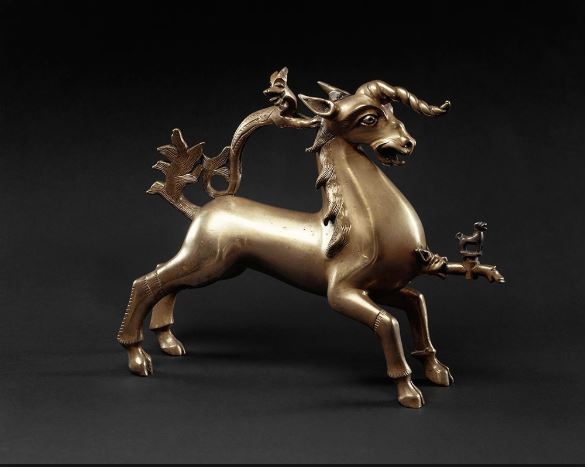
Everywhere you look there seems to be some product inspired by a unicorn: purple frappuccinos, table lamps, there’s even a shop (in Brooklyn, naturally,) that specializes in unicorn horns proudly crafted in the USA. Privately held companies valued at over a billion dollars are known as “unicorns” to represent the statistical rarity of such entities. (Airbnb and SpaceX are two examples.) Yet, despite what seems to be rampant unicorn fever, it’s nothing new; the ancient Indus carved unicorns onto seals, and the beasts appear in the Physiologus, an ancient Greek bestiary, which ascribes curative powers to unicorn horns. By the Middle Ages, unicorns came to symbolize the life and trials of Jesus Christ.


Far from the playful, purple-and-pink hued creature we often think of today, historical unicorns were squat, compact, notoriously ferocious creatures that could only be captured by virgins. Unicorn horns were believed to be powerful aphrodisiacs as well as effective teeth whiteners, leading to the robust sale of ground-up narwhal horns passed off as genuine unicorn. Wealthy families and merchants often commissioned unicorn images for their coats of arms and emblems to suggest magnificence and power.


Now, Magical Unicorns, the latest exhibition on view at the Musée Cluny in Paris offers a comprehensive look at how unicorns have been depicted over the past 500 years. Engravings, sculptures, illuminated manuscripts, and other items illustrate the allegorical significance of these mythical beasts and humankind’s enduring fascination with them.
The highlight of the show is a set of six tapestries entitled The Lady and the Unicorn, part of the Cluny’s permanent collection. Woven around 1500, the tapestries are believed to have been designed by Jean Bourdichon, offical court painter to four French Kings and the illuminator responsible for the sumptuous Book of Hours created for Queen Anne of Brittany. Showcased in a dimly-lit rotunda to preserve the fabrics, the scarlet 12-feet by 9-feet silk and wool tapestries are complex visual meditations on the meaning of life, filled with allegorical iconography.
To quote Sebastian from Shakespeare’s The Tempest: “Now I will believe that there are unicorns.”
Magical Unicorns runs now through February 25.


Images (Top) Aquamanile : Licorne Alliage cuivreux, vers 1400 Cl. 2136 © RMN-Grand Palais (musée de Cluny – musée national du Moyen-Âge) / G. Blot. (Middle) Livre d’heures dit de Yolande d’Aragon: «la Vierge Marie et la chasse à la licorne» Enluminure sur parchemin, vers 1460 – 1470 Ms 22 (Rés. ms 2) © Bibliothèque Méjanes, Aix-en-Provence. (Bottom) Graduel de Sainte-Rictrude de Marchiennes: «David menacé par le lion et la licorne» Parchemin, 1548 ms 112, fol. 88 Bibliothèque municipale de Douai, © IRHT-CNRS. Reproduced with permission from the Musee Cluny.

Westsider Rare Books to Close After 35 Years Unless a GoFundMe Campaign Comes Through – The Fine Books Blog

Source: Westsider Rare Books to Close After 35 Years Unless a GoFundMe Campaign Comes Through – The Fine Books Blog

An American Master: Ursula Le Guin

It’s been almost exactly one year since her death, but Ursula Le Guin remains a literary powerhouse. Check out Elisa Shoenberger’s look at the enduring influence of an American master over at the Book and Paper Fair Blog: https://bit.ly/2RtVzBc


The Holiday Round-Up: Books for All!

Yes, ’tis the season for frantic holiday shopping, unless you’re one of the rarefied people who check everyone off your list during those Christmas in July sales. If you’re more of a last-minute shopper, there’s still time to ace your gift-giving game this holiday season with a carefully selected title or two.  Below, our top picks for the bibliophile in your life. Get ’em while the gettin’s good!
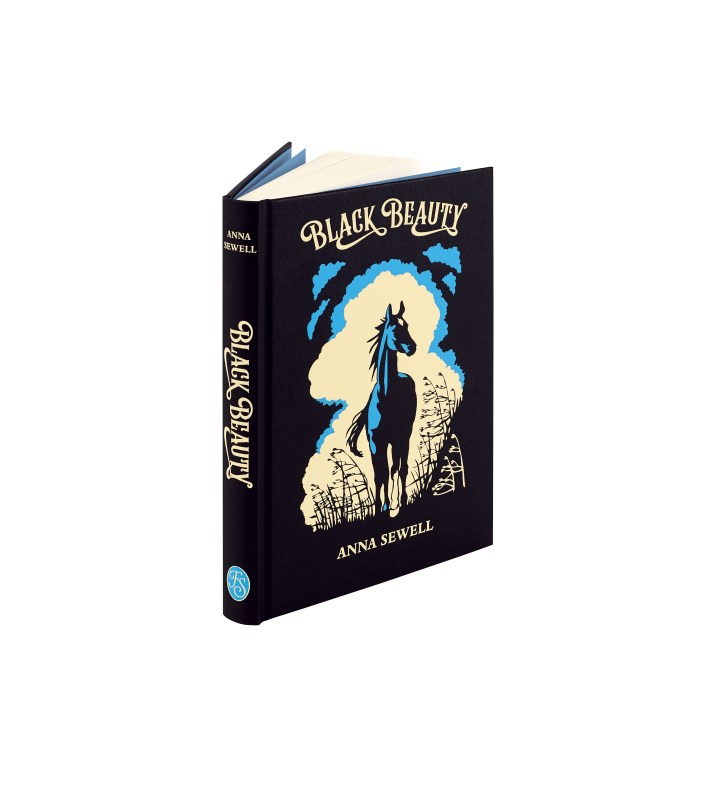
The Folio Society Black Beauty cover shot

Black Beauty, by Anna Sewell, illustrations by Annette Hamley-Jenkins; Folio Society, $53.95, 224 pages.

Originally published in 1877, Sewell’s bestselling tale championing fair treatment for working horses in Victorian-era England gets the sumptuous Folio treatment with lush, full color illustrations by Annette Hamley-Jenkins and an introduction by War Horse author Sir Michael Morpurgo. This edition of Black Beauty comes in a handsome blue slipcase printed with horses galloping across in silhouette. This is the gift that keeps on giving: a timeless story, beautifully presented.

Please note: Folio Society’s order deadlines to make Christmas delivery are December 8 for standard shipping and December 14 for express.

(Images copyright 2018 Annette Hamley-Jenkins and reproduced with permission from Folio Society. )

This slideshow requires JavaScript.

Charles Dickens’s A Christmas Carol: The Classic Novel with Recipes for Your Holiday Menu by: Giada de Laurentis, Ina Garten, Martha Stewart, and Trisha Yearwood; Puffin Plated, $25.00, 168 pages.

Carol

Is there any better combination than a good book and a good meal? Perhaps a frothy brew, but I digress. Puffin Plated, a new endeavor launched this fall by Penguin Random House, recently released A Christmas Carol by Charles Dickens, unabridged and accompanied by mouth-watering photographs (by Tisha Cherry and Vega Hernando) of fruitcakes, gingerbread, and other holiday treats.  Delectable recipes come courtesy of culinary giants like Ina Garten and Martha Stewart. (Looking for a non-denominational gift? Pride and Prejudice also got the Puffin Plated treatment and is filled with sugary sweet confections.)


This slideshow requires JavaScript.

(Images reproduced with permission from Penguin Random House.)

Picturing America: Thomas Cole and the Birth of American Art, by Hudson Talbott; Nancy Paulsen Books, 32 pages, ages 4-7.
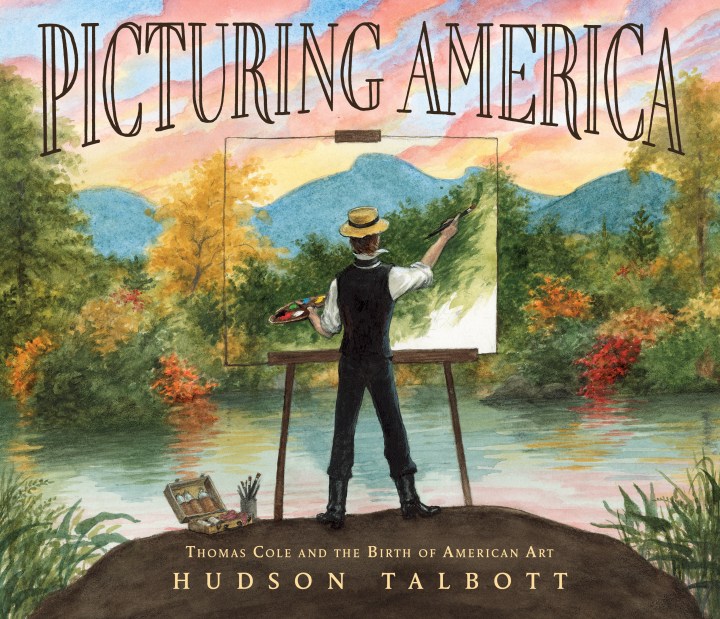
Picturing America cover

“The painter of American scenery has, indeed, privileges superior to any other. All nature here is new to art,” wrote Thomas Cole (1801-1848), the father of the Hudson River School of painting and the patriarch of the young country’s first art movement. Here, author-illustrator Hudson Talbott introduces readers to a man who was at once an immigrant, an artist, and an environmentalist by weaving elements from some of Cole’s most iconic paintings into the book. A perfect gift for budding naturalists with an artistic streak.


This slideshow requires JavaScript.

(Images copyright 2018 Hudson Talbott and reproduced with permission from Penguin Random House.)

Hansel & Gretel, by Bethan Woolvin; Peachtree Publishers, $16.95, 32 pages, ages 4-8.

hansel

Bethan Woollvin is back with another twisted fairy tale. Now, the author of Little Red and Rapunzel has concocted a revision of the Grimm brother’s classic story of two siblings forced to outsmart a cannibalistic old witch. As in her previous adaptations, Woollvin’s Hansel & Gretel takes a surprise turn, with Hansel and Gretel as sassy brats and the witch (named Willow) cast in a more benevolent role. To be enjoyed fireside with a heaping plateful of tasty gingerbread cookies.


This slideshow requires JavaScript.

(Images copyright 2018 Bethan Woollvin. Reproduced with permission from Peachtree Publishers.)

All is Merry and Bright, by Jeffrey Burton, illustrated by Don Clark; Little Simon, $24.99, 26 pages, ages 0-4.

merry

Get the littlest revelers into the holiday spirit by offering them this oversize board book by Jeffrey Burton and Don Clark. The retro volume, complete with sparkly foil and embossing on every page is a joyous celebration of Christmas. Sensory overload in the best sense awaits the tiny tots who find this book tucked under their tree this year.


This slideshow requires JavaScript.

(Text copyright 2018 Jeffrey Burton. Illustrations copyright 2018 Don Clark. Reproduced with permission from Simon & Schuster.)