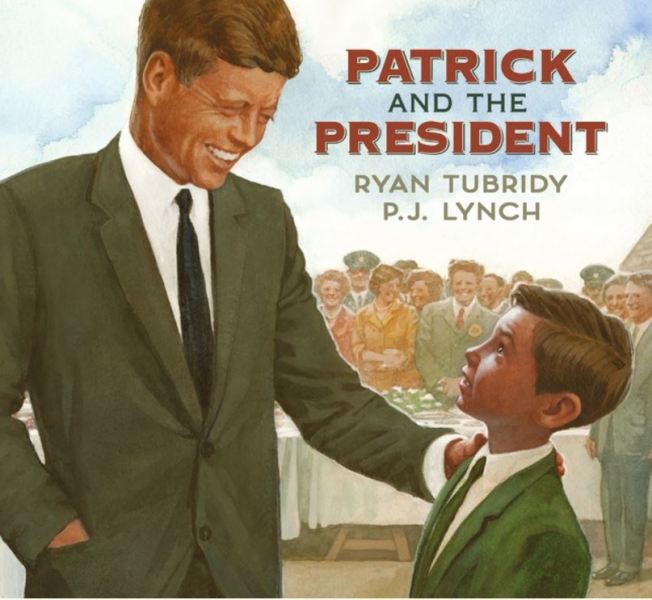
Patrick and the President, by Ryan Tubridy, illustrated by P.J. Lynch; Candlewick Press, $16.99, 48 pages, ages 6-9.
On June 26, 1963, Air Force One touched town at Dublin Airport, shepherding America’s first Irish Catholic president to his ancestral island home. Irish television and radio broadcaster Ryan Tubridy has written about Kennedy before; his 2011 JFK in Ireland explores the president’s trip to the Emerald Isle, and here imagines that same visit through the eager eyes of a young boy named Patrick, who, along with his fellow Wexford classmates, has been chosen to welcome the president and sing in his honor. Uplifting and bursting with joy, the narrative is, at times, clunky, but is saved (perhaps even overshadowed) by the stunning golden-hued lifelike watercolors by two-time Kate Greenaway Medal winner and 2016 Irish children’s laureate P.J. Lynch (The Boy Who Fell Off the Mayflower). The illustrations are, quite simply, magnificent. Portraits of the president and his megawatt smile nearly pass for photorealism, while the ruddy-cheeked children possess a similar verve as those found in paintings by Norman Rockwell. A four-day chronology of the actual itinerary offers further details as well, the whole a touching tribute to Kennedy.
Fantastic Flowers, by Susan Stockdale: Peachtree Publishers, $17.99, 32 pages, ages 2-5.
It’s beginning to feel a lot like spring, and a host of new non-fiction books are popping up like a field of crocuses and daffodils. Fantastic Flowers is a charmingly playful presentation of seventeen flowers found across the globe, and Stockdale’s bubbly illustrations are a lively match for the simple, lyrical descriptions–the Mediterranean bumblbee orchid that graces the front cover looks like a pair of magenta smiling honeybees, and other flowers resemble baboons, ballerinas, and pineapples. The book gently introduces young readers to the concept of object identification and encourages close observation skills, while back matter offers further scientific explanation about plants and pollinators.
Fantastic Flowers offers cheerful anticpiation for the forthcoming season.
Text and art copyright 2017 Susan Stockdale. Reproduced with permission from Peachtree Publishers.
When Jackie Saved Grand Central, by Natasha Wing, illustrated by Alexandra Boiger; HMH Books for Young Readers, $17.99, 48 pages, ages 6-9 (March 7, 2017).
When Jackie Saved Grand Central. Text copyright 2017 Natasha Wing, image copyright Alexandra Boiger. Reproduced with permission from HMHCo.
More than 750,000 people pass through the magnificent halls of Grand Central Terminal daily, but without the tireless campaigning of former first lady Jacqueline Kennedy (1929-1994), the fate of the rail terminal could have easily have mirrored what befell Penn Station.Natasha Wing’s latest foray in non-fiction focuses on Kennedy’s fight to preserve the stately Beaux Arts building of 42nd Street by tracing the First Lady’s belief that preserving the past could foster a brighter future.
Starting with Kennedy’s meticulous preservation of the White House, Wing gracefully transitions from Camelot to 1975 without mentioning JFK’s assasination by simply stating that another American landmark needed Jackie’s strength and fortitude. Alexandra Boiger’s watercolors add depth through symbolic deployment of color: black for power, red for anger, tones of yellow for resilience, and that famous cerulean blue found on Grand Central’s ceiling to evoke victory. Notes and a bibliography round out this timely example of how to successfuly champion for a worthy cause in the face of opposition.
When Jackie Saved Grand Central. Text copyright 2017 Natasha Wing, image copyright 2017 Alexandra Boiger. Reproduced with permission from HMHCo.
Glitter Clay Charms, by Klutz Press; $21.99, 48 pages, ages 8 and up.
Klutz has built its reputation on building fun activity kits that encourage and stimulate open-ended creativity. We recently received the Glitter Clay Charms book kit and tested it. Here’s what we learned:
What it is: A 48-page design booklet with materials necessary to create sparkly charms: a metal link bracelet, charm loops, clay, even a drying rack complete the kit. Precise, easy-to-follow-instructions are Klutz’s hallmark, and cover every conceivable clay-related outcome here.
You will need: Patience. Plus a toaster oven to “bake” the charms.
Who it’s for: Children eight years old and up. Tiny metal pieces, polymer clay, and functional sharp points can puncture tiny fingers and other body parts. Less dexterous children should be supervised. Note that the book only comes with one metal bracelet, which could make sharing this project with others problematic unless another bracelet is provided.
The project: We were feeling adventurous so we skipped the simple charms and headed straight for the adorable orange fox. There’s no orange clay, so we blended a small pink ball and a medium yellow ball of clay, as instructed. Rather, we tried to–this clay doesn’t blend well, and after about ten minutes of kneading, we still had clay in a darker shade of pink. No matter, we soldiered on, following the step-by-step instructions to mold the charm into the desired form. Even with minimal artistic skill, we were able to compose something that resembled the example in the book. Next we added the charm loop and then placed the fox on a foil-lined cookie sheet, which went in a 250°F toaster oven for twenty minutes. (This is where parental supervision is crucial.) After letting the charm cool, we attached it to the metal bracelet. The loop came loose from the charm, but Klutz discusses how to remedy that on page 13.
Here’s how our charm turned out:
A rare pink fox on a charm, modeled by my assistant.
Total time commitment: We spent roughly forty-five minutes (including twenty minutes baking) from start to finish creating one charm. The only frustrating moment we encountered was blending the clay into our desired shade of orange, but we worked through it.
The verdict: Detailed instructions encourage close reading and following directions. Creative types who love to work with their hands will enjoy this satisfying project. I found molding the clay especially soothing, even when the color didn’t blend as desired. Those easily frustrated by manipulating small objects may not enjoy Glitter Clay Charms. Parents will want to cover workspaces with newspaper and put kids in an old t-shirt or smock–polymer clay stains.
Would we do it again? Definitely.
Have you tried any Klutz products? Share your experiences in the comments below!
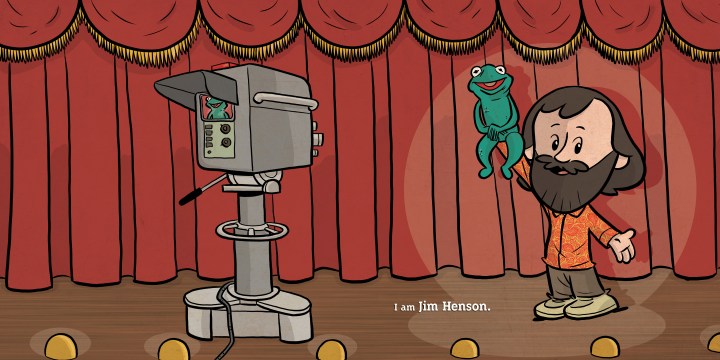
Text copyright 2017 Brad Meltzer, art copyright 2017 Chris Eliopoulos.
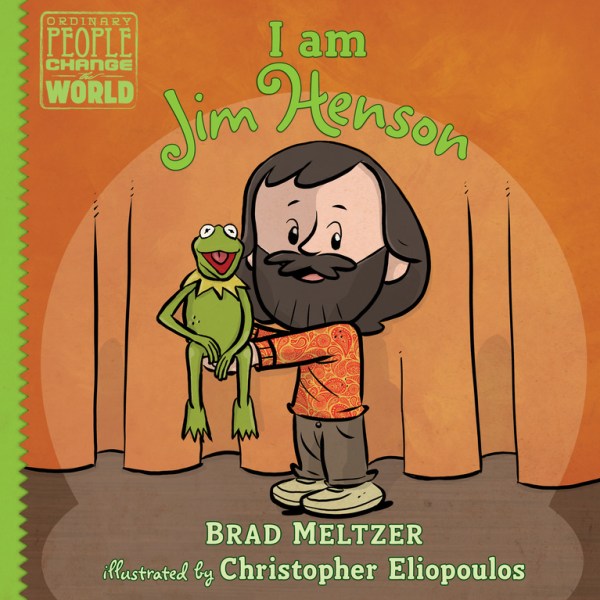
Jim Henson gets the hero treatment in Brad Meltzer’s latest biography for Dial’s Ordinary People Change the World series. Aimed at 5 to 8 year-olds, the Ordinary People books profile historical figures who left the world a better place, and the creator of The Muppet Show and Sesame Street is an ideal candidate. Meltzer’s simple, conversational style intersperses actual quotes by Henson to create an engaging and informative biographical sketch, while a timeline and selected bibliography round out this well-crafted and accessible work of nonfiction. Misery Loves Sherman and Pet Avengers creator Chris Eliopoulous maintain a casual, comic-book feel while capturing the essence of the master of make-believe and imagination.
I Am Jim Henson, by Brad Meltzer, illustrated by Christopher Eliopoulos; Dial Books, $14.99, 40 pages, ages 5- and up.
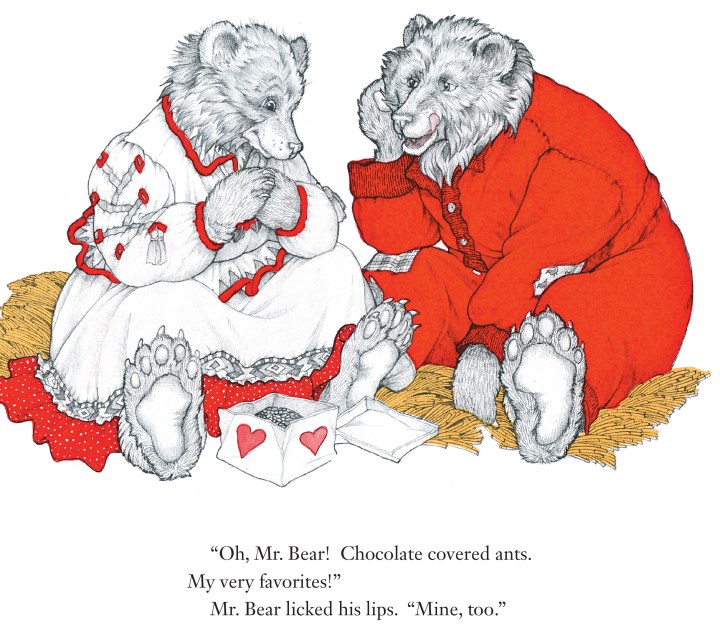
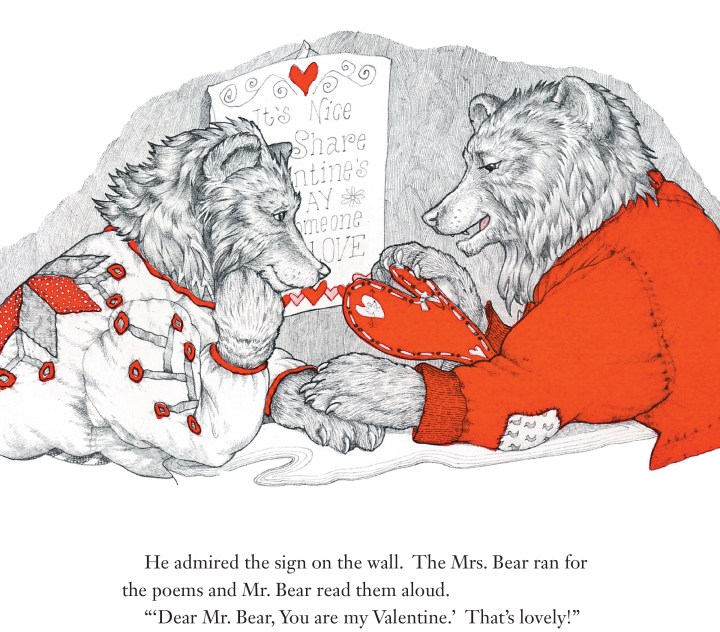
Text copyright 1983 Eve Bunting, art copyright 1983 Jan Brett, reproduced with permission from HMHCo.
The Valentine Bears, by Eve Bunting, illustrated by Jan Brett; Houghton Mifflin Harcourt Books for Young Readers, $8.99, 32 pages, ages 4-7.
Say “I love you” with this beary adorable picture book from master children’s picture book makers Eve Bunting and Jan Brett. Originally published in 1983, this edition is updated with a pretty pink hardcover embellished with a garland of wild berries. The story, however, remains the same: Mrs. Bear rouses early from hibernation to to celebrate Valentine’s Day–a first for her and Mr. Bear. She gathers all of Mr. Bear’s favorite things–crunchy dried beetles, summertime honey–along with homespun poems of love. Mr. Bear has a few surprises in store, too. Brett’s illustrations are some of her finest, full of detail and expression. Share this with everyone you love–there’s just enough humor to keep The Valentine Bears from being too lovey-dovey for little boys.
A gentle tale of an old married couple keeping the flame alive.
Text copyright 1983 Eve Bunting, art copyright 1983 Jan Brett. Reproduced with permission from HMHCo.Text copyright 1983 Eve Bunting, Art copyright 1983 Jan Brett. Reproduced with permission from HMHCo.Text copyright 1983 Eve Bunting, Art copyright 1983 Jan Brett. Reproduced with permission from HMHCo.
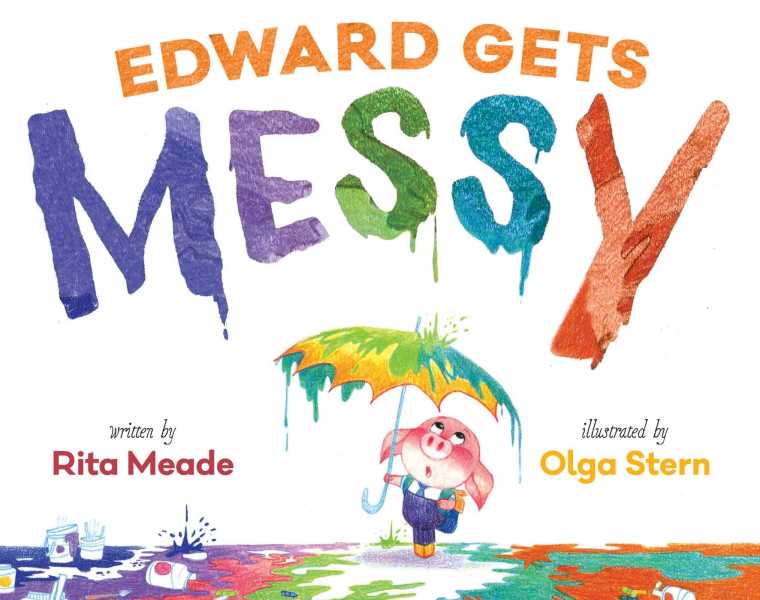
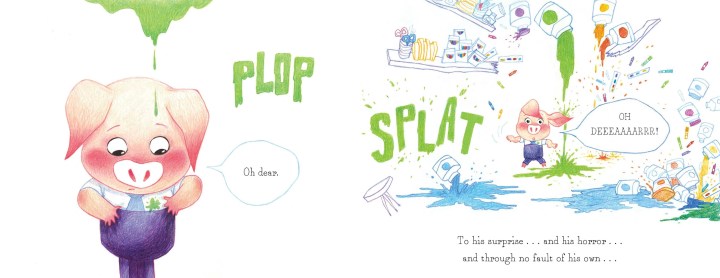
Text copyright 2016 Rita Meade. Art copyright 2016 Olga Stern. Reproduced with permission from Simon & Schuster.
Edward Gets Messy, by Rita Meade, illustrated by Olga Stern; Simon & Schuster Books for Young Readers; $17.99, 32 pages, ages 3-7.
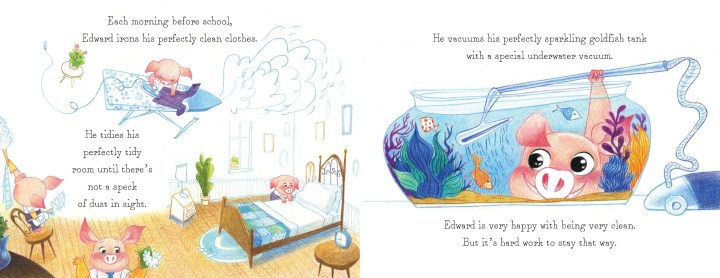
Edward is a scrupulous pig–he irons his clothes before school, vacuums the fish tank, and avoids leaf piles and volcanic science experiments in order to stay clean. One day, while tidying up the supply shelf in class, green paint plops onto his pressed shirt, the catalyst for Edward to discover the joys of digging in dirt and exploring new activities. Debut children’s book author Rita Meade composes a quick-paced, witty narrative that begs to be read aloud. Olga Stern’s bright colored pencil illustrations build in intensity as Edward’s embrace of chaos grows. Neatniks will sympathize with Edward’s penchant for cleanliness, while ragamuffins will cheer this little piggy on his messy adventure. Besides, sometimes the best part about getting dirty is the clean-up afterwards.
Text copyright 2016 Rita Meade, art copyright 2016 Olga Stern. Reproduced with permission from Simon & Schuster.
The Singing Bones, by Shaun Tan; Arthur A. Levine, $24.00, 192 pages, ages 14 and up.
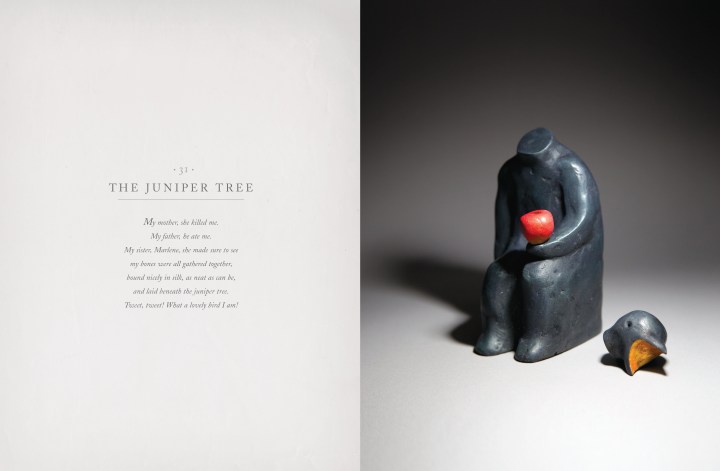
Australian artist Shaun Tan has made his name creating surreal, slightly peculiar works of art with the ultimate goal of encouraging dialogue and social engagement–Tan worked on the science-fiction animated film WALL-E, for example–and in The Singing Bones he tackles the Grimm brothers’ literary canon with similar verve. Seventy-five pieces of original art are accompanied by a portion of text from obscure and beloved tales by Jacob and Wilhelm Grimm. Inspired by Inuit and pre-Columbian stone carvings, Tan’s compositions are molded of earthy, unpretentious materials–papier-mâché and air-drying clay adorned with acrylic paint and shoe polish–resulting in art that looks like it has weathered the passage of time.
Many of the selections may not be well known to contemporary readers, at least not in the forms referenced here: in “Mother Trudy” an overly inquisitive young girl is turned into a block of wood and cast upon the hearth by a witch, and Tan’s sculpture depicts a demonic-looking old creature nestled comfortably in front of a recently lit blaze. A wicked stepmother decapitates her stepson in “The Juniper Tree” and the attending artwork is a disturbingly complex rendering of multiple moments that unfold in the narrative. Snow White and her long-forgotten sister Red Rose gleefully traipse on a magical bear in another excerpt. Though summarized in an annotated index, only the basic sketch of each story is provided, encouraging readers to explore the fairy tales separately.
Reigning master of macabre Neil Gaiman and renowned fairy-tale expert Jack Zipes provide thoughtful introductions and commentary on the enduring importance of the Grimm fairy tales for our generation.
The Singing Bones is a powerful examination of the range of human emotion, and how much greater that range can be for children, if adults will allow it.
The Borrowers Collection, by Mary Norton, illustrated by Beth and Joe Krush; HMHCo, $24.99, 1004 pages, ages 8-11.
The charming adventures of the miniature Clock family have captivated readers since the Eisenhower era, and this hefty volume presents five fantasy-filled adventures. The first story won the Carnegie medal in 1952, and today The Borrowers remains as magical and rewarding as ever. A captivating gift to share with first-timers and lifelong Borrowers fans.
Muddle & Mo, by Nikki Slade Robinson; Clarion Books, $14.99, 32 pages, ages 0-3. (available February 21, 2017)
Originally published in New Zealand,this cuddly picture book by Nikki Slade Robinson lands stateside in less than a month, and it’s worth putting on your wish list; this adorable story about a goat and a duck exploring what makes them different subtly teaches important life lessons like kindness, patience, and love.
Did You Ever See? by Joanna Walsh; Tate, $16.95, 32 pages, ages 2-5.
Kids wonder about everything–why the sky is blue, what the smallest living creature is, and even what the inner workings of a television look like. Author-illustrator Joanna Walsh examines the world from a youngster’s point of view, and her oversized images of big eyes staring out at the world in bold stamps of color encourage imaginative exploration. Walsh’s jaunty text nicely coordinates with the retro-jam feel of the illustrations. Art lovers of all ages will find something to enjoy here.








 Literary Features Syndicate