Animalium (Welcome to the Museum), written by Katie Scott, illustrated by Jenny Broom; Big Picture Press, $35.00, 112 pages, ages 6-12.


This stunning oversize volume bills itself as an all-hours natural history museum that houses creatures alive and extinct. Following an informative preface by Dr. Knapp from the Natural History Museum of London, author Katie Scott explains the book’s layout – here, the six chapters are actually separate galleries classified by animal and each one moves up the evolutionary ladder from invertebrates to mammals. Chapters also include animal habitats ecosystems, and even a few dissections illustrating animal’s interior circuitry. The show-stopping pen and ink plates by Jenny Broom recall nineteenth century wildlife lithographs and engravings.  160 animals are identified by numbers corresponding to an accompanying key with the critter’s common and Latin name, plus identifiable characteristics. The folio sized pages allow readers to examine in great detail the various bits and parts that make all of Earth’s creatures perfectly suited to their habitats.  There’s no bibliography, but the appendix includes five fabulous websites, such as those run by the Cornell Lab of Ornithology and National Geographic which offer opportunities for readers to continue their explorations within the animal kingdom. Budding naturalists of all ages will find themselves getting quite enjoyably lost in the vast pages of this unique museum.  

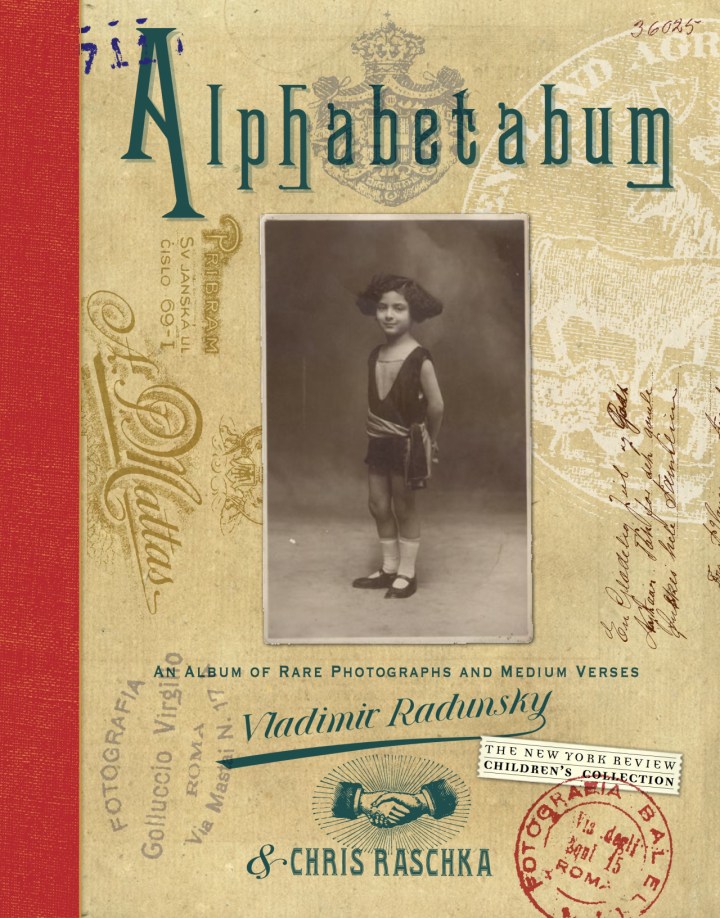
Alphabetabum: An Album of Rare Photographs and Medium Verses, by Vladimir Radunsky and Chris Raschka; The New York Review Children’s Collection, $19.95, 80 pages, ages 5 and up.


Vladimir Radunsky spent years rummaging through bookstalls and flea markets around the world in search of black and white photographs from the turn of the last century. He found that many of the pictures had no identification, and had been pitched in trash bins. This book is his way of breathing life back into these portraits byimagining in verse the lives these cherubs led, suspended in time, dressed in their best clothes and posed against sumptuous backgrounds. Radunsky curated twenty-six images of children from his collection and asked fellow author (and Caldecott Medal winner) Chris Raschka to compose alliterative poems exploring the subjects’ possible personalities. These little verses create a fantasy world in this photo album-as-alphabet book. While it’s unlikely that children will actually learn their ABCs, images of boys in girls in outfits of long ago will likely inspire conversations about life in another era.

Once Upon An Alphabet: Short Stories for All the Letters, by Oliver Jeffers; Philomel, $26.99, 112 pages,  ages 3-5. (October 2014)


Bestselling author-illustrator Oliver Jeffers (The Day the Crayons Quit; Stuck) returns with another whimsical and unique offering for young readers. Here Jeffers dedicates an entire story to each of the letters of the alphabet. Quirky, ink on paper art fill the oversize pages with tales of elephants fitting in envelopes, the wonderful applications of jelly, and cucumbers that aspire to swim. The odd vignettes are captivating, amusing, and will entertain young readers time and again. The book may be too long for pre-schoolers to read in one sitting, but with one story for each letter, parents can easily combine which tales to tell, and children will likely have their favorites already in mind.

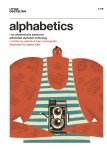
Alphabetics: An Aesthetically Awesome Alliterated Alphabet Anthology, by Patrick and Traci Concepción, illustrated by Dawid Ryski; Little Gestalten, $16.95, 64 pages, 3-7. (September 2014)


Logophiles, rejoice! As the title suggests, this alphabet book is a series of twenty-six alliterative entries accompanied by illustrations by graphic artist Dawid Ryski, whose structured renderings of astronauts, quails and yuppie Yetis feel at once retro and hip.  Husband and wife design team Patrick and Traci Concepción created such sophisticated little ditties that younger readers may find themselves scratching their heads at words like ‘hellacious’ and ‘gambol.’ Luckily, the authors included a handy glossary. This book is one that parents and children will enjoy, and would make an excellent present to young, hipster parents, design aficionados, and wordsmiths alike.

Nick and Tesla’s Super-Cyborg Gadget Glove: A Mystery with a Blinking, Beeping, Voice-Recording Gadget Glove You Can Build Yourself, by Bob Pflugfelder and Steven Hockensmith, illustrated by Steve Garrett; Quirk Books, $12.95,  272 pages, ages 9 to 12. (Publication: October 7, 2014)

During a phone conversation late this spring, ‘Science Bob’ Pflugfelder  enthusiasticly explained  that his books for middle-grade students are driven by his own desire to question, tinker and build. The co-author of the much-loved Nick and Tesla series, Science Bob also conducts  experiments on television programs like Jimmy Kimmel Live and Live! with Kelly and Michael, and teaches elementary school science in a Boston suburb. “Originally Nick and Tesla was meant to be a trilogy,” he remarked. “Our readership has grown with each book, and teachers and librarians are excited about them too.” This is most likely due to the series’s unique narrative structure, which are written as part novel, part do-it-yourself manuals. “As far as we can tell, there’s never been a novel that combines a ‘how-to’ with a storyline,” Science Bob said, “we couldn’t find it anywhere else.” The latest, Nick and Tesla’s Super-Cyborg Gadget Glove, marks the fourth book to be released, and a fifth is in the works.

The layout in Gadget Glove is a slight departure from the other three. In previous books, several do-it-yourself creations are interspersed throughout the narrative. That happens in Gadget Glove as well, but now, each project becomes one part of a larger contraption: the cyborg glove of the book’s title. “The projects are more complex this time,” Science Bob said, “I hope kids will be eager to make their own versions of the cyborg glove.” Once fully constructed, the cyborg glove has four functions: a LED signal light, an ultra-loud emergency alarm, a handy sound recorder, and an UV secret message revealer.

The creative process is divided between Science Bob, co-author Steven Hockensmith, illustrator Scott Garrett, and a team at Quirk Books. That may sound like many chefs stirring the pot, but all parties work well together. “Usually, we agree on the general plot and outline some of the DIY projects. Then Steve and I go in our own directions. We have done four books together and now on Book Five, and neither Steve nor I have ever met each other!”

The twins’ names Nick and Tesla are an homage to electrical engineer and futurist Nikola Tesla, known for his high-voltage experiments which led to, among other things, inventing the Tesla coil, which was used by radio stations and telegraph companies. Mr. Tesla’s historical importance and scientific contributions are explored in depth in Gadget Glove. “Tesla has been in the media in recent years. Now we even have Tesla vehicles, so I think it will be interesting for kids to read the Nick and Tesla series and discover that there was a scientist named Nikola Tesla.”

Throughout the series, Nick and Tesla are generally more competent and resourceful than their adult counterparts. Sometimes, the adults are even the villains.  I think it’s nice to present things from a kid’s viewpoint; they see things that adults don’t,” said Science Bob. “In our books, that kids are able to put things together in different ways because they have a different viewpoint and a different motivation and a bit of imagination.”

Science Bob is also devoted to his role as an elementary school science teacher. He is quick to emphasize how curious, inventive, and imaginative children can be when given the chance. “Ultimately, I think the kids who turn cardboard boxes into robots using Christmas lights and fishing line are the children who go on to build Mars Rovers, solve energy problems, and feed the world.” The Nick and Tesla books tap into that creative and inventive spirit.

Being a member of the burgeoning ‘maker’ movement most inspires Science Bob’s writing and his teaching. While anyone could dabble in an activity to qualify as a maker, there is a strong current of participation within the fields of science, technology, engineering, the arts, and mathematics. The maker movement encourages passive thinkers to become active innovators through creative expression, self-reliance, and yes, even tinkering. I think, first and foremost, I like making things in the shop,” Science Bob said. “I am fascinated by movie props; I collect movie props and build movie props. That’s where my passion lies. I think the maker movement is something you’re hearing about a lot now. Look at 3D printers, for example. As they become more available, people are starting to understand what you can do with them. Programmable microchips are now in stores too. So I think the maker movement especially among kids is going to keep growing.”

Nick and Tesla have become more than characters that encourage middle-graders to be avid readers, but that being makers opens doors onto all sorts of worldly possibilities.  Science Bob could not be more delighted with the reception. “It’s great that people are embracing the Nick and Tesla series, but also how the maker world has adopted it. Parents in particular want their kids to build things, and use these books as a template. For me, it is so rewarding that kids are putting down the iPad, looking away from the screen, and are actually building stuff.”

Nicole Basbanes Claire is the head children’s librarian at the Upton Town Library in Massachusetts, where she helps young readers discover the wonder of books. Prior to that, she was a teen librarian at Gleason Public Library in Carlisle, MA. Claire received her AB in English and Creative Writing from Sweet Briar College and her MSLIS from the Palmer School of Library and Information Science. She now lives and kayaks with her husband, Billy, at their lake house in Central Massachusetts.

Le prix Nobel de littérature à Patrick Modiano

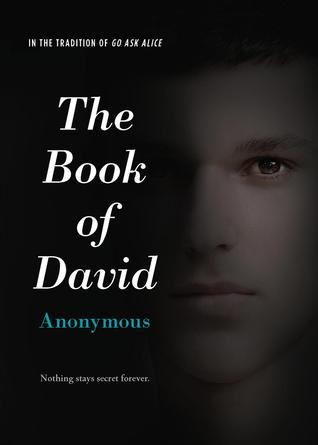
The Book of David, by Anonymous; Simon Pulse, $17.99, 288 pages, ages 14-17 yrs. (June 2014)

At a nondescript American high school, David, the narrator of The Book of David, appears to lead the quintessential teenager’s life. Quarterback of the varsity football team and going steady with the cheerleading captain, David commands respect from the entire school population. With his pick of college offers, the senior year looks bright. After the arrival of a new boy in school, and David begins questioning his own sexual identity, and worries about the repercussions of doing so.  

The Book of David is structured similarly to the 1971 classic teen novel Go Ask Alice. David’s author is Anonymous and, like Alice, it is also written as a diary. David mimics perfectly how a typical contemporary American teenager might write, and exudes a sense of voyeurism. Following in Alice’s footsteps, David explores themes of identity and self-perception that will resonate with teenagers at all levels of the popularity ladder. The book illustrates how most teenagers wrestle with issues of social acceptance, and strives to offer readers answers on how to meet those struggles with grace and compassion. Both are beloved by teenagers because they open windows onto their protagonists’ innermost secrets.

David’s diary reveal emotions that he most definitely wants to keep hidden from his friends. The homophobic rants in the book might sound cliché, they do, alas, represent words young people deploy without much regard for their trajectory or ultimate impact.  In one poignant journal entry David expresses fear of coming out. Being a potential pro-football player, he laments the lack of gay role models in the National Football League. This book was just published in June 2014, when Michael Sam made headlines for coming out before being drafted in the NFL. Sam quickly became a role model for male teen football players, especially for a sport notable for its absence of openly gay athletes. Perhaps readers might have seen kinder, more hopeful entries in David if Sam had come out sooner.

Teens who savor epistolary narratives, and especially teens questioning their sexual identities will find much to enjoy here. The appendix contains a useful list of resources for those seeking support. David would make a worthy choice for teens–regardless of their sexual orientation or their popularity status–to better understand their peers, and themselves.

Nicole Basbanes Claire is the head children’s librarian at the Upton Town Library in Massachusetts, where she helps young readers discover the wonder of books. Prior to that, she was a teen librarian at Gleason Public Library in Carlisle, MA. Claire received her AB in English and Creative Writing from Sweet Briar College and her MSLIS from the Palmer School of Library and Information Science. She now lives and kayaks with her husband, Billy, at their lake house in Central Massachusetts.
Ship of Dolls, by Shirley Parenteau; Candlewick Press, $16.99, 258 pages, ages 11-13.

Earlier this week, Nicole Claire reviewed The Secret Hum of a Daisy, a coming of age story chronicling the adventures of a bohemian girl left without her mother to guide her through her formative years.  Shirley Parenteau’s latest young adult novel also traces the moment in time when a young girl takes her first cautious steps out of childhood through self-discovery and personal growth.

Ship of Dolls revolves around a little known historical event that occurred in the 1920s after the First World War. An American doctor initiated a doll exchange program between Japanese and American girls in the hope of fostering cultural awareness between the two countries as well as maintaining a delicate peace. Lexie Lewis of Portland, Ore. participates in the exchange and enters the accompanying writing contest. Winners are sent to San Francisco to wish the dolls a safe journey.  Lexie’s estranged flapper mother is also in the city by the bay, and Lexie’s ulterior motive to winning the contest is to also win freedom from life with her strict grandmother and torture at the hands of a snobby neighbor. Ideals Lexie once held to be solid truth are chipped away, and as the girl learns tough life lessons, she also learns what it is to be truly loved, and how to share it.

Middle-grade readers will race through the book to see how the heroine tackles each new challenge, mostly because the girl manages to do so with unexpected grace and confidence. Parenteau keeps the tone squarely in the 1920s and only briefly loses authentic dialogue – a tender moment is jarringly thrown into 2014 when Lexie’s grandfather asks if he can ‘Get in on a hug.’  Young readers will likely not be tripped up, however, and the rest of the book is done well. Ship of Dolls would make a lovely, thoughtful gift to adolescent girls facing bullying and coping with estranged parents in their own lives.

From the Fine Books Blog: Read my interview with WICKED and EGG&SPOON author Gregory Maguire! http://bit.ly/1CsZLjh

More reviews at Literary Features Syndicate!

Check out Literary Features Syndicate’s website dedicated to books for big kids! This week we look at a new biography on Handel, how to spin wool, and Bourbon desserts!

http://bit.ly/Zae3r3