


(via Printshop Donation Leaves Big Impression on Children – The Fine Books Blog)


Staying in the Lines
Coloring books have reached the zenith of sophisticated stress-release and mindfulness for adults – one need look no further than the pricey pattern tablets offered with creamy Faber-Castel colored pencils – but coloring books for kids offer inexpensive, portable, and decidedly screen-free ways to relax and pass the time. The following three selections are the best of the pack:
I Heart Cute Coloring, by Jess Bradley; Price, Stern, Sloan, $9.99, 128 pages, ages 6-9.
Yes, this chunky tablet delivers exactly what the title promises: page after page of unicorns, reindeer and bathing penguins. The vaguely anime style lend the book an air of cool no pre-tween can resist. Rather than swipe your kid’s copy, adults can pick up the companion volume, I Heart Coloring, by Felicity French.
Merry Christmas, Hello Kitty! Grossett & Dunlap, $9.99, ages 3 and up.
64 pages of puzzles, mazes, seek and finds, and a pull-out poster all starring the global phenomenon Hello Kitty. Does it matter that the illustrations are Christmas-themed? Not in the least. If you have more than one Hello Kitty fan at home, better get two copies.
Harry Potter Coloring Book, Scholastic; $15.99, ages 9-14. (release date: November 10, 2015)
This coloring book cast a spell on me; filled with all the magical creatures and places from the film series, it will enchant Harry Potter buffs, too. The final 16 page spread includes fully-colored illustrations of emblems as well as photo stills from all the movies. Aparecium!


Today I’m excited to share my Q&A with Maggie Thrash, whose emotional graphic novel, Honor Girl (Candlewick Press, $19.99, 272 pages), chronicles a fateful summer when the author first fell in love while at an all-girls sleepaway camp in the South. Thrash, also a writer for Rookie Magazine, spoke with me about accepting and embracing her sexuality, her years at Hampshire College, sleepwalking, the mental demands of riflery, and recognizing that pivotal moment when you realize you’ve grown up.
What moved you to write Honor Girl at this point in your life?
I needed to say this before I could say anything else. This book is the Maggie Thrash starting point. So much about my life– the way I think, the way I deal with love– all traces back to how I handled this summer. It was the first time in my life that I was faced with real, intense, adult emotions. Before this summer, I was a kid, and afterwards I was not—and there was no going back.
Why did you decide to write a graphic novel instead of a traditional book? Honor Girl focuses on a very specific period in your life – your discovery/acknowledgement of your sexuality, and your first love. Was it difficult reliving your adolescence? Was this book your way of coming out to the world?
I think comics are the best medium for memoir because you can be up-front and objective about yourself while also being incredibly personal. It wasn’t very difficult for me to relieve this period, because in many ways I’m kind of stunted– I still feel fifteen years old. So it wasn’t a stretch for me to reach back and relive those feelings. And yes, this is definitely me coming out to the world. I’d always been very secretive about my relationships with women, because being secretive made life easier. But the world has changed a lot in the last fifteen years, and diversity is being celebrated now.
Did you ever reconnect with Erin, or is she firmly in the past?
She’s read the book, and we’re going to have lunch soon…. I’m kind of terrified! It must be very strange to see yourself and your memories through some else’s eyes, and to have that version published for the world to see. But she has been immensely supportive and cool.
What happened afterwards? You attended Hampshire College, and as a fellow graduate of a Pioneer Valley school (Smith), I can easily imagine that Hampshire was a far cry from Bellflower and Atlanta. Did you experience any culture shock when you got to college? What were your first impressions? How did attending Hampshire, and spending your undergraduate years in such an environment, influence your work and life?
Yes, Hampshire College was a huge shock! There was a nudist, and a girl who made art exhibits out of garbage piles, and a guy who dressed like a pirate every single day. The place was teeming with gay people and nonconformists and a wide variety of weirdos. It’s funny, on the first day of orientation, I found this one Midwestern boy who was wearing “normal” clothes– like a Polo shirt and jeans– and I latched onto him and he became my best friend. We navigated all the craziness together. I have probably never been happier in my life as I was at Hampshire College. It is a strange, wonderful heaven.
Have you stayed in touch with any of the girls from Bellflower?
I purposefully avoided contacting anyone while I was writing the book. I wanted to stay true to my perspective and not feel beholden to other people’s memories. It’s wild how two people can remember one event so differently. The idea of having to serve multiple perspectives was too overwhelming. All the girls in the book have their own stories. What ended up happening to the character of “Bethany” is pretty crazy, for instance. It could be a whole book of its own. But I was just like, I gotta stay focused and tell my own story here.
As a writer for Rookie you know that many young girls read and look up to you. Did you feel any of that pressure while writing?
Rookie readers are very compassionate. They get that everyone is flawed. I am not a fantastic role model in Honor Girl. I let people push me around, and I didn’t have confidence in my feelings or my intuition. But it’s important for me to be real with girls and to tell them, “You’re gonna lose some battles in life. It happens. It doesn’t mean you’ll be a loser forever.”
You’re pretty good with a gun, but you haven’t shot anything in over a decade. Why? Do you miss it? Could you talk about why you took up riflery in the first place? (You allude to riflery as a way to bond with your father.)
It’s pretty random how I took up shooting. Mostly I did it because it wasn’t a popular activity at the camp, so it was a great way to get away from everyone (at camp you’re constantly surrounded). I definitely didn’t expect to be such a prodigy. Riflery is an interesting sport, because all it takes to excel is concentration and confidence. It’s 100% mental. When I went back to camp the next summer, the summer after the one portrayed in the book, I was a different person. My confidence had faltered, and I lost my magic. Like most prodigies, I totally flamed out. I want to shoot soon just to see what happens, to see if lost magic can be recovered. I’ll let you know how it goes!
Do you still sleepwalk? If so, what do you do about it? If not, how did you stop?
I rarely sleep-walk anymore. I grew out of it I guess. But I have a new, equally disruptive sleep malfunction where I wake up in the middle of the night screaming my head off. Usually I’m screaming for my dad, like, “DAAAAAAAAAAD!” It’s probably a deeply ingrained thing for girls in this patriarchal society, to scream for their fathers to save them.
Did you really see Brigadoon after you left camp? It seemed an appropriate coda to Bellflower disappearing into the past, just like Brigadoon vanishes into the ether.
Oh yeah. Every year my mom and I saw a musical on the way home from camp.Brigadoon always stuck with me. Partly because I’m Scottish and because the title song is so beautiful. But I also love how Brigadoon represents how nothing lasts. All anyone wants is to be happy and for time to stop. Brigadoon captures those two impossible desires.
What are you working on now?
I have something pretty different in store for next year. It is fiction, and non-graphic. It’s a teen mystery. I think it will be interesting for Honor Girl readers to read it and be like, wow, so this is what became of Maggie Thrash. She grew up to write books about teenagers murdering each other. Nice.
Honor Girl, by Maggie Thrash; Candlewick Press, $19.99, 272 pages, ages 14 and up.
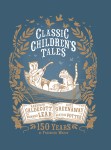
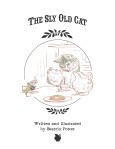
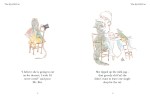
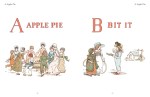
Classic Children’s Tales: 150 Years of Frederick Warne; Frederick Warne, $25.00, 112 pages, all ages.
Since 1865 Frederick Warne & Company has championed the importance of providing children with their own literature, and introduced the world to Beatrix Potter, Kate Greenaway, Randolph Caldecott and Edward Lear, as well as more modern authors such as Eric Hill (creator of the Spot series) and Cicely Mary Barker (Flower Fairies). In 1983 Penguin Books acquired Frederick Warne, where it flourishes as an imprint. Now celebrating its sesquicentennial, Warne recently released a commemorative compilation of its most prestigious authors and illustrators. Classic Children’s Tales: 150 Years of Frederick Warne is a foil-stamped jewel destined to find pride of place on the bookshelves of many children’s book collectors. Devoted to Potter, Caldecott, Greenaway, and Lear, each of the four sections includes introductions supplied by modern legends Jan Pieńkowski, Paul O. Zelinsky, Lee Bennett Hopkins and Eleanor Taylor. Stories that have nurtured young spirits for generations are here, such as Caldecott’s “Sing a Song of Sixpence” and Greenaway’s “Mother Goose,” as well as a story by Beatrix Potter entitled “The Sly Old Cat” that wasn’t published until 1971, nearly thirty years after Potter’s death. These stories encourage young readers to imagine the impossible, that reading is an adventure, and that a picture is worth 1,000 words. Here’s to many more years of Frederick Warne and to the next golden age of children’s literature.

Bees and Sunbeams
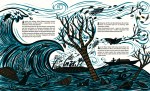
Little Gestalten is the recently formed children’s imprint of the Berlin-based art book publisher Gestalten. (Find reviews of earlier Gestalten titles here.) Since 2014, the house has pushed the envelope with unexpected stories and showstopping art, and in the coming years will likely become a greater voice in the world of picture books. The Honey Hunter, written by Karthika Naϊr and illustrated by Joёlle Jolivet ($24.95, 52 pages), is a bold example of Little Gestalten’s offerings. Originally a play, the story was converted into book form and published simultaneously in English and French (Le Tigre de Miel). This modern Indian folk tale begins in the peaceful land of the Sundarban, where people coexist happily with the world around them, until the seasons change for the worse, and there is no food. Little Shonu and his family go hungry, and the boy’s father refuses to take honey from the bees because doing so would undo the natural balance. One day when the roar of the boy’s stomach outweighs his sense of reason, Shonu disappears into the forest, finding honey but also angering a demon tiger who preserves the fragile ecosystem. At 52 pages, The Honey Hunter is longer than the standard 32 or 40 page spreads, and there’s a lot going on in the story, including global warming, deforestation, poverty, and religion. At times it’s just too much for a young reader to follow. (These elements probably worked much better and more smoothly on stage, where thoughts could be transcribed through action and set design.) A few small spelling errors mar the text as well. However, the art is fantastic, and the images above don’t do them justice. Jolivet’s linocut prints are rendered in brilliant neons offset by forms outlined in inky black, and are a wonderful example of work by this winner of the prestigious Prix Goncourt Jeunesse. Hot pink, psychedelic purple and oozing gold take center stage here. Where the text lagged, I found myself abridging much of the story and taking cues from the art on the page, and I think many readers will do the same. Consider this book for the stunning linocuts and recreate the tale in your own words. It will be sweet.


Two for Tuesday
In our last Halloween-themed post,we meet cuddly monsters and vampires sure to impress little ghouls with their charming ways.
First up is Fred, by Kaila Eunhye Seo (Peter Pauper Press, $15.99, 40 pages, ages 4-8), a story about a young boy surrounded by amazing creatures only he can see. That is, until the real world starts to eat away at Fred’s free time – between school, and new (human) friends Fred grows up, and slowly forgets about his old pals, who wait patiently for the day that he sees them again. Kaila’s debut picture book tackles growing up with an unexpected airiness and humor. Her pen and ink renderings of big-eyed, fuzzy monsters aren’t intimidating in the least, and captures the wacky, wonderful world of a child’s imagination.
If you’ve ever opened a jam jar only to find it totally empty, perhaps your pantry was visited by a Jampire. In Jampires (David Fickling Books; $16.99, 32 pages, ages 3-6), writer/illustrator duo Sarah Mcintire and David O’Connell teamed up to confect a sticky tale of whodunnit. Sam won’t stand for dry doughnuts at breakfast, and convinced of thievery, lays a ketchup-laced laundry basket trap to catch the perpetrators. Turns out, the pointy-eared filchers are endearing, and take Sam to visit their sugary hacienda in the sky. Readers racked by a sweet tooth will savor this story and revel in the playful tricks and treats throughout.


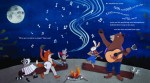
One Bear Extraordinaire, by Jayme McGowan; Abrams Books for Young Readers, $16.95, 32 pages, ages 3-7.
Debut children’s book author-illustrator Jayme McGowan has crafted a triumph of three-dimensional illustration in One Bear Extraordinaire, and her dedication is evident throughout. After rendering the characters using watercolors and colored pencils, McGowan cuts out each piece of paper and assembles the scenes inside a book-size paper theater, suspending the characters and scenery with toothpicks, twine, and even clothespins. Once satisfied with the setup, McGowan scrupulously photographs her creations using various lenses and camera settings. (Art teachers might find this book useful in teaching design concepts and paper cutting techniques.) It’s not a popup, but every page in the book is full of depth and complexity, the result of many hours spent getting every last piece just right. The tale itself is one of camaraderie and acceptance: A musical bear wakes one day and discovers that he can’t quite play the song he hears rumbling in his head. So he sets out across the forest, and along the way collects a banjo-playing fox, a raccoon with an accordion, and even a little wolf pup who can’t seem to play any instrument…yet. The story, while charming, is upstaged by the fantastic art. That said, I think McGowan will bring wonderful things to the world of children’s picture book illustration and I’m looking forward to what she does for her encore presentation.



(via 89 Years of Winnie-the-Pooh – The Fine Books Blog) Winnie-the-Pooh:89 and Looking Fine!
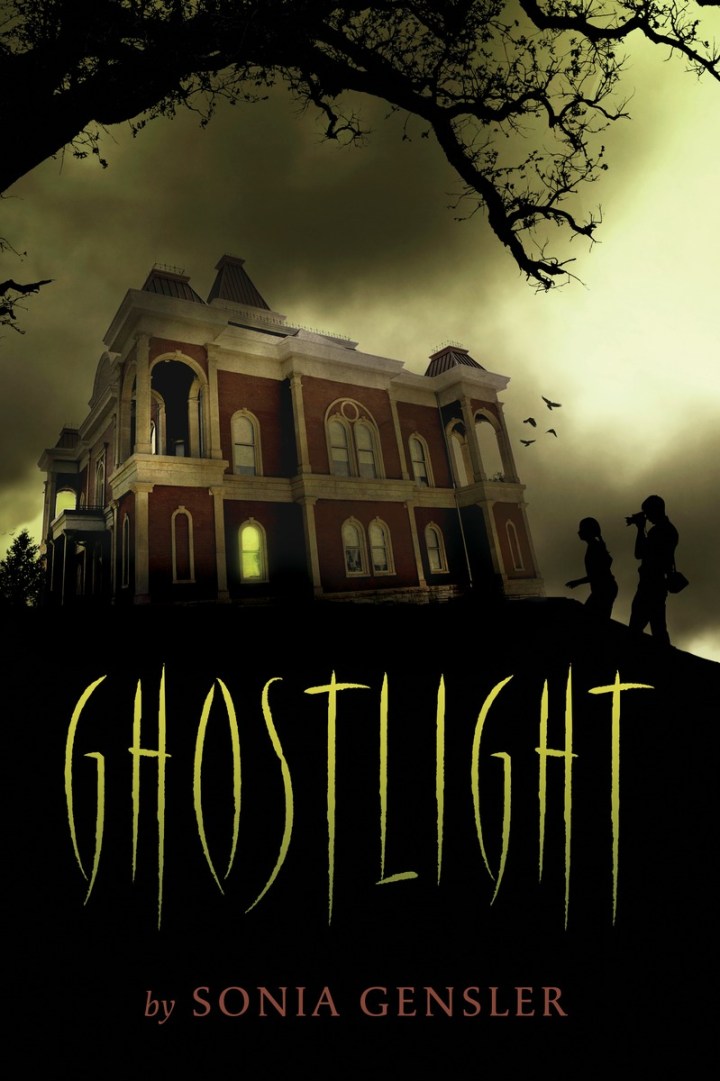
Ghostlight, by Sonia Gensler; Alfred A. Knopf, $16.99, 256 pages, ages 11 and up.
Every summer, twelve-year-old Avery May Hilliard laments, in pitch-perfect tween style, that nothing exciting happens at her grandmother’s quiet farm. Well, that all changes when Julian comes to town. He wants to shoot a haunted-house movie at an abandoned mansion called Hilliard House, and Avery is thrilled at the prospect. Here’s the rub: Avery’s grandmother has forbidden her to enter the premises. Of course, Avery jumps at the chance, and while filming, all sorts of creepy things happen. Gensler, whose previous middle-grade novels include The Dark Between and The Revenant, has conjured a perfectly spooky story about ghosts, growing up, and facing one’s fears. While Ghostlight flirts with elements from ‘The Blair Witch Project,’ there’s nothing here that will keep kids (or their parents) up at night. Equal parts detective novel, ghost story, and coming-of-age narrative, Ghostlight is a great choice for middle-grade readers who enjoy reading thrillers but don’t want to be terrified out of their wits.


 Literary Features Syndicate