Birth Day

@nancypaulsen @penguinrandomhouse

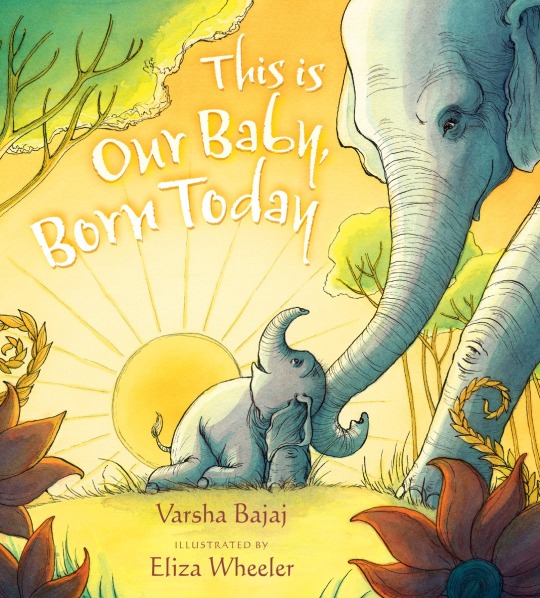
This Is Our Baby, Born Today, by Varsha Bajaj; illustrated by Eliza Wheeler; Nancy Paulsen Books, $16.99, 32 pages, ages 1-4.
image
image

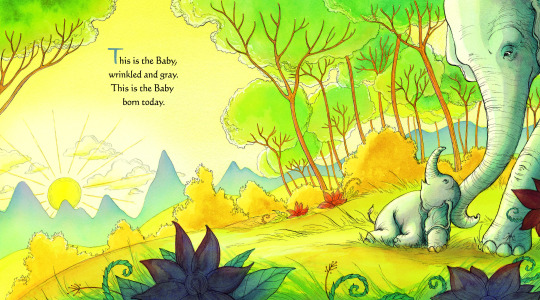
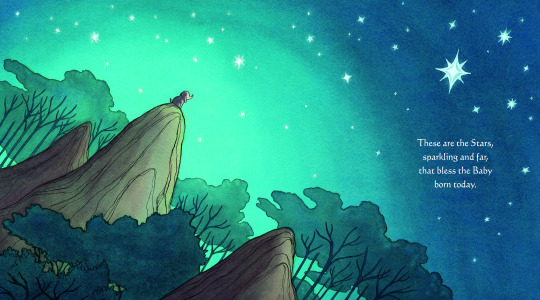
What do you get for the newborns who, unbeknownst to them, have everything awaiting their arrival? Rather than saddle expectant parents with another swaddling blanket or fancy doodad, consider a charming picture book like This Is Our Baby, Born Today. Varsha Bajaj’s poetic ode to new beginnings chronicles the arrival of a baby elephant while celebrating the joy of life and the importance of family and friends. This pint-sized pachyderm is cuddled and caressed by its doting mama and a menagerie of exotic visitors. (The baby’s gender isn’t offered, and it doesn’t matter whether we’re reading about a boy or a girl, the point is the same–babies are gifts, to be treasured and nurtured and loved.) Older readers may recognize Bajaj’s name; her debut effort was the critically-acclaimed middle-grade novel Abby Spencer Goes to Bollywood. Lush, full watercolors by New York Times bestselling illustrator Eliza Wheeler bathe the characters in a warm jungle glow, no doubt infused with the love that surrounds and embraces this happy elephant family.
image
image

(images copyright 2016 Eliza Wheeler, text copyright 2016 Varsha Bajaj. Reproduced with permission from Nancy Paulsen Books.)

With thought, patience, and discrimination, book passion becomes the signature of a person’s character.

Nicholas A. Basbanes (via observando)

Imagining the ABCs

@Candlewick

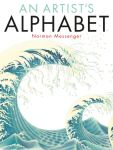
An Artist’s Alphabet, by Norman Messenger; Candlewick Press, $17.99, 48 pages, all ages. 

Alphabet books are especially popular this time of year, and one particular standout is Norman Messenger’s latest offering, An Artist’s Alphabet. Each letter is illustrated by an irreverent illustration. At first glance, the artwork may be confusing–why are cats standing in at the letter D? It’s the shapes the felines make with their oversize bodies that illustrate the letter at hand. Watercolor and pencil renderings of gryphons, boots, and three-headed dragons all pitch in to teach the ABCs to pre-literate and emerging readers, but readers of all ages will delight in this special presentation.

(via “Ghost Stories” Takes Top Honors at V&A Awards: A Chat With the Artist – The Fine Books Blog)

Remembering 9/11

 @911day @peachtreepublishers @peachtreepub

Seven and a Half Tons of Steel, by Janet Nolan, illustrated by Thomas Gonzalez; Peachtree Publishers, $17.95, 36 pages, ages 6-10.

There’s been plenty of debate on the best way to discuss 9/11 with youngsters, and even after fifteen years it’s still difficult for many adults to process it, let alone talk about it with children. Full disclosure: I am not ready to have that conversation with my seven-year-old, and probably won’t be for some time. Still, those looking for a sensitive yet compelling picture book highlighting one way Americans found strength in the face of adversity, Seven and a Half Tons of Steel would be my pick.

Janet Nolan’s narration is simple and driven mostly by Thomas Gonzalez’s (Toad Weather; 14 Crows for America) dramatic artwork. The story starts on the endpapers, where a young schoolboy gazes up at a plane careening through a robin’s-egg-blue sky, headed for the World Trade Center jutting out of horizon. It’s a different perspective than one might expect–the boy is in the foreground, the plane barely painted onto the top of the picture, and the buildings almost an afterthought. It’s a section easily skipped, because at first glance the image is almost serene: a boy holding his baseball glove and books, heading to school. And then we all know what happens next.

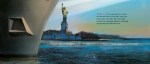
After the towers collapse, Nolan traces the retrieval of a steel beam from the wreckage, which is then shipped to a New Orleans shipyard to be turned into the bow of the USS New York. There’s no smooth sailing for this journey; Hurricane Katrina slowed down the work considerably, but eventually the beam becomes a bow, the entire endeavor illustrating how men and women of this country united to heal by turning remnants of a disaster into a symbol of strength.

Strength forged through sacrifice. Never forget.

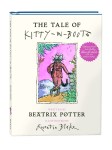
Beatrix Potter’s Forgotten Tale Published at Last

@penguinrandomhouse @beatrixpotter (via Beatrix Potter’s Forgotten Tale Published at Last – The Fine Books Blog)

Bird Brains

@HMHCo

 Crow Smarts: Inside the Brain of the World’s Brightest Bird, by Pamela S. Turner, photographs by Andy Comins, illustrations by Guido de Filippo; Houghton Mifflin Harcourt, $18.99, 80 pages, ages 8-12.

It’s back-to-school time, and what better way to celebrate the return to class than with a book highlighting the intelligence of an oft-maligned creature, the crow. But not all corvids are created equal; the inhabitants of the French Overseas Territory of New Caledonia are considered “geniuses” and have been the subject of many fascinating studies on animal behavior. This particular subspecies has learned to create and implement a variety of tools for gathering food. For example, crows coax tasty grubs out of their hiding places by using hooks with a curved edge, and New Caledonian crows manufacture their tools from a local barb-edged plant. Scientists have even discovered that crows hold their tools along the right side or left side of their head–instead of being right- or left-handed, crows exhibit right- or left-laterality.

Award-winning nonfiction author (and crow rehabilitator) Pamela S. Turner takes readers on a lively tour of the world of New Caledonian crows by explaining what traits set these birds apart from their cousins abroad, how they’ve adapted to their environment, and what scientists are learning about the evolving field of animal intelligence. In a book geared to middle-grade readers, Turner successfully discusses complicated concepts like cumulative cultural evolution and various properties of intelligence by making the material approachable and providing facts that only a nine-year old could love (e.g., why crows eat the eyeballs off carrion). That also means a lot of references to Jedi warriors and other Star Wars characters, and the chief corvid scientist is referred to as “Gavin” rather than “Dr. Hunt.”

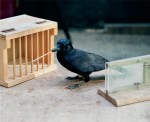
Crow scientist Guido de Filippo’s charming crow sketches are peppered throughout, and crisp photographs of crows at work by Andy Comins reinforce the concept that humans aren’t the only creatures capable of intelligent thought.


Crow Smarts confirms Henry Beecher Stowe’s comment (and opening epigraph) that “if men had wings and bore black feathers, few of them would be clever enough to be crows.” Turner’s latest scientific adventure would make a wonderful addition to any elementary-school library or back-to-school present for budding scientists.


Catalog Review-Catalogue Huit

(via Catalogue Review: “Catalogue Huit” by Jean-Baptiste de Proyart – The Fine Books Blog)

(via Collectival: Writing Code That Sings to Antiquarians – The Fine Books Blog)

During the depths of winter six months ago, Schubertiade Music & Arts co-founders Gabe Boyers and Drew Massey debuted a preview version of their web-based cataloging software at the California Antiquarian Book Fair. On August 15 the software, dubbedCollectival, became available to antiquarian dealers with the goal of streamlining running a rare books shop from anywhere in the world…. [Read more on the Fine Books Blog!]   

Original Bemelmans Illustration Goes to Auction–Fine Books Blog

(via Original Bemelmans Illustration Coming to Auction – The Fine Books Blog)