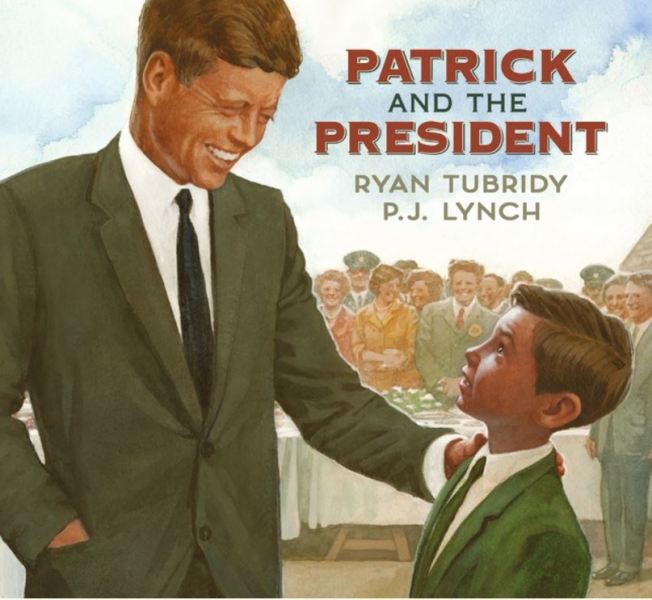
Patrick and the President, by Ryan Tubridy, illustrated by P.J. Lynch; Candlewick Press, $16.99, 48 pages, ages 6-9.
On June 26, 1963, Air Force One touched town at Dublin Airport, shepherding America’s first Irish Catholic president to his ancestral island home. Irish television and radio broadcaster Ryan Tubridy has written about Kennedy before; his 2011 JFK in Ireland explores the president’s trip to the Emerald Isle, and here imagines that same visit through the eager eyes of a young boy named Patrick, who, along with his fellow Wexford classmates, has been chosen to welcome the president and sing in his honor. Uplifting and bursting with joy, the narrative is, at times, clunky, but is saved (perhaps even overshadowed) by the stunning golden-hued lifelike watercolors by two-time Kate Greenaway Medal winner and 2016 Irish children’s laureate P.J. Lynch (The Boy Who Fell Off the Mayflower). The illustrations are, quite simply, magnificent. Portraits of the president and his megawatt smile nearly pass for photorealism, while the ruddy-cheeked children possess a similar verve as those found in paintings by Norman Rockwell. A four-day chronology of the actual itinerary offers further details as well, the whole a touching tribute to Kennedy.
Fantastic Flowers, by Susan Stockdale: Peachtree Publishers, $17.99, 32 pages, ages 2-5.
It’s beginning to feel a lot like spring, and a host of new non-fiction books are popping up like a field of crocuses and daffodils. Fantastic Flowers is a charmingly playful presentation of seventeen flowers found across the globe, and Stockdale’s bubbly illustrations are a lively match for the simple, lyrical descriptions–the Mediterranean bumblbee orchid that graces the front cover looks like a pair of magenta smiling honeybees, and other flowers resemble baboons, ballerinas, and pineapples. The book gently introduces young readers to the concept of object identification and encourages close observation skills, while back matter offers further scientific explanation about plants and pollinators.
Fantastic Flowers offers cheerful anticpiation for the forthcoming season.
Text and art copyright 2017 Susan Stockdale. Reproduced with permission from Peachtree Publishers.
When Jackie Saved Grand Central, by Natasha Wing, illustrated by Alexandra Boiger; HMH Books for Young Readers, $17.99, 48 pages, ages 6-9 (March 7, 2017).
When Jackie Saved Grand Central. Text copyright 2017 Natasha Wing, image copyright Alexandra Boiger. Reproduced with permission from HMHCo.
More than 750,000 people pass through the magnificent halls of Grand Central Terminal daily, but without the tireless campaigning of former first lady Jacqueline Kennedy (1929-1994), the fate of the rail terminal could have easily have mirrored what befell Penn Station.Natasha Wing’s latest foray in non-fiction focuses on Kennedy’s fight to preserve the stately Beaux Arts building of 42nd Street by tracing the First Lady’s belief that preserving the past could foster a brighter future.
Starting with Kennedy’s meticulous preservation of the White House, Wing gracefully transitions from Camelot to 1975 without mentioning JFK’s assasination by simply stating that another American landmark needed Jackie’s strength and fortitude. Alexandra Boiger’s watercolors add depth through symbolic deployment of color: black for power, red for anger, tones of yellow for resilience, and that famous cerulean blue found on Grand Central’s ceiling to evoke victory. Notes and a bibliography round out this timely example of how to successfuly champion for a worthy cause in the face of opposition.
When Jackie Saved Grand Central. Text copyright 2017 Natasha Wing, image copyright 2017 Alexandra Boiger. Reproduced with permission from HMHCo.
Glitter Clay Charms, by Klutz Press; $21.99, 48 pages, ages 8 and up.
Klutz has built its reputation on building fun activity kits that encourage and stimulate open-ended creativity. We recently received the Glitter Clay Charms book kit and tested it. Here’s what we learned:
What it is: A 48-page design booklet with materials necessary to create sparkly charms: a metal link bracelet, charm loops, clay, even a drying rack complete the kit. Precise, easy-to-follow-instructions are Klutz’s hallmark, and cover every conceivable clay-related outcome here.
You will need: Patience. Plus a toaster oven to “bake” the charms.
Who it’s for: Children eight years old and up. Tiny metal pieces, polymer clay, and functional sharp points can puncture tiny fingers and other body parts. Less dexterous children should be supervised. Note that the book only comes with one metal bracelet, which could make sharing this project with others problematic unless another bracelet is provided.
The project: We were feeling adventurous so we skipped the simple charms and headed straight for the adorable orange fox. There’s no orange clay, so we blended a small pink ball and a medium yellow ball of clay, as instructed. Rather, we tried to–this clay doesn’t blend well, and after about ten minutes of kneading, we still had clay in a darker shade of pink. No matter, we soldiered on, following the step-by-step instructions to mold the charm into the desired form. Even with minimal artistic skill, we were able to compose something that resembled the example in the book. Next we added the charm loop and then placed the fox on a foil-lined cookie sheet, which went in a 250°F toaster oven for twenty minutes. (This is where parental supervision is crucial.) After letting the charm cool, we attached it to the metal bracelet. The loop came loose from the charm, but Klutz discusses how to remedy that on page 13.
Here’s how our charm turned out:
A rare pink fox on a charm, modeled by my assistant.
Total time commitment: We spent roughly forty-five minutes (including twenty minutes baking) from start to finish creating one charm. The only frustrating moment we encountered was blending the clay into our desired shade of orange, but we worked through it.
The verdict: Detailed instructions encourage close reading and following directions. Creative types who love to work with their hands will enjoy this satisfying project. I found molding the clay especially soothing, even when the color didn’t blend as desired. Those easily frustrated by manipulating small objects may not enjoy Glitter Clay Charms. Parents will want to cover workspaces with newspaper and put kids in an old t-shirt or smock–polymer clay stains.
Would we do it again? Definitely.
Have you tried any Klutz products? Share your experiences in the comments below!
To one generation, the name Henry Winkler is a reminder of the 1970s hit sitcom “Happy Days,” where he portrayed the fast-talking Fonz. To a much younger generation, he is the author of a series of early-reader chapter books starring a goofy yet lovable boy named Hank Zipzer. Along with writing partner and co-founder of the Society of Children’s Book Writers and Illustrators Lin Oliver, Winkler has written dozens of stories in the Here’s Hank series. The critically acclaimed books appear regularly on bestseller lists and even inspired a television series on the BBC. Children gravitate to Winkler’s Hank, an endearing boy with learning difficulties but whose determination and spirit provide inspiration and courage to face any obstacle.
Winkler was diagnosed with dyslexia at age thirty and understands firsthand the difficulties children face with learning. The Here’s Hank series grew out of Winkler’s desire to encourage kids to embrace their differences and realize that there’s more than one way to achieve success. On January 31st, Penguin released the latest Hank adventure: Always Watch Out For Flying Potato Salad. Winkler and Oliver kindly answered a few questions about the origins of the Here’s Hank series, best practices for building self-confidence, and the influence of good storytelling on reluctant readers.
The questions below were edited from an e-mail conversation on February 6, 2017.
The Hank series deals with dyslexic child. Could you talk about what made you decide to become a children’s book author of a series with a dyslexic protagonist?
Winkler: The idea of writing a children’s book about my learning challenge was suggested to me by my agent. I was incredulous at the thought. It took a few months for my courage and the idea of my writing anything to merge in my brain, and very simply, I wrote what I knew. The emotion of Hank Zipzer is very true. The humor Lin and I create is exaggerated.
You have been collaborating since the early 2000s. Could you talk about your work process? How do you come up with storylines?
Winkler: Lin and I meet every morning and we write in her office. One of us brings up a story idea and either spark to it right away or we throw the idea out. If the idea really hits us, we come up with a hundred possibilities in a matter of minutes, and then we know we’re on to something. I talk, Lin types. Lin has an idea, and she types, I wait, and then we argue over every word.
How did you discover the Dyslexie font used in the Here’s Hank books? Have you, Henry, noticed a difference in your own comprehension when you read in this font?
The font was brought to us by our publisher who thought it would be an excellent addition to Here’s Hank, which is our younger series for second and third graders. [The Hank Zipzer series follows the protagonist through elementary school.] And yes, when I read the books out loud in classrooms and bookstores, I find the font helps my eyes and the words on the page become friends.
In this installment, Hank goes with his mom to her deli for Take Your Child to Work Day and discovers what he’s good at and where he could use a little more practice (taking sandwich orders, for example.) It’s an important message—that it’s OK to make mistakes and we all have special gifts and talents. Where did the idea for this storyline come from?
Oliver: The story started with the sentence, ‘Take your child to Work day.’ The deli seemed to be the perfect cauldron of situations to highlight Hank’s challenges.
I’ve read that many of the storylines in the books come from your own life experiences. True? Which Hank stories hit closer to home?
Winkler: Not being able to spell, to take orders, to play sports, to write a report, to use a dictionary, to figure out how a robot works, to reading cold from a page of a script, to organize, just to name a few.
Were there any teachers who encouraged you not to give up?
Winkler: Actually, Mr. Rock, my music teacher in the 11th grade, who appears throughout the Hank Zipzer series. I am so proud that I got to play him in the BBC television series for the last four years.
Were there any teachers who were insensitive? What was that like?
Winkler: When Hank Zipzer gets to the fourth grade, he has Ms. Adolf as his primary teacher. She is the worst teacher on the planet AND she was mine.
Describe what it’s like actually writing a book as someone who never read as a child.
Winkler: Writing this series of 34 novels with Lin Oliver makes me so proud, so happy, so amazed, so triumphant, and so aware of my learning challenges that never disappear.
Henry, you’ve said that you didn’t read when you were a child because of your undiagnosed dyslexia. What do you read now? Do you still find reading difficult?
Winkler: Reading now is still difficult but my eyes and my mind seem to enjoy thrillers and suspense, especially Daniel Silva and Lee Child.
Do children and parents ever write to you with feedback on the books?
Winkler: Children have written to Lin and I all the time since 2003. The same two comments find themselves into so many of those letters: 1) How did you know me so well? 2) I laughed so hard my funny bone fell out of my body. Parents always write how much they appreciate that their children enjoy reading now because of Hank.
Do you travel to schools and speak with kids about Hank?
Winker: Lin and I, together and separately, love speaking to students. I have spoken in schools all over our country and in Canada, England, and Italy.
What are some best practices for children to build self-confidence in the face of dyslexia?
Winkler: A learning challenge can make a child’s self image plummet like a stone to the bottom of the ocean, so it is vital for every adult in a child’s life to help them hold on to the concept that no matter how difficult learning is, it has NOTHING to do with how BRILLIANT they are.
What do you hope children take away from the Hank books?
Winkler: I hope kids read about Hank and realize that their cup is half full, too; that there is greatness in every reader and the child’s job is to figure out what that greatness is, and give it to the world as a gift.
What is the key to good storytelling?
Oliver: I think good storytelling starts with a deeply felt truth, which is then dramatized and amplified by the story teller. In Hank’s case, we feel that this child has to deal with the frustration and low self-esteem that learning challenges can bring. That is the deeply felt truth. Then, we add drama and high stakes to that truth to make a story. In our most recent Always Watch Out for Flying Potato Salad, Hank wants more than anything to be successful during Take Your Child to Work Day; he wants his mother to be proud of him. When he can’t help but mess up, the story emerges that is full of both laughter and emotion.
Do you have plans for subsequent books in the series?
Oliver: In the Here’s Hank books, we plan to follow Hank throughout his school year. We hope that this series of what will likely be twelve books will sustain our chapter books readers until they are ready to move on to the Hank Zipzer novels, which follow upon the chapter book series. We want Hank to become a friend and trusted companion to our readers throughout their grade school careers.
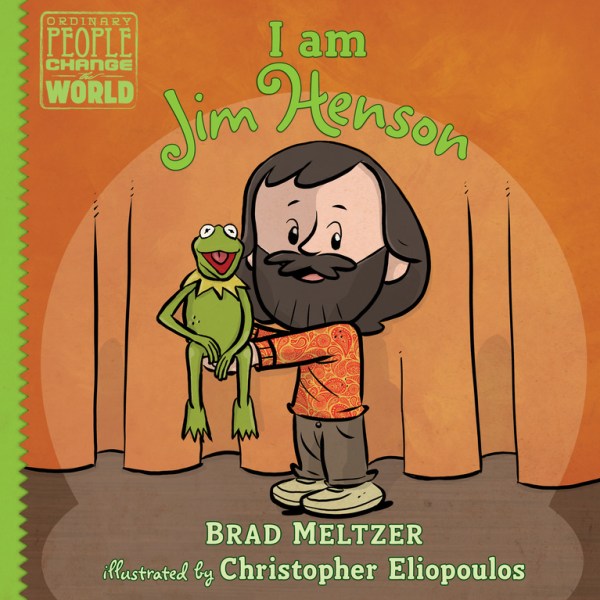
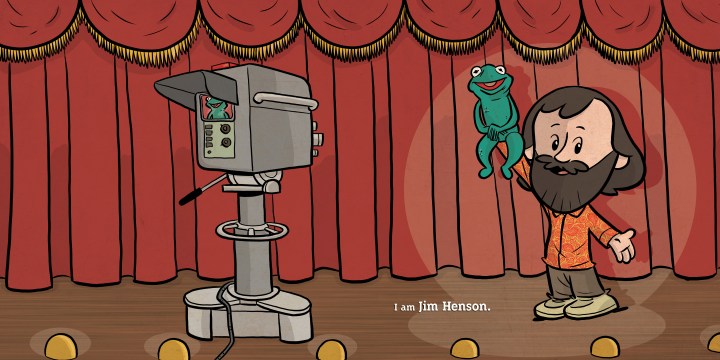
Text copyright 2017 Brad Meltzer, art copyright 2017 Chris Eliopoulos.
Jim Henson gets the hero treatment in Brad Meltzer’s latest biography for Dial’s Ordinary People Change the World series. Aimed at 5 to 8 year-olds, the Ordinary People books profile historical figures who left the world a better place, and the creator of The Muppet Show and Sesame Street is an ideal candidate. Meltzer’s simple, conversational style intersperses actual quotes by Henson to create an engaging and informative biographical sketch, while a timeline and selected bibliography round out this well-crafted and accessible work of nonfiction. Misery Loves Sherman and Pet Avengers creator Chris Eliopoulous maintain a casual, comic-book feel while capturing the essence of the master of make-believe and imagination.
I Am Jim Henson, by Brad Meltzer, illustrated by Christopher Eliopoulos; Dial Books, $14.99, 40 pages, ages 5- and up.
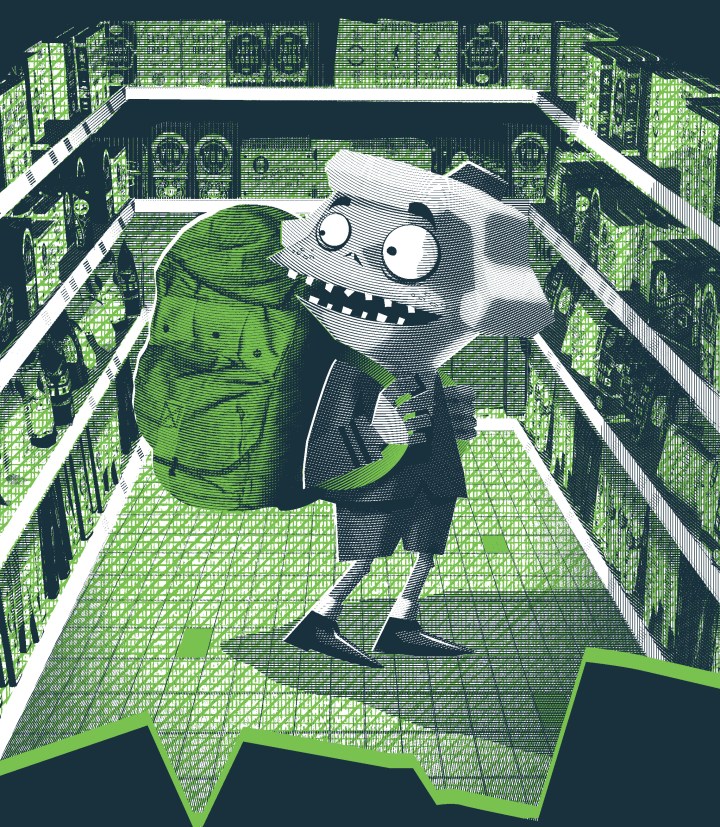
Warren is an unusual protagonist: squat with bulging eyes, he doesn’t make the cutest first impression. He’s the homely heir to a family hotel in a forest full of witches, talking trees, and other fantastical beasts. But what he lacks in looks Warren makes up for in charm and wit, much to the delight of his devoted fanbase. Warren the 13th and the All-Seeing Eye landed on bookshelves in 2015 to great acclaim, and readers have been chomping at the bit for the next installment. The wait is almost over: Warren the 13th and the Whispering Woods (Quirk Books, $16.95, 240 pages, ages 11 and up) goes on on sale March 21.
Warren creators Tania del Rio and Will Staehle are bewitching readers and shaking up the children’s picture-book world by blurring the lines between comics and traditional storytelling.
Del Rio is a comic illustrator at heart: her work has appeared in the Archie series, Sabrina the Teenage Witch, Marvel comics, and manga. While pursuing her BFA at the Minneapolis College of Art and Design, del Rio met Staehle, also an art student there, and they remained friends after graduation. Staehle is considered by many critics to be one of the most exciting young illustrators today, and his work has graced The New York Times and bestselling book covers.
Del Rio and Staehle kindly answered a few questions via e-mail in late January about working with friends, early influences, and why middle-schools are forever pulled towards the macabre. (Make it all the way to the end for how kids can contact del Rio with their own questions!)
1. Warren seems to be follow the Lemony Snicket genre, that is, geared to middle-grade readers and appealing to the quirky, slightly macabre sensibilities of the tween set. How did you come up with the idea for this series?
Tania: Will is probably better suited to answer this question as he originally created the character of Warren back when we both attended the Minneapolis College of Art and Design over 13 years ago. Even back then, the character ignited my imagination, and I began writing an early novel based on Warren and his hotel, and revisited it over the years. A lot has changed plot-wise since the earliest draft, but the creepy Victorian vibe, and the mysterious riddles have been there from the beginning.
Will:As Tania mentioned above, I created Warren during art school many years ago. This was before A series of Unfortunate Events burst onto the scene, so at the time Warren was inspired more by Edward Gorey and Victorian dime novels of yesteryear. Add to that a touch of Poe, some Jules Verne, and healthy dose of Tim Burton, and you have Warren the 13th!
2. Tania, how did you make the leap from cartooning (Archie, Sabrina, Manga, My Poorly Drawn Life) to Warren?
Tania: Even while I was drawing comics, I was also writing them, so it wasn’t actually much of a leap at all to write a middle grade novel. This age group has always been my favorite audience to write for, and I enjoyed having more space to expand on my story using prose as opposed to being confined to speech balloons. I let Will focus on the art and I focused on the writing.
3. What was the collaborative process like?
Tania:We’ve been creative collaborators for many years, and so we’ve formed a really comfortable working relationship with a lot of brainstorming over the phone, and sending ideas back and forth throughout the entire process. Luckily, we both see eye-to-eye on many things, and have a similar aesthetic and sense of humor.
Will: It’s pretty seamless at this point, we tend to fight about the small stuff more than anything–new character’s names, neighboring towns, etc. But more often than not things run pretty smoothly.
4. Tell me why you went with the two-column layout.
Will: The two-column layout was originally based on Victorian dime-novels and turn-of the-century newspapers. While traditionally illustrated novels leave full pages open for their art, the two column approach allows for me to have full-page images throughout while adding many small inset illustrations into the text, creating a unique look.
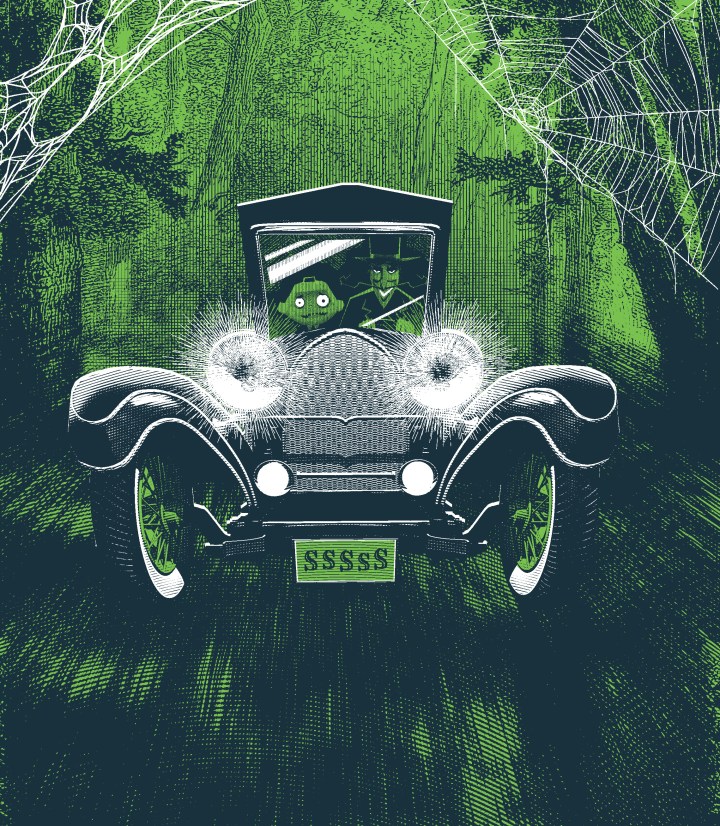
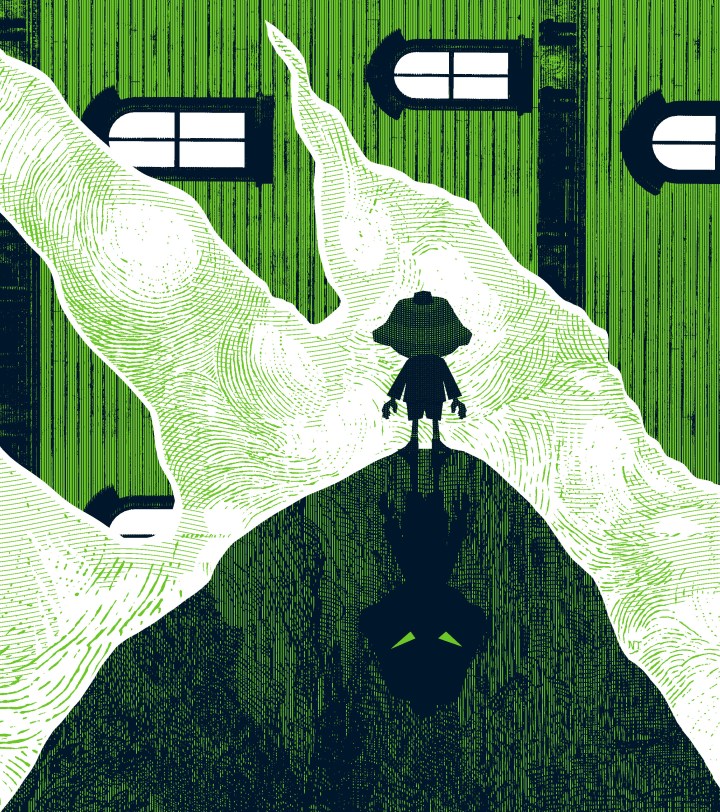
5. Will, what’s the medium for the illustrations? The images feel like engravings, but after having gone through some kind of digital processing, like a mashup of steampunk Victorian with a dash of Tim Burton and Edward Gorey for good measure.
Will: The illustration is a little bit of everything. But I generally say that it’s collage-based. It’s a mixture of original drawings, some custom 3-D models, and vintage engravings that I’ve collected. It’s a hodgepodge of sources, really, but the goal is to have all of those pieces come together in a uniform way.
Credit: Aaron Feave
6. Warren is an odd-looking child, but hard-working and well-meaning. Do you hope readers will connect with him? (Don’t judge a book by its cover sort of thing?)
Tania: I always hope readers will connect with the characters I write, because otherwise they won’t be invested in the story. I see a bit of myself in Warren, and I hope my writing feels like it’s coming from an authentic place. When I was his age, I was a bit of an ugly duckling, and got bullied quite a bit. Despite that, I tried really hard to make friends and do well in school and I took pride in areas of my life that I excelled at.
Will: As a book cover designer, I can vouch for that “don’t judge a book by it’s cover.” thing. Everyone goes through an awkward phase, and hopefully Warren is no different. But I think the hope is that people see past that, and just like Warren for who he is. Tania, Jason (our publisher), and I often speak about how Warren is a cute lad to us now. I think as people live out these adventures with him, that eventually they won’t even think twice about his appearance.
7. Bunion, Sketchy, Mr. Friggs, even Beatrice–how did you come up with the names?
Tania: Some of the characters have been around for so long I can’t even remember! Will came up with some of the names, and I came up with some others. I’ve always been inspired by Roald Dahl’s books and the fantastic names of his characters: Trunchbull, Wormwood, Bogtrotter. I wanted to evoke some of that feeling when brainstorming names for the odd characters in the Warren universe.
Will: I do have a bit of a particular sense when it comes to names. For me it often becomes a visual thing. How does this name look when typed out…or how does it look when it’s set in giant lettering, and being screamed out in a word balloon?
credit: Rich Dachtera
8. What do you hope kids take away from the Warren books?
Tania:I just want them to be entertained, and to leave them wanting more! I’m a big advocate for young readers, especially in an age when we have so many digital distractions. I don’t write to “teach” kids or preach to them. I just want them to have a great time reading, and to feel like they’ve stepped into another world when they open my books. Warren has been touted as a good book for reluctant readers, thanks to the great visuals, and nothing makes me happier than hearing from parents who tell me their kids are reading Warren for the second or third time!
Will: Entertainment, and hopefully inspiration. I drew pretty much every day of my life growing up, and if we can inspire students to make that leap and draw their own comics, or write their own short story, it feels like it’s a huge win. Tania and I have been busy doing school tours for book one, and more are scheduled for the second book, and there isn’t much better in life than talking to 200 kids about being creative for a living, and answering their questions about story-telling, magic, and monsters!
9. What do you think about danger in children’s literature? Can there be too much menace? Not enough?
Tania: I think kids can handle a lot more than we give them credit for. I mentioned Roald Dahl earlier. He had some really dark themes in some of his books. But they thrilled me as a child, and they stuck with me over the years. The same is true of Hayao Miyazaki’s films, which are also a big influence in my work. In this day and age, especially, I don’t see the point of trying to hide the dangers that exist in the world from kids. Better to give them stories where they can face, and triumph, over those threats in a safe and imaginative way. Of course, it’s always up to parents to decide what their children are ready to be exposed to, but as an author, I choose not to avoid darkness in my work.
Will: I think every kid is very different. We’ve had everyone from elementary school kids to senior citizens read Warren and love it. Every once and while I’ll hear that it was too scary for a certain reader, I think the imagery probably adds to some of that intensity, but the goal is always to hopefully leave Warren in a better place at the end of each book than he was at the beginning of it, and I think if kids go into it knowing that, it makes the experience a little less concerning.
10. What were you two like as kids?
Tania: I was extremely shy, and a constant daydreamer. I was also voracious reader, but when I wasn’t reading you could find me busy writing stories or drawing. I used to get in trouble for doodling too much during class, and I tried to incorporate storytelling into every homework assignment I got. As for my hobbies, I was obsessed with comic books, Super Nintendo, and Disney animation. I didn’t get outside too much!
Will: I grew up in Racine, Wisconsin, and was the “artsy” kid who was raised by two artist parents. I loved comics and yard sales (and actually, I still do). I guess some things never change!
11. What kinds of books did you read growing up? What kind of comics did you read?
Tania: As I mentioned, I loved Roald Dahl, but I also read a lot of fantasy and sci-fi – The Dragonriders of Pern and Dune series were favorites of mine. I also loved historical fiction about ancient civilizations. I’m grateful that my parents were heavy readers themselves, and so there were always books aplenty to be found in the house. I’m also grateful they never tried to stop me from reading whatever I wanted to, even if it wasn’t entirely “age appropriate”! As for comics, I was crazy about ElfQuest, X-men, and Sonic the Hedgehog.
Will: I read mostly comics when I was a kid. I used to go to the local pharmacy and stare at the spinner rack, checking out the week’s newest comics. I didn’t get into “real” books until a bit later when I read some of Ray Bradbury’s books, which opened the doorway for me into literature.
12. Will and Tania, are there any things you find hard to illustrate?
Tania: When drawing comics I pretty much hate drawing anything that isn’t a character. I’m not a fan of backgrounds, and I really find drawing cars and other machinery really difficult. But just because I don’t like it doesn’t mean I don’t still have to do it if the story calls for it!
Will: I don’t hate drawing anything in particular, but there are certainly more time-consuming elements of art. Hands and fingers are always a bit of a time-drain!
13. Will, as the former art director at HarperCollins, how did you make the leap from cover design to children’s book illustration? (Is there a leap?)
Will: Well, it wasn’t exactly intentional… I worked at HarperCollins straight out of college, and worked my way up to be the art director. I worked with and designed covers for some amazing authors, like Michael Crichton, Michael Chabon, and Christopher Moore. After HarperCollins, I moved westward to take a job as the art director of JibJab, an art + animation studio based in Venice, CA. I continued to design freelance book covers, and a friend of mine at Harper became the new art director at Quirk Books. He suggested to [Quirk publisher] Jason Rekulak that they should try to do a project with me. That introduction spun into two postcard book projects, and the Warren the 13th series, and I couldn’t be happier to call Quirk home.
14. Will and Tania: You took the first Warren on the road to middle schools around the country, and I understand you plan on doing that again. Can you tell me what your presentation is like? What kinds of questions do kids ask you?
Tania: We’ve had a great experience speaking to middle school kids. We try to keep our presentation entertaining with a lot of visuals and humor. We start with a keynote presentation introducing ourselves and some of the art we made when we were in middle school, and we talk about what we do now. We introduce the world of Warren the 13th and the main characters, and then I read a portion of the book out loud. To cap it off, Will shows the kids the long and painfully arduous process of designing the book cover, which always gets a laugh.
The Q and A at the end is one of my favorite parts. A lot of the kids want to know where we came up with our ideas, and why Warren looks the way he does. Often, they want to know what the “All-Seeing Eye” is. Of course, we can’t give anything anyway, but we encourage them to read the book and solve the riddles to find out.
Will: Tania covered most of the main points, but I’ll add that the whole tour was exhilarating, and exhausting, but so very rewarding to to speak directly to the students. Walking into these schools where the kids had created original drawings of the characters on poster-board hanging all around the school nearly melted my heart! It is so much fun. And then I go home and sleep for a week straight!
15. What else would you like our readers to know about you and the Warren books?
Tania: I want readers to know that we have a lot of ideas for future books in the Warren series, so we hope we’ll have the chance to write even more adventures for them. I also love hearing from readers and I do my best to respond.
My address is: P.O BOX 70801 Pasadena, CA 91117 I can also be reached at taniadelrioauthor@gmail.com, and on twitter @taniadelrio.
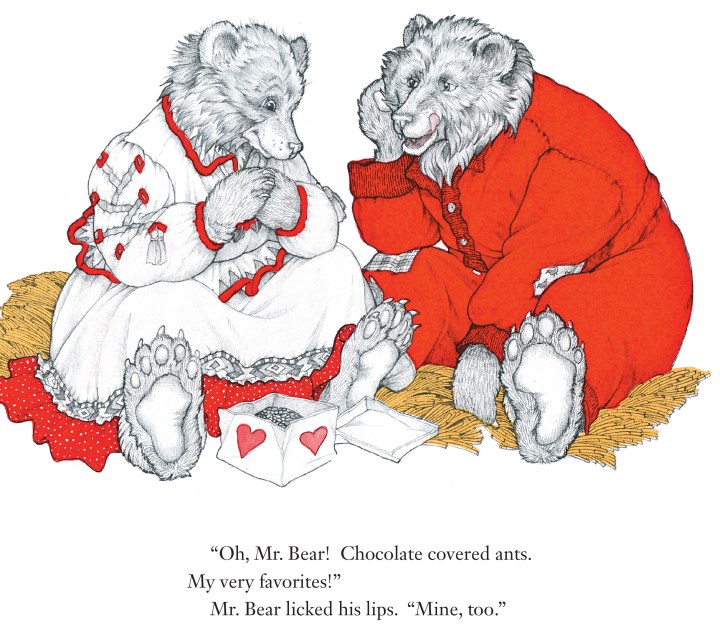
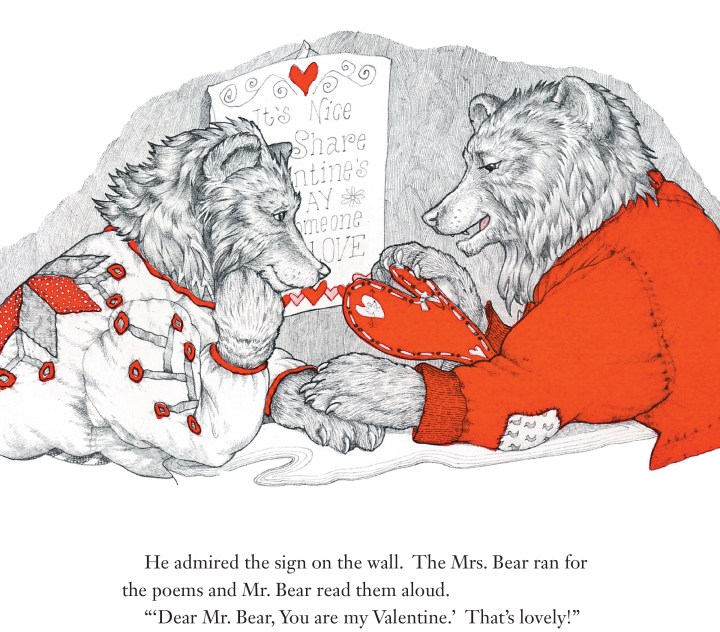
Text copyright 1983 Eve Bunting, art copyright 1983 Jan Brett, reproduced with permission from HMHCo.
The Valentine Bears, by Eve Bunting, illustrated by Jan Brett; Houghton Mifflin Harcourt Books for Young Readers, $8.99, 32 pages, ages 4-7.
Say “I love you” with this beary adorable picture book from master children’s picture book makers Eve Bunting and Jan Brett. Originally published in 1983, this edition is updated with a pretty pink hardcover embellished with a garland of wild berries. The story, however, remains the same: Mrs. Bear rouses early from hibernation to to celebrate Valentine’s Day–a first for her and Mr. Bear. She gathers all of Mr. Bear’s favorite things–crunchy dried beetles, summertime honey–along with homespun poems of love. Mr. Bear has a few surprises in store, too. Brett’s illustrations are some of her finest, full of detail and expression. Share this with everyone you love–there’s just enough humor to keep The Valentine Bears from being too lovey-dovey for little boys.
A gentle tale of an old married couple keeping the flame alive.
Text copyright 1983 Eve Bunting, art copyright 1983 Jan Brett. Reproduced with permission from HMHCo.Text copyright 1983 Eve Bunting, Art copyright 1983 Jan Brett. Reproduced with permission from HMHCo.Text copyright 1983 Eve Bunting, Art copyright 1983 Jan Brett. Reproduced with permission from HMHCo.







 Literary Features Syndicate