Q&A with Jim Arnosky, Part 2

In part one of my Q&A with children’s book author Jim Arnosky, we explored how he got his start in picture books as well as how he became a naturalist. Today, he shares his transition from cartooning to illustrating,
the importance of great editors, and how his books take shape.

Basbanes: What made you decide to go the children’s book route?

Arnosky: Well,on the first day of each month, Deanna and I mailed out drawings  to see if I could get some freelance work, and the first publications that responded were Ranger Rick and Jack and Jill.  These seemed to be where people responded to my work most. When I saw an advertisement for Cricket magazine I thought, ‘Whoa! that’s beautiful! I love that cover!’ It was [Caldecott Medal winner] Trina Schart Hyman who had done the cover.

It turned out she was the art director at the time, and I sent her some drawings. She didn’t like them at all. She said, ‘This is not what we want. In fact, it’s the exact opposite of what we’re looking for. It’s all too Madison Avenue.’ My drawings were indeed very ‘Madison Avenue,’ because they were advertisements, but I wrote her back and said, ‘We live in a one-room cabin, we take a bath in a small galvanized tub. I catch our food, we grow our food and I heat the house with the wood that I cut on our property. I’m as far away from Madison Avenue as you can get.’ She responded by sending me a another letter, asking me to send something that better represented me. So I sent her my journal drawings, and she responded by giving me a Farley Mowat story to illustrate. After that I became kind of a regular at Cricket.

B: How wonderful when an editor sees talent and reaches out and says this isn’t what they want, but encourages you nonetheless.

A: Well, back in that time—and I’m sure that it still happens somewhere today, but not with me because I’m so old and I’ve been at it so long—people would say they recognize raw talent and if you were willing to hear some criticism and accept guidance, they would mentor you along. They would help you. and they would help you. Trina would write and say that I couldn’t draw hands very well and that I should work on that. That was enormous for someone like me who never had a single formal art lesson. I always drew from my natural ability and for Trina to – as such a skilled artist as she was—to show that interest in me was a godsend. I loved her. It turns out we lived pretty close to one another I visited her at her home here in Lyme, all the way up until she passed away [in 2014]. I used to bring her trout, so she could have fresh fish to eat.

B: What a powerful relationship.

J: Yes. Our daughters were friends, and we ended up living fairly close here—I was in Vermont, she was in New Hampshire.

B: Your work speaks to children and to adults. While they’re realistic, they’re obviously not photographs. They show this love and appreciation of the natural world. It was wonderful that Trina saw that you had such talent.  You said writing wasn’t something you ever thought you would do, but now you do a lot of it. What is your work process now? How do you start a new book?

J: Ideas come to me in bits and pieces and over the course of many years. It took me seven years to write Pirates of Crocodile Swamp, and almost eighteen years to write Frozen Wild, which is out now making the rounds. These things are always based on true events, things I’ve seen and things that I know about. Still, they are fictionalized stories. Whereas with the nonfiction books, I normally become fascinated with something, or fall in love with a place, or an environment, like the Florida Keys, for instance, or the Everglades, and then after four to five years of visiting the place, photographing, sketching, and writing in my journal, usually I get some idea of what I might be able to do in a book. The pictures always come to me first. As the drawings take shape on my board I’m always fascinated by them being there, because, like I said, have no training in this, and I believe it’s some sort of gift that I am able to make a picture. Sometimes I’ll walk by my drawing board during the course of that day, and I just stare at it wondering where it comes from. Then the picture itself inspires me to write the words, and that’s when the words come.

B: Could you talk about Manatee Morning?

J: I tell this story in schools a lot. We went to Florida because I wanted to see manatees in a
wild environment. Deanna and I searched and searched, and we couldn’t
find any. We kept going further
south into Florida and finally we found manatees down in Chokoloskee in
the Everglades. I had seen them at Sea
World, and the state park where you can go under the river in a tunnel and see them in the wild, but you’re sort of in a zoo-like
environment.  I wanted to see them in the true wild. When
that occurred, it was very happy experience for me, and I came home and I
first wrote a song about them because I had always written songs
long before I wrote books. I wrote a song called “The Manatee Morning,” which inspired the book. This was the first time I ever left rhymes in my text for a
book. (A number of books were written first as songs, but I took
the rhyme out in order to qualify it in my mind as picture book
text.) I did the book
exactly the way the song was written—to the words of the song. And it
captures the animals beautifully because the music is very gentle, and
the wording is very careful and gentle, and it captures what I think
manatees represent when you see them in the wild.

B: Since that book
has been published, [in 2000] have you noticed the book being used to promote manatee awareness? Do you find your books being used to educate children on the
importance of these and other animals in the wild?

A: I’ve done two more
books on manatees in that regard. I did one called All About
Manatees
(2008) for Scholastic which was more of a science book, which gets
into their needs and how they what they eat and how they live. Then
there was a picture book called Slow Down for Manatees (2010) about a
particular rescue effort where a manatee gets hit
by a boat. It goes to a sea park in Miami where they take the animal in and they bring it back to health. In this case, the scientists discovered the manatee was pregnant after they
had rescued this wounded manatee. I wondered whether they would keep the calf as a money maker once it was born, because
everybody wants to go to the zoo and see a baby manatee. Or would they
do the right thing, and that would be to let it go with its mother. Happily they were both released. I wrote this
little story that reflected that event.

When I
get interested in an animal, it’s never
scientific at first, it’s just a pure love, fascination,
and joy that an animal brings me. Once I get to know the animal and
see it and watch it and study it, then it becomes more of a subject of curiosity. That’s when the science and animal
welfare comes into it. That’s how the story usually builds
in my mind.

Next time, we talk about Arnosky’s favorite animals, climate change, and what’s on his drawing board now.
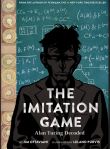
Head on over to the Fine Books & Collections Blog to read all about a new biography on Alan Turing!

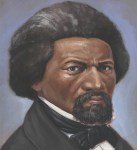
Frederick’s Journey: The Life of Frederick Douglass, by Doreen Rappaport, illustrated by London Ladd; Jump at the Sun, $17.99, 48 pages, ages 6-10.

Born a slave, separated from his family at age six, routinely starved and beaten, Frederick Douglass’ initiation into the world looked bleak. Undaunted and resilient, he overcame the odds and became one of the 19th century’s most influential voices for the abolition of slavery, even jeopardizing his hard-won freedom for the emancipation of others. Doreen Rappaport and London Ladd’s new biography of Douglass is a brilliant picture-book that pulses with electrifying energy. Rappaport weaves Douglass’ own words throughout the text, following with riveting precision the succession of events that led Douglass to overcome physical and psychological enslavement. Once Douglass understood the liberating power of literacy, he risked his own safety in order to learn to read, sneaking into his master’s library at night and trading food with local poor white boys in exchange for whatever meager instruction they could provide. These lessons, “more valuable than bread,” spurred Douglass to cut the bonds of slavery and flee North to New Bedford, Massachusetts, where he eventually wrote his best-selling autobiography. Rappaport’s retelling of Douglass’ extraordinary life is expertly matched by Ladd’s richly detailed illustrations. The cover image gives readers a sense of what lays inside the covers: A full-page portrait of Douglass, eyes piercing and resolute, is a testament to an extraordinary man dedicated to freedom and equality for all.

Author’s and illustrator’s notes, timeline, and sourcenotes round out an outstanding addition to any child’s nonfiction library. 

Q&A with Jim Arnosky

Though prolific and beloved by educators and children, children’s book author and illustrator Jim Arnosky has rarely consented to interviews, preferring a walk in the woods over publicity tours. Yet I had the great pleasure of speaking with him for over an hour this fall about his life away from the hustle of the city, and how that connection with nature intimately informs his books.

A self-taught artist, Arnosky, 70, has been sketching ever since he can remember, but began illustrating the outdoors in earnest while serving in the military. Once discharged, rather than return to his birthplace of New York City, he headed for the hills–first to a one-bedroom unheated cabin in Pennsylvania, then to a farm in South Rygate, Vermont, where he has spent the past 28 years writing and illustrating over 100 books, raising sheep, and providing for his family from the surrounding forests and streams.

Much like the great naturalist John Muir, Arnosky’s love of the outdoors grew through firsthand experiences–by exploring, living, and getting as close to the wilderness as possible, and his books are the fruit of his dedication. Over the years, he has been honored for his overall contribution to
children’s literature with the Eva L. Gordon Award, the Christopher
Medal, and The Washington Post/Children’s Book Guild Award for nonfiction.

In his most recent publication, Frozen Wild (Sterling Books), Arnosky reveals the icy regions of the world, from the Arctic to our own backyards. A consummate self-taught naturalist, his books and his way of life exemplify an independent spirit and the interdependence of wild spaces and the human spirit.

Below, part one: The birth of a naturalist. 

Basbanes: Describe how you began your career as a children’s book author—you started sketching while in the Navy, correct?

Arnosky: Yes. I joined the Navy after I got out of high school. I didn’t go to college—we didn’t have the money to go to college—I didn’t really want to anyway. I was kind of tired of school. So I joined the Navy, and I married Deanna soon after that, and by the time we had our first little girl, we all moved to Germany where I was stationed.

B: You joined the Navy during the Vietnam War?

A: Yes. I joined the Navy during the Vietnam War because I wanted to have a choice rather than be drafted into a branch. Ever since I was a child I had a natural ability, and I knew that I wanted to make a living drawing, but I really hadn’t been able to put it all together. In the Navy, I took up photography, and in particular wildlife photography. I began photographing animals in Germany, too.

B: What kind of camera did you use?

A: Before leaving for Germany I bought a used, cheap Pentax and a 300mm lens. I put a doubler on it, and that gave me a little more telephoto capability.

B: Did photography led to painting?

A: No. I started painting in Germany, inspired by music that I liked. I would do a painting for certain classical pieces and I would paint a scene from my imagination. During the day when I wasn’t on duty, I would gather the family and go to wild places where I photographed birds and natural subjects – a lot of butterflies and flowers—it was all natural, but I really hadn’t figured out what to do with it all at that point. I was just 21 years old!

B: What happened when you left the Navy?

A: When we got home from the Navy, we saved up for a down payment on a home in a suburban area. It dawned on me that I would be there forever if I took a mortgage, and I would never be able to really do what I would like to do–to live way out in the country, or live in the wilder areas. We sold the piece of land before the house was built, we took the down payment of eight thousand dollars, we went into the Pennsylvania mountains, and we found a one room cabin for eight thousand dollars.

B: Could you describe the cabin? What was daily life like?

A: We were at the base of Hawk Mountain in Pennsylvania, where the famous hawk migrations pass over, and I hiked every day for almost ten miles, every time. I had a particular mountain hike I would take along through the hills, and little by little, I began to write down the things I saw. We were very rustic—we had no plumbing, we had to cut a tree a week in order to heat in the place because we didn’t have any dried wood when we first moved in. We spent four and a half years there until our second daughter came and they started getting big for one room.

But in the meantime, I had learned the names of the trees and the names of the birds, and I was catching fish every day for us to eat. I really became a naturalist by being outdoors, by going out every day to see what nature would give me, and I would take it home, either in a sketch or a drawing or a notebook, or maybe I’d bring a few little fish, and then we would have that for dinner.

B: That sounds very much like John Muir—becoming a naturalist by living in the wild. Though I imagine if you got poison ivy you didn’t revel in it like he did!

A: Well, I had never been a reader, and we had no books in our home when I was a child. Because of what I was experiencing, I started noticing that other people had done this, and I began reading the great naturalists. I read Muir and Thoreau, though Thoreau wasn’t like anything like what my family and I were doing – he was more of an experimentalist, and more political than I could ever be. But he wrote beautifully in his journal! Then I began reading Henry Bastian and Hal Borland, and it was like a door opening for me. I learned that there were others who thought the way I did, others that had a similar affinity for the wild animals, the wild world, and nature, and they were able to get it down in words and share it with other people. That’s when I started thinking that perhaps I could do a book instead of just illustrating cartoon animals for magazines I was working for.

In part two, Arnosky talks about the transition from cartooning to illustrating, the importance of great editors, and how living in nature is vital to his work.

Lost Mozart-Salieri Composition Resurfaces After Decades of Hiding in Plain Sight – The Fine Books Blog

Great Leaders and the Place They Called Home


Feeling a bit overwhelmed/angry/confused with the current race to the White House? Imagine what your kids think of the whole thing. This Presidents Day, remind them (and yourself) that great men have held that office and accomplished wonderful things for the country. These two books provide much-needed salve. (Also, check out the link at the bottom–it’s a video of Sabuda explaining his process.)

Nice Work, Franklin! by Suzanne Tripp Jurmain, illustrated by Larry Day; Dial Books, $17.99, 32 pages, ages 5-9.

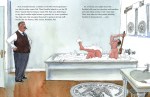
Jurmain and Day’s latest presidential collaboration (George Did It! and Worst of Friends) explores the life and career of Franklin Roosevelt. Though permanently disabled by polio, Roosevelt was determined not to be defined by this handicap. This resilience exemplified how Roosevelt faced his disability and the Great Depression. Jurmain’s story weaves facts with amusing anecdotes to paint a full picture of the man while also keeping kids engaged. In one such account, the president’s children cheer him on while he conditions his leg muscles, rallying  for various body parts–thigh, calf, and the favorite, the gluteus maximus. Day’s pencil, watercolor, and gouache illustrations perfectly capture Roosevelt’s complexities and the crises he faced with spirit and levity. The story isn’t all gloss and cheer–Jurmain highlights that, although most Americans loved FDR (they did elect him to office four times, after all), plenty of folks disagreed with his policies, then and now. Nice Work, Franklin! hits the non-fiction trifecta with the power to enlighten, entertain and educate.

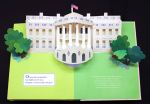
The White House: A Pop-Up of Our Nation’s Home, by Robert Sabuda; Orchard Books, $29.99, 6 spreads 9 popups, ages 6 and up.

Every president since John Adams has called the house at 1600 Pennsylvania Avenue home, and 1.5 million people visit the White House annually. Now, master paper engineer Robert Sabuda brings the tour between hardcovers, showcasing six distinct parts of the property, including the Lincoln Bedroom, the Rose Garden, and the South Lawn. Like any other Sabuda popup, details are everywhere–from tiny lamps in the massive chandelier to a Secret Service agent hiding behind an Oval Office curtain. An adaptation of “Inauguration Day” by Richard Watson Gilder (1844-1909) runs through the book and provides appropriate lyricism.

https://www.youtube.com/watch?v=NFFdTmEoe58

literarykids:

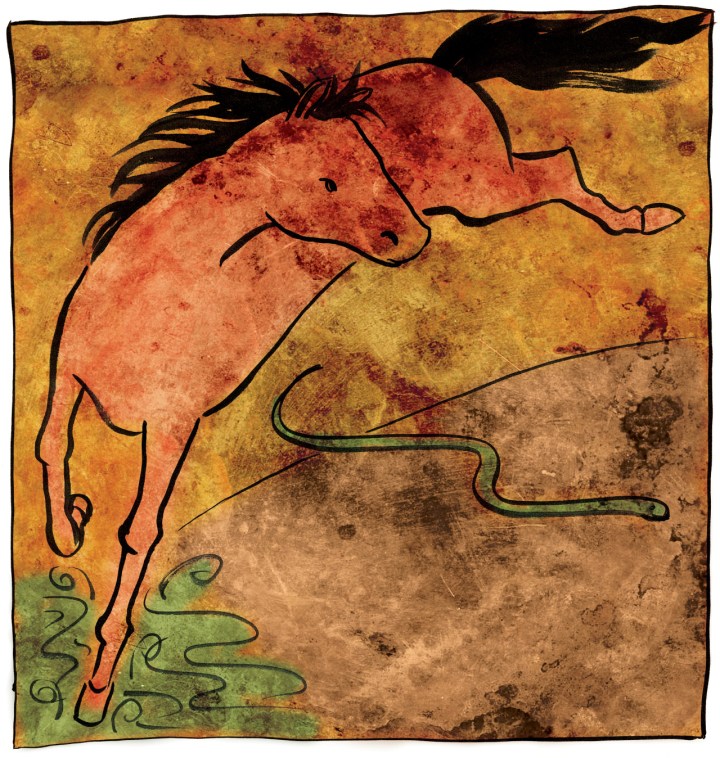
THE RACE FOR THE CHINESE ZODIAC. Text copyright © 2010 by Gabrielle Wang. Illustrations copyright © 2010 by Sally Rippin. Reproduced by permission of the publisher, Candlewick Press, Somerville, MA on behalf of Walker Books Australia and Black Dog Books.

“The Race for the Chinese Zodiac,” by Gabrielle Wang, illustrated by Sally Rippin; Candlewick Press, $14.99, 32 pages, ages 5-7.

In Gabrielle Wang’s retelling of this classic Chinese creation story, the Jade Emperor announces a race to determine which twelve animals will have a year named after them in the zodiac. As the gong sounds, the animals plunge into a mighty river and make their way to the finish line.  Who will be first? Who stops at nothing to win?  Children and adults will find this a pleasure to read, and its quick pace mimics the feel of competitors vying for the top spot. Sally Rippin renders Charming Rat, Spirited Horse and all the other animals in Chinese ink and earth-toned linocuts. 

After reading the end notes to find out which Zodiac year is yours, try this fun post-reading activity: Enlarge the Chinese characters for each animal that are found throughout the book. Give children a big brush and let them trace the characters with bold brushstrokes.  

马年大吉(Wishing you luck in the Year of the Horse!)


Here’s a reblog of one of my favorite books about Chinese New Year. 恭禧发财! (Gong Xi Fa Cai)

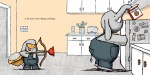
Super Jumbo, by Fred Koehler; Dial Books, $16.99, 32 pages, ages 3-5.

What child doesn’t imagine saving the world? How many more children have engaged in a heroic act (saving ants from a giant’s wayward foot, for example), without recognition? In Fred Koehler’s second picture book featuring Little Jumbo, the caped, wrench-welding, pint-sized pachyderm fights crime (keeping his dad out of the cookie jar), assists the weak, and shoos annoying pigeons away from popcorn ‘dropped’ by an unsuspecting elderly park visitor.  Unfortunately, sometimes Little Jumbo’s actions cause more chaos than intended. What happens when he’s faced with a real call for help? This tale of a well-meaning elephant with outsize ambitions is a charming, simple read aloud, and is a perfect match for Koehler’s illustrations of a small but mighty hero.